Hubble Tracks Crab Nebula's 25-Year Expansion at 3.4M MPH
NASA's Hubble Space Telescope captured stunning new images of the Crab Nebula, revealing how the supernova remnant has expanded over 25 years at 3.4 million miles per hour. The telescope's unique longevity lets scientists track cosmic changes invisible to previous generations.
The Crab Nebula, born from a supernova explosion nearly 1,000 years ago, is still racing outward through space, and NASA's Hubble Space Telescope just captured its most detailed growth portrait yet.
In 1054, astronomers witnessed a star explosion so bright it was visible during daylight for weeks. Now, a quarter-century after Hubble first photographed the full nebula 6,500 light-years away in the constellation Taurus, scientists have taken a fresh look at this cosmic wonder.
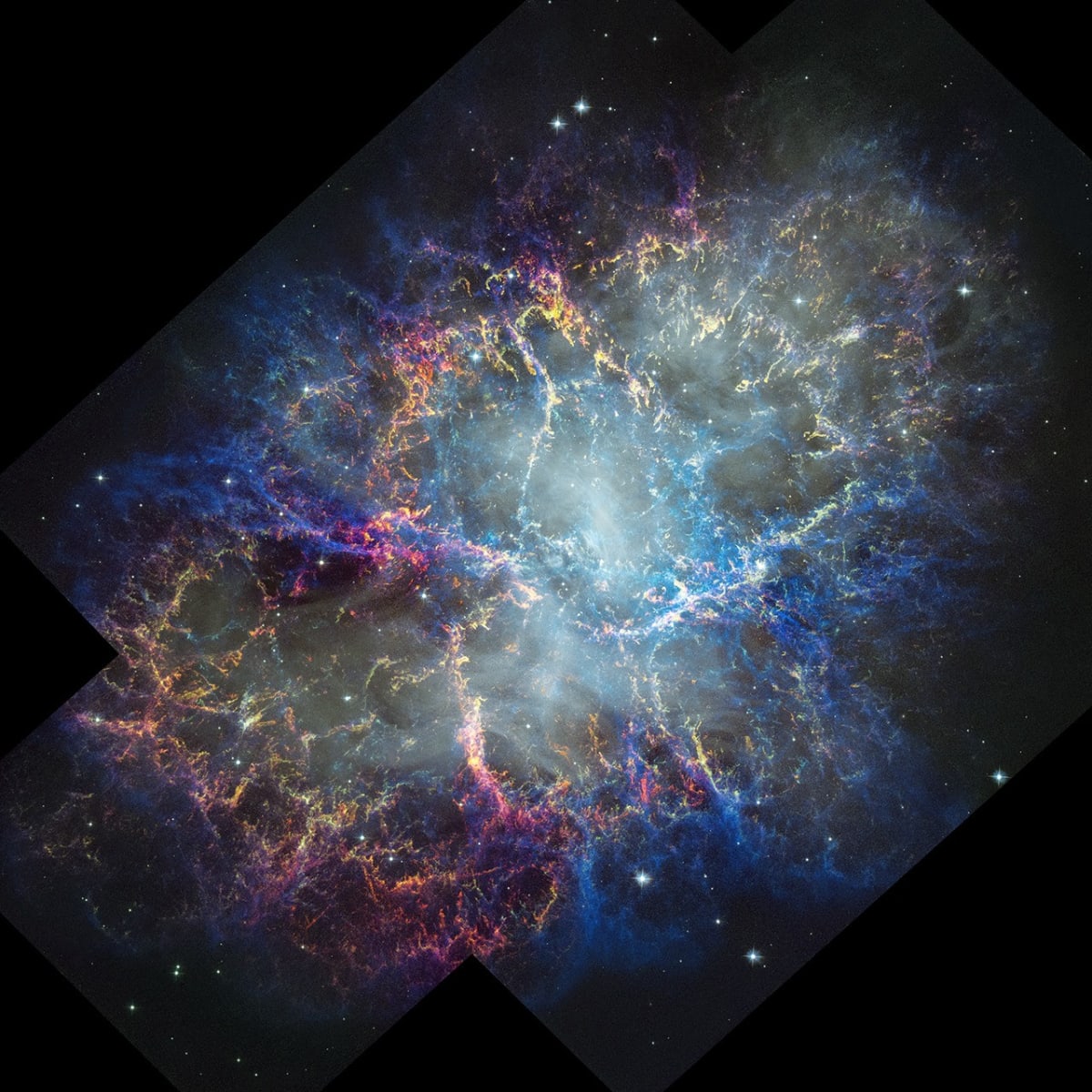
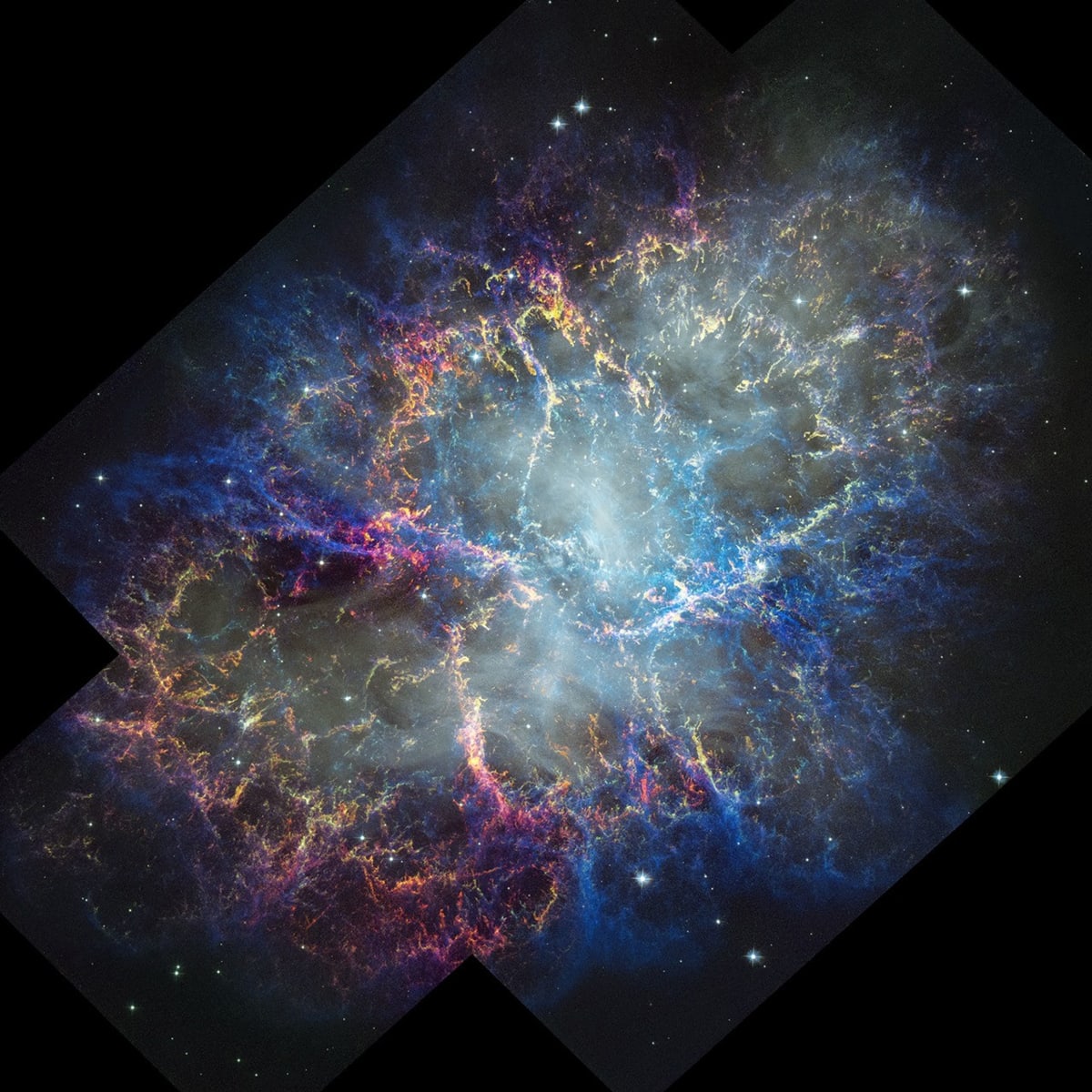
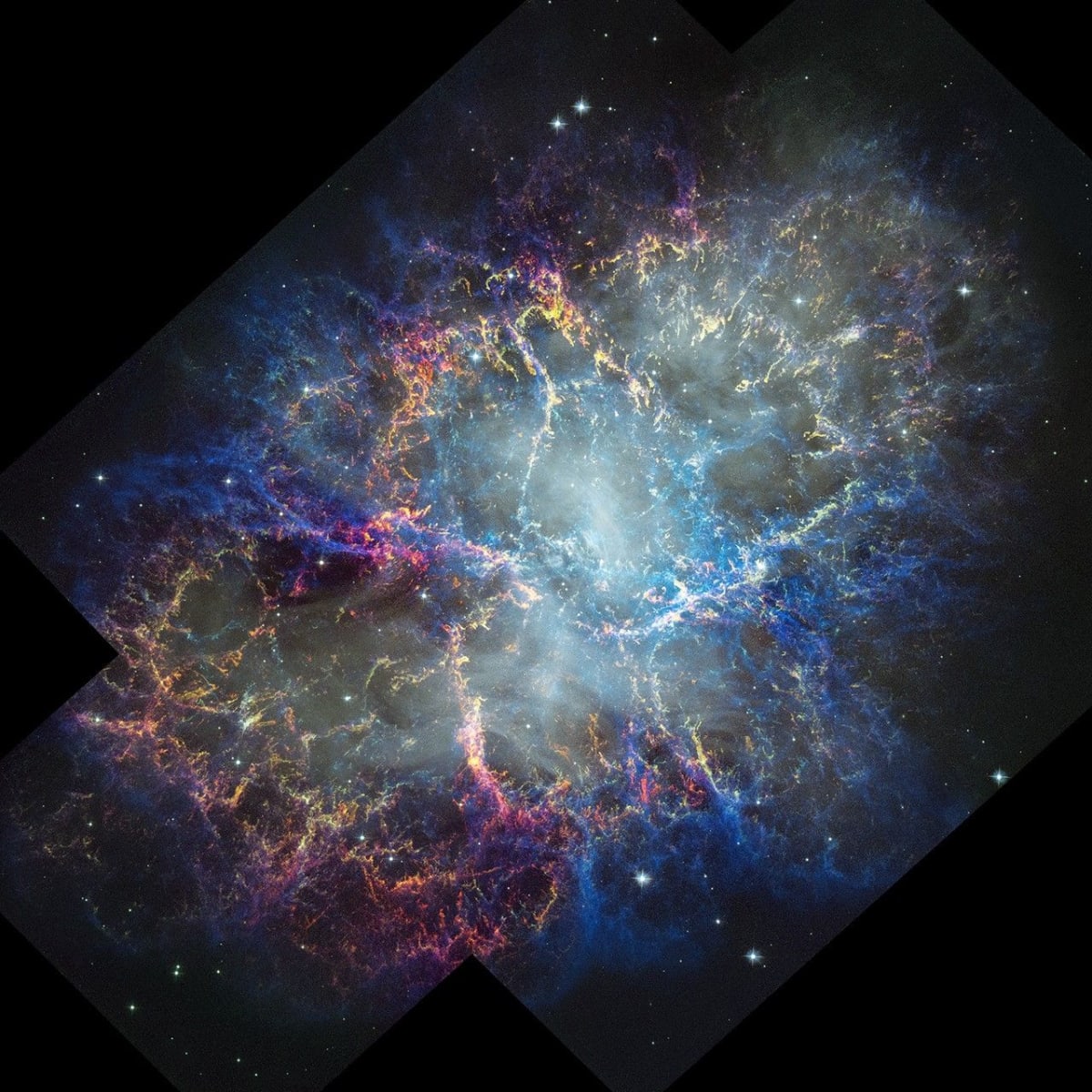
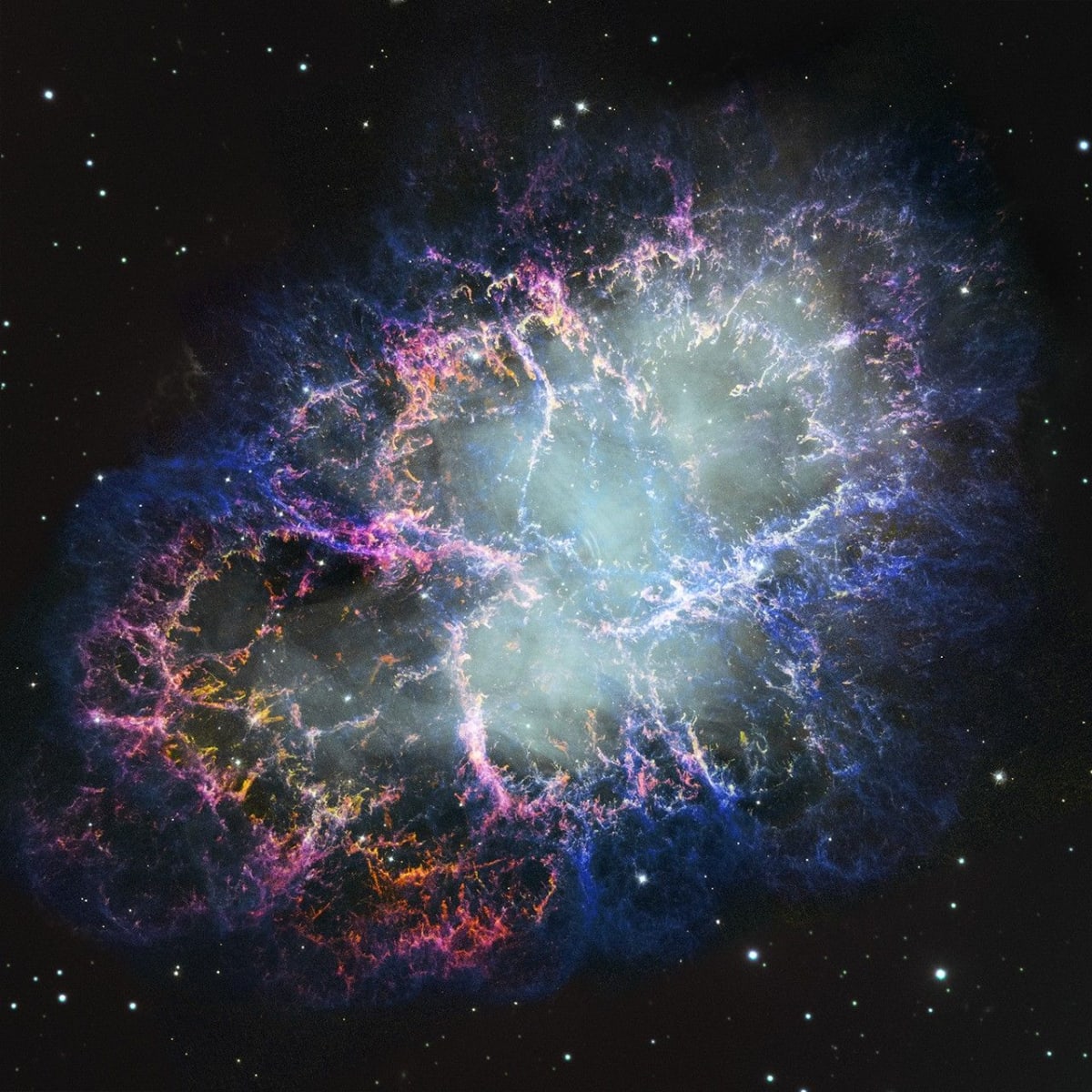
The results are breathtaking. Hubble's latest images reveal intricate, web-like filaments of gas streaming outward at 3.4 million miles per hour, showing how dramatically the nebula has expanded since 1999.
"We tend to think of the sky as being unchanging, immutable," said astronomer William Blair of Johns Hopkins University, who led the observations. "However, with the longevity of the Hubble Space Telescope, even an object like the Crab Nebula is revealed to be in motion."
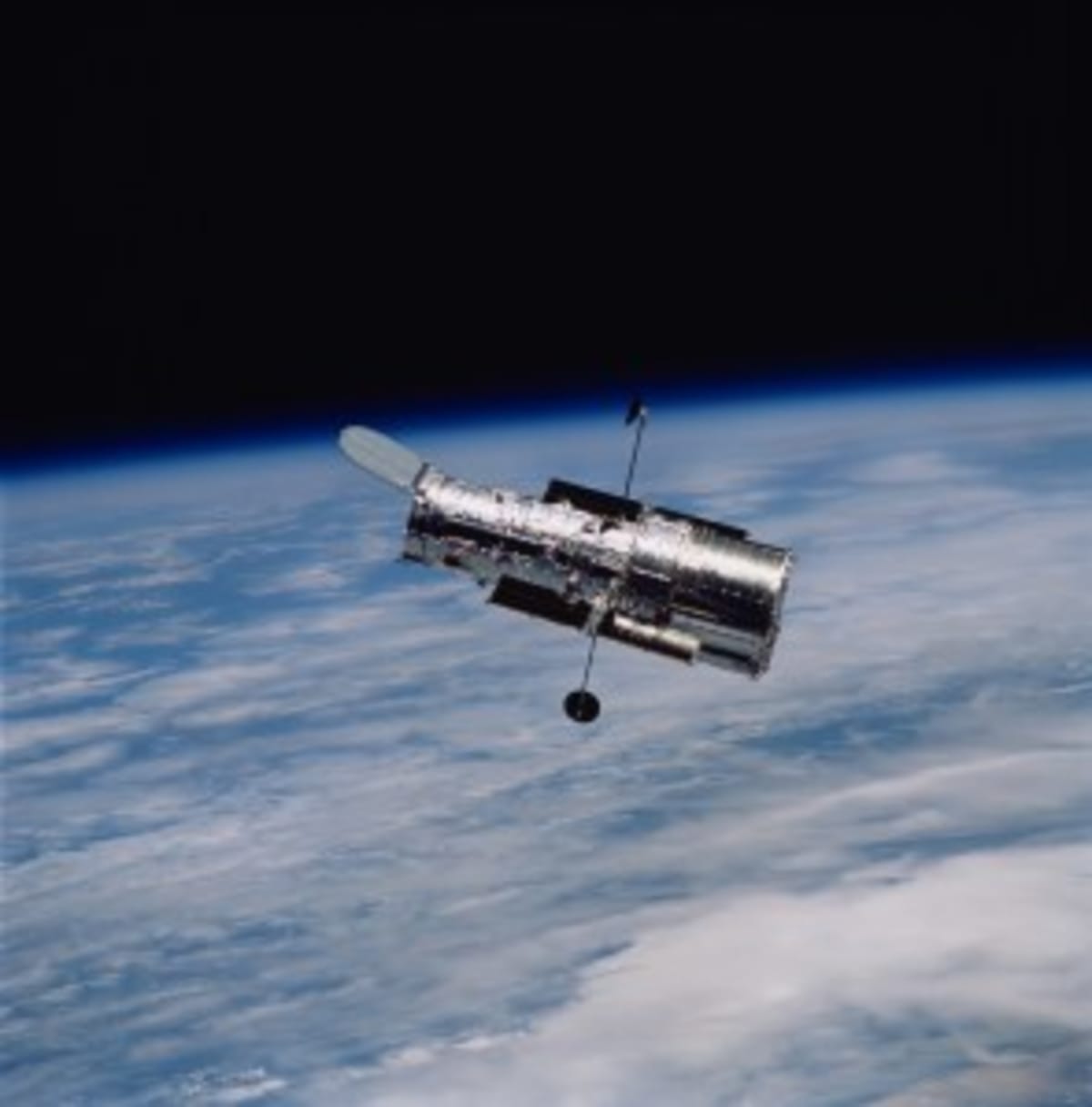
Hubble stands alone in its ability to track these changes. No other telescope combines the high resolution and three-decade lifespan needed to capture such detailed cosmic evolution.
The new images show something surprising: filaments at the nebula's edge have moved more than those near the center, but they haven't stretched out over time. Instead, they've simply shifted outward, pushed by energy from the pulsar at the nebula's heart, a rapidly spinning neutron star left behind after the original star died.
The technology makes a difference too. Wide Field Camera 3, installed during Hubble's last astronaut servicing mission in 2009, captures far more detail than was possible 25 years ago. The vibrant colors in the images reveal temperature changes, gas density variations, and different chemical compositions throughout the nebula.
Scientists can even see shadows cast by some filaments onto the glowing interior, helping them understand the nebula's 3D structure. Surprisingly, the brightest filaments cast no shadows at all, meaning they must be on the far side of the nebula.
Why This Inspires
This discovery reminds us that patience reveals wonders. Hubble has been watching the sky for over 30 years, long enough to see cosmic objects change and grow. That persistence is now paying off in ways scientists couldn't have imagined when the telescope first launched.
The real excitement is still ahead. Scientists plan to combine Hubble's visible-light observations with infrared data from the James Webb Space Telescope and observations from other instruments. Together, these different views will create the most complete picture ever of what happens after a star explodes.
What seemed unchanging to ancient astronomers continues to surprise us today, proving that the universe is always in motion and always worth watching.
More Images
Based on reporting by Google News - Science
This story was written by BrightWire based on verified news reports.
Spread the positivity!
Share this good news with someone who needs it