Mexican Cave's Natural Skylight Reveals Evolution in Action
A collapsed cave ceiling in Mexico created a unique laboratory where blind and sighted fish of the same species now live side by side, showing scientists how evolution works in real time. Researchers discovered key genes responsible for eye development by studying this rare natural experiment.
Deep in the mountains of northeastern Mexico, a falling chunk of rock accidentally created one of the most extraordinary scientific discoveries of the decade.
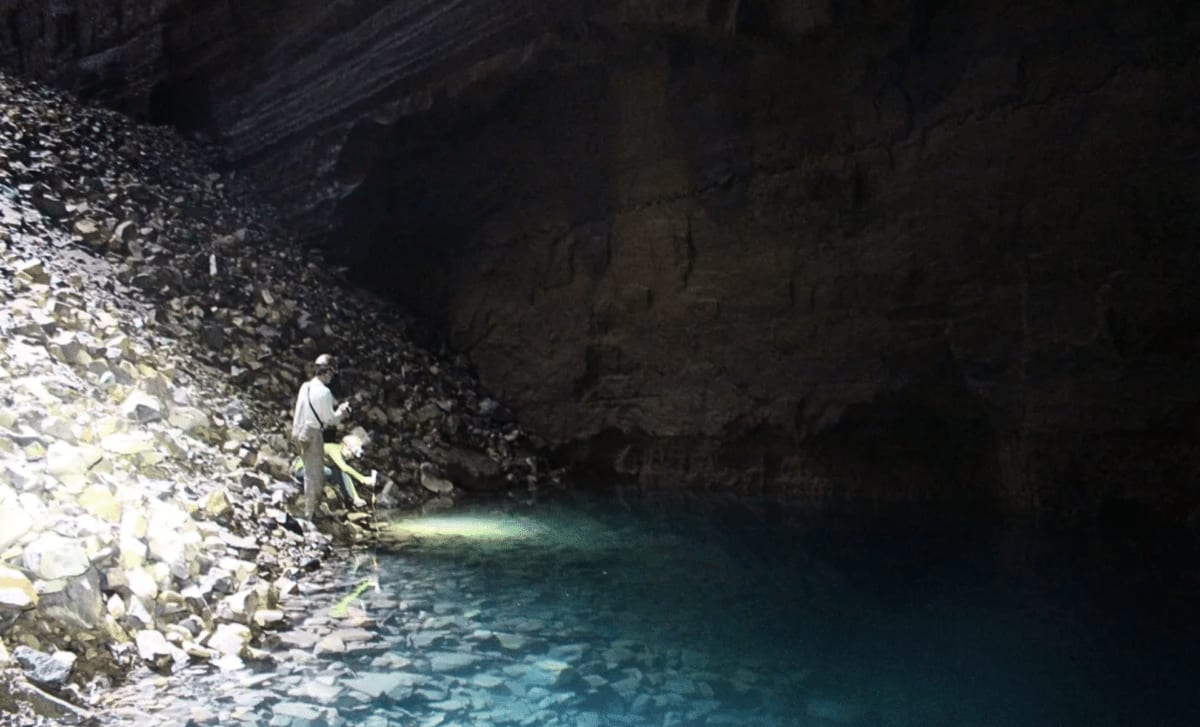
When part of the Caballo Moro cave ceiling collapsed, sunlight suddenly flooded into an underground lake that had sat in complete darkness for thousands of years. That single beam of light split one fish population into two evolutionary paths, and scientists are thrilled about what it means for understanding how life adapts.
The stars of this story are Mexican tetras, small freshwater fish that have fascinated evolutionary biologists for years. Surface populations have normal eyes and coloring. Cave populations living in pitch darkness have gradually lost their vision over many generations, their eyes shrinking away completely.
What makes Caballo Moro special is that both versions now share the same underground home. One group has functional eyes and claims the sunny spots. The other remains blind and sticks to the dark sections. They're technically the same species, but evolving in completely different directions just meters apart.
Nicolas Rohner, an evolutionary geneticist at the University of Münster, explains that the eyed fish aren't simply surface dwellers who wandered in. They're genetically cave fish that happen to have retained their vision after surface fish entered the cave and interbred with the original blind population.
The two groups mostly avoid each other, creating a natural social experiment. The sighted fish use their vision to aggressively defend territory in the lit areas. The blind fish thrive where eyesight offers no advantage, relying on other senses to navigate and hunt.
The Bright Side
This accidental natural laboratory gave researchers something they could never create in a lab. Because the population resulted from generations of interbreeding between surface and cave fish, scientists could track exactly how vision genes get shuffled and inherited over time.
The team identified a gene called cx50 that plays a crucial role in lens development. When they disrupted this gene in surface fish during lab experiments, the fish developed major eye problems. The discovery helps explain how complex traits like vision can disappear through evolution when they're no longer needed.
Around 35 populations of blind Mexican tetras exist across Mexico, each representing a separate evolutionary journey into darkness. But Caballo Moro offers something unique: a before-and-after snapshot of evolution happening right now, in a single location.
The research shows that evolution isn't always a slow, invisible process taking millions of years. Sometimes a single environmental change can set dramatically different paths in motion, even for populations living in the same small lake.
Scientists now have a living textbook for studying how animals adapt to their environments, all thanks to one fortunate cave collapse.
More Images



Based on reporting by Google News - Scientists Discover
This story was written by BrightWire based on verified news reports.
Spread the positivity!
Share this good news with someone who needs it