Human Brain Cells Help Mice Navigate Mazes at Stanford
Scientists at Stanford University successfully grew human brain tissue inside mice, and the results were surprising. The human cells didn't just survive—they actually helped the mice think better.
Mice at Stanford University are walking around with human brain cells making up nearly half their brain volume, and it's helping scientists unlock mysteries about how our brains work.
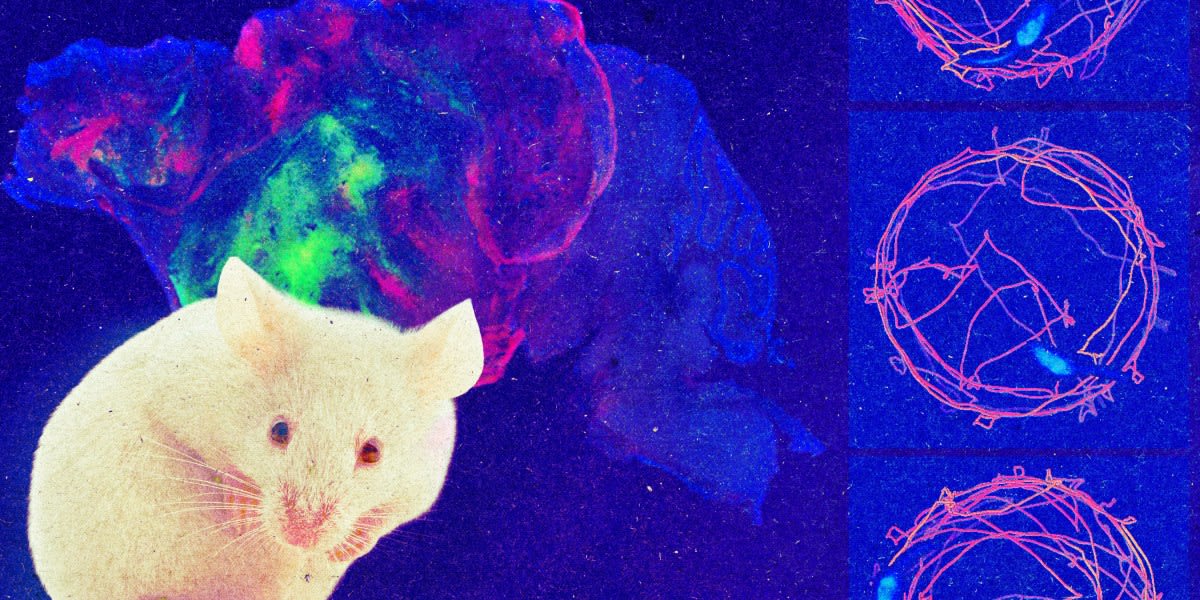
Neuroscientist Sergiu Pașca and his team created mice that were genetically modified to lack most of their cortex and hippocampus, two critical brain regions. This gave human brain organoids—small blobs of neural tissue grown from stem cells—plenty of room to grow and connect with the mouse nervous system.
The surprising part? The mice missing brain tissue seemed fairly normal at first. They walked around and squeaked like regular mice, though they struggled with memory tasks and couldn't navigate mazes well.
But when the team added human brain tissue, those same mice got better at remembering which parts of the maze they'd already explored. The human cells weren't just sitting there—they were actively helping the animals think.
This breakthrough combines genetic engineering and stem cell technology in ways that were impossible just years ago. The human cells divided, grew, and within weeks to months filled the space in the mouse brains, integrating across a species barrier that evolution built over millions of years.
Why This Inspires
This research could revolutionize how we study brain injuries and disorders. Instead of relying solely on computer models or human trials, scientists can now test potential treatments in living systems that contain actual human brain tissue.
The Stanford team is taking ethics seriously too. Last year, Pașca convened ethics experts to tackle tough questions about consciousness and potential misuse of the technology. He's drawn a clear line: this experiment should never be done in primates, where large volumes of functioning human brain tissue could blur the boundaries between species.
For now, mice are tiny enough and evolutionarily distant enough that there's no risk of human consciousness emerging. But the fact that human cells can survive, grow, and function in another species opens doors to understanding brain development, testing new drugs, and potentially even developing treatments for stroke victims.
Scientists in other labs are already exploring whether brain organoids can connect to computers or serve as biological replacement parts for damaged brains. What seemed like science fiction a decade ago is becoming reality in laboratories around the world.
The path forward requires careful thought and clear ethical boundaries, but the potential to help people with brain injuries and neurological conditions makes this research worth pursuing responsibly.
Based on reporting by MIT Technology Review
This story was written by BrightWire based on verified news reports.
Spread the positivity!
Share this good news with someone who needs it