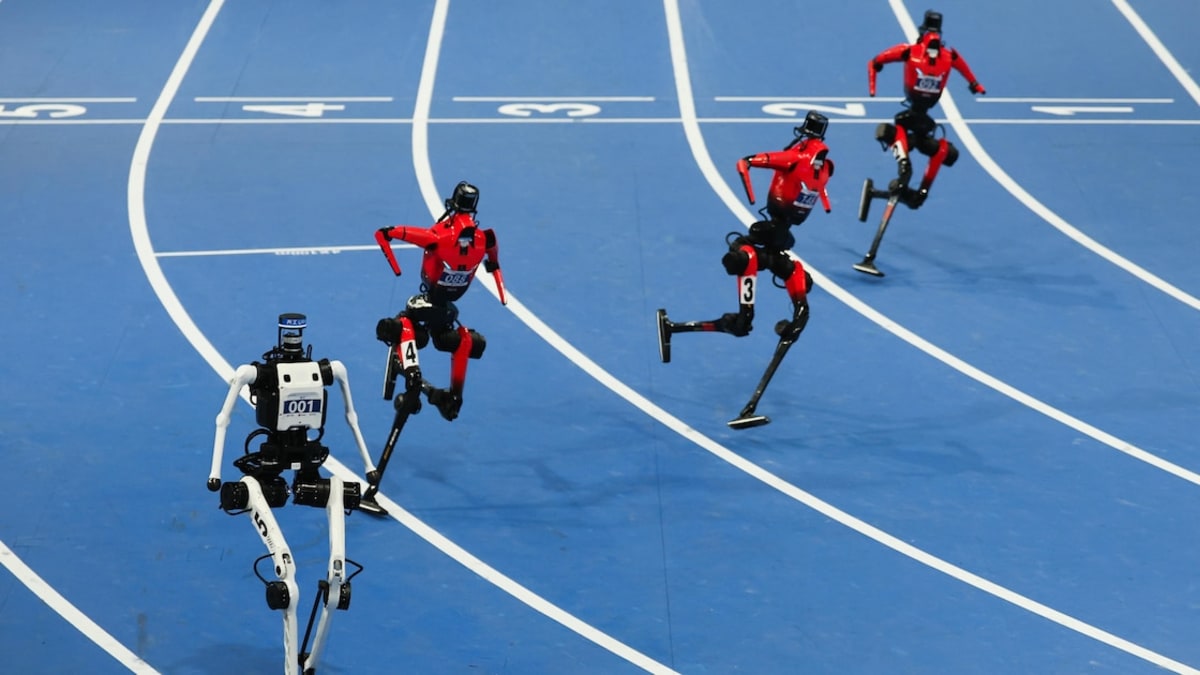
Humanoid Robot Runs 400m in 38 Seconds at Tech Games
Engineers just demonstrated a humanoid robot that can run the 400 meters in 38.15 seconds at the World Humanoid Robot Games in China. The breakthrough in bipedal robotics could transform search and rescue operations and advance prosthetic technology.
Engineers at the World Humanoid Robot Games just proved that two-legged robots can move faster than ever imagined.
The humanoid robot Tiangong completed a 400-meter run in just 38.15 seconds during the competition in China this weekend. To put that in perspective, that's faster than most college athletes and quicker than the average person could complete the distance on a bicycle.
The achievement represents years of work solving one of robotics' toughest challenges: making machines balance and move on two legs like humans do. While wheeled robots have existed for decades, getting a humanoid form to run smoothly requires solving thousands of micro-adjustments per second.
The same weekend saw other humanoid robots completing the 100-meter dash and various athletic challenges. These weren't just straight-line sprints either—the robots had to navigate turns, maintain balance, and recover from momentum shifts just like human runners.
Why This Inspires
This technology isn't about replacing human athletes. The real promise lies in creating robots that can navigate human environments during emergencies.
Imagine a humanoid robot that can climb stairs in a burning building, navigate rubble after an earthquake, or traverse rough terrain to deliver medical supplies. These machines could go places too dangerous for first responders, buying crucial time to save lives.
The balance and movement breakthroughs also feed directly into prosthetic limb development. Engineers working on these robots are solving the same problems that make advanced prosthetics more natural and responsive for amputees.
Some researchers are already adapting these systems for exoskeletons that help paralyzed individuals walk again. The faster and more stable the robot movement becomes, the more refined these assistive technologies can be.
The World Humanoid Robot Games brought together engineering teams from around the globe to push these boundaries in friendly competition. Rather than military applications, the focus remains on peacetime uses: disaster response, elderly care assistance, and hazardous environment work.
This weekend's demonstrations show we're getting closer to robots that can truly help humans in need.
More Images

Based on reporting by Google News - Sports
This story was written by BrightWire based on verified news reports.
Spread the positivity!
Share this good news with someone who needs it