Humanoid Robots Assist in Live Surgery for First Time
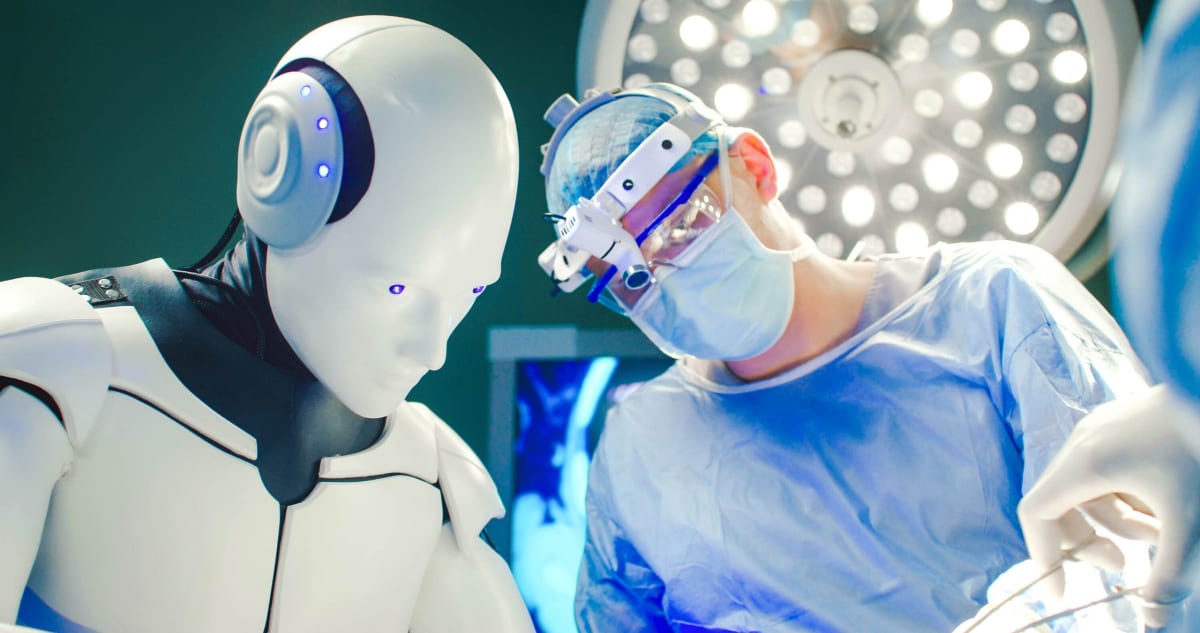
Two humanoid robots successfully participated in gallbladder removal surgeries at UC San Diego, marking a groundbreaking moment that could help solve America's growing surgeon shortage. This historic achievement brings us closer to expanding access to critical medical care in underserved areas.
In a medical first, humanoid robots have successfully worked alongside human surgeons to perform live operations, opening a new chapter in healthcare that could help millions access life-saving procedures.
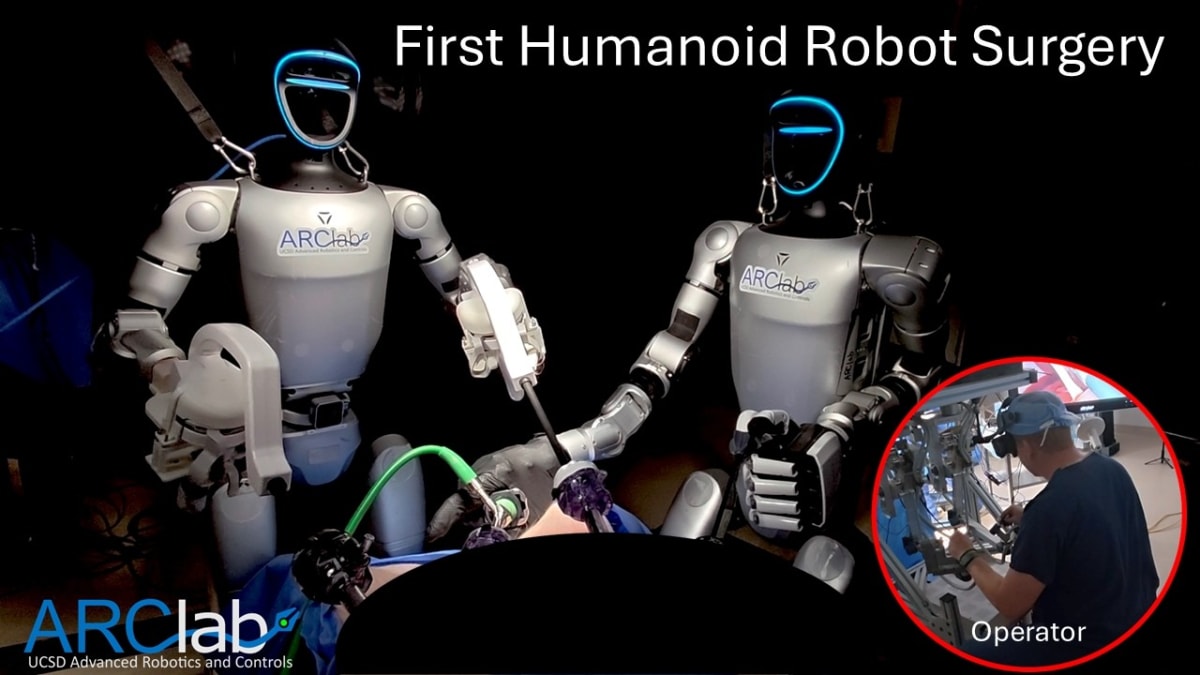
Researchers at the University of California San Diego recently conducted two proof-of-concept surgeries using humanoid robots. In one procedure, a human surgeon and a humanoid robot teamed up to remove a gallbladder. In another, two humanoid robots worked together to complete a laparoscopic gallbladder removal.
Both surgeries were successful, safely performed on non-primate mammals. The robots demonstrated they could handle delicate surgical tasks that typically require human precision and dexterity.
"This study shows that humanoid robots have a viable future in the field of surgery," said Michael Yip, one of the lead researchers from UC San Diego's Department of Electrical and Computer Engineering. "Remotely operated and autonomous humanoid robots have real potential for amplifying access to critical surgeries to which patients would otherwise not have access."
The timing couldn't be more critical. A 2025 study by the American College of Surgeons revealed that 21 states currently lack enough general surgeons to meet patient needs. By 2036, the United States could face a shortage of anywhere from 13,500 to 86,000 physicians.
The researchers highlighted several advantages of humanoid robots in medical settings. Their relatively low production costs make them economically viable for hospitals and clinics. Their versatility means they can be trained to perform multiple types of procedures. Perhaps most importantly, they can be deployed to remote locations where finding qualified surgeons proves nearly impossible.
The Ripple Effect
This breakthrough could transform healthcare access in rural communities and developing nations. Patients who currently travel hours for surgery or go without care entirely might soon receive treatment from expert surgeons working remotely through humanoid assistants. Veterans hospitals, understaffed facilities, and emergency response units could maintain round-the-clock surgical capabilities.
The technology isn't perfect yet. During the experimental procedures, both robots required multiple recalibrations, extending the surgery times beyond what human surgeons would need. The research team sees these as solvable technical challenges rather than fundamental limitations.
This moment joins other historic milestones in robotic surgery. In 1983, Arthrobot became the first surgical robot to assist in knee surgery. The PUMA 560 system helped with a brain biopsy in 1985. And ROBODOC performed the first fully robotic procedure on a human in 1992 during a hip replacement.
Each advancement built on the last, and humanoid robots represent the next evolution. Unlike earlier systems designed for specific tasks, these robots possess the flexibility to learn multiple procedures and adapt to different surgical environments.
As artificial intelligence continues advancing, future iterations could operate with increasing independence, always under human supervision but requiring less direct control. The goal isn't replacing human surgeons but extending their reach and capabilities to serve more patients in more places.
What started as an experimental procedure in a San Diego research lab could one day mean that no patient goes without critical surgery simply because they live too far from a major hospital.
More Images


Based on reporting by Google News - Health Breakthrough
This story was written by BrightWire based on verified news reports.
Spread the positivity!
Share this good news with someone who needs it