Scientists Crack the Code on How Humans See Sharply
Johns Hopkins researchers discovered how vitamin A and thyroid hormones help babies develop sharp central vision before birth, overturning a 30-year-old theory. The breakthrough could lead to new treatments for macular degeneration and other blinding diseases.
Scientists at Johns Hopkins University have figured out how humans build the sharpest vision in our eyes, a discovery that could one day help millions of people see clearly again.
The research team grew tiny retinas in their lab and watched them develop over several months. What they saw surprised everyone: cone cells that detect blue light actually transform into red and green light detectors during weeks 10 through 14 of fetal development.
This transformation happens in the foveola, a tiny spot at the center of your retina responsible for half of everything you see. Without this region working properly, you can't read, drive, or recognize faces.
Robert J. Johnston Jr., an associate professor of biology at Johns Hopkins, said the discovery challenges what scientists have believed for three decades. Researchers used to think blue cone cells simply moved away from the center of the developing eye, but the new evidence shows they stay put and change their identity instead.
The process relies on vitamin A, which breaks down in the developing eye to stop new blue cones from forming. Then thyroid hormones take over, converting the remaining blue cones into red and green ones. This precise sequence creates the specialized arrangement needed for sharp central vision.
"If you have those blue cones in there, you don't see as well," Johnston explained. The body removes them naturally before birth to give us the clearest possible vision.
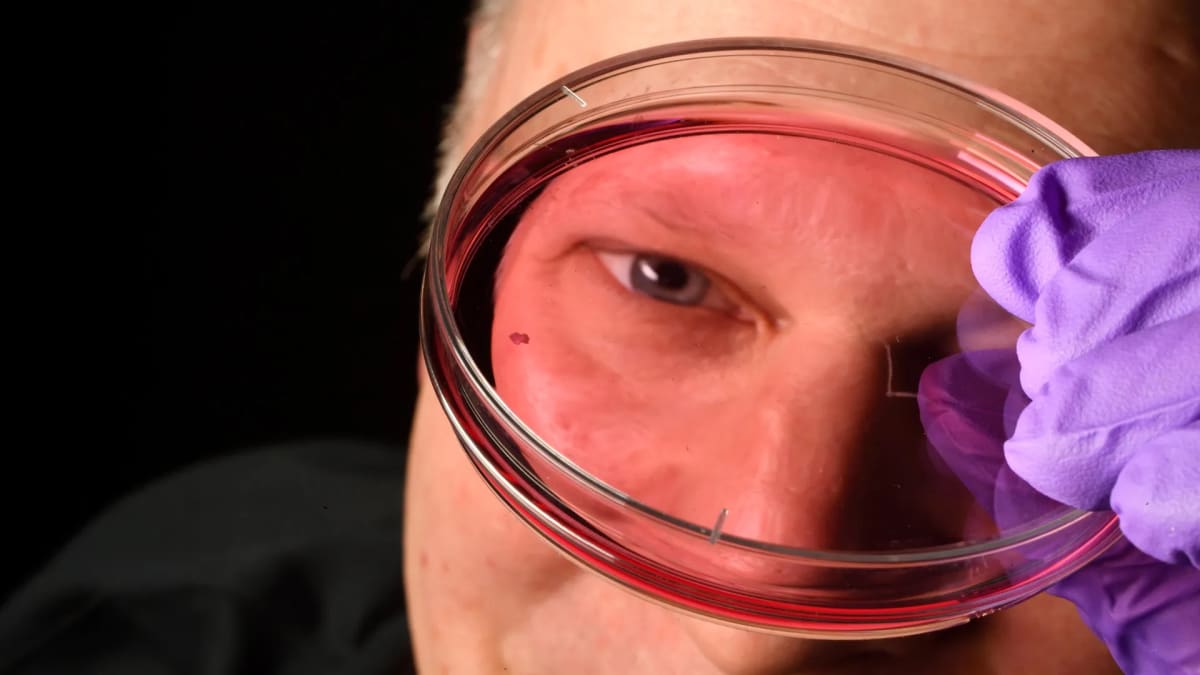
The discovery was only possible because the team used lab grown retinal organoids, small clusters of tissue that mimic real human eyes. Common research animals like mice and fish don't develop the same three types of color detecting cones that humans have, so scientists have struggled to study this process until now.
The Ripple Effect
The breakthrough opens doors for treating diseases that steal sight. Macular degeneration, which damages the foveola first, affects millions of people and currently has no cure.
Johnston's team is refining their lab grown retinas to more closely match real human tissue. The goal is to eventually create healthy photoreceptor cells that could be transplanted into damaged eyes, potentially restoring lost vision.
Researcher Hussey, now working at cell therapy company CiRC Biosciences, calls it a viable path forward. "A big avenue of potential is cell replacement therapy to introduce healthy cells that can reintegrate into the eye and potentially restore that lost vision," he said.
The experiments will take years and require extensive safety testing before reaching patients. But for people watching their central vision fade, the research offers something precious: genuine hope that science might one day give them back what they've lost.
Based on reporting by Health Daily
This story was written by BrightWire based on verified news reports.
Spread the positivity!
Share this good news with someone who needs it