Humans Thrived in Rainforests 150,000 Years Ago
Scientists discovered evidence that ancient humans lived deep in West African rainforests 150,000 years ago, more than doubling the previous record and proving our ancestors were far more adaptable than anyone imagined.
For decades, scientists thought early humans avoided dense rainforests because they seemed impossible to survive in. A groundbreaking discovery in Côte d'Ivoire just proved them completely wrong.
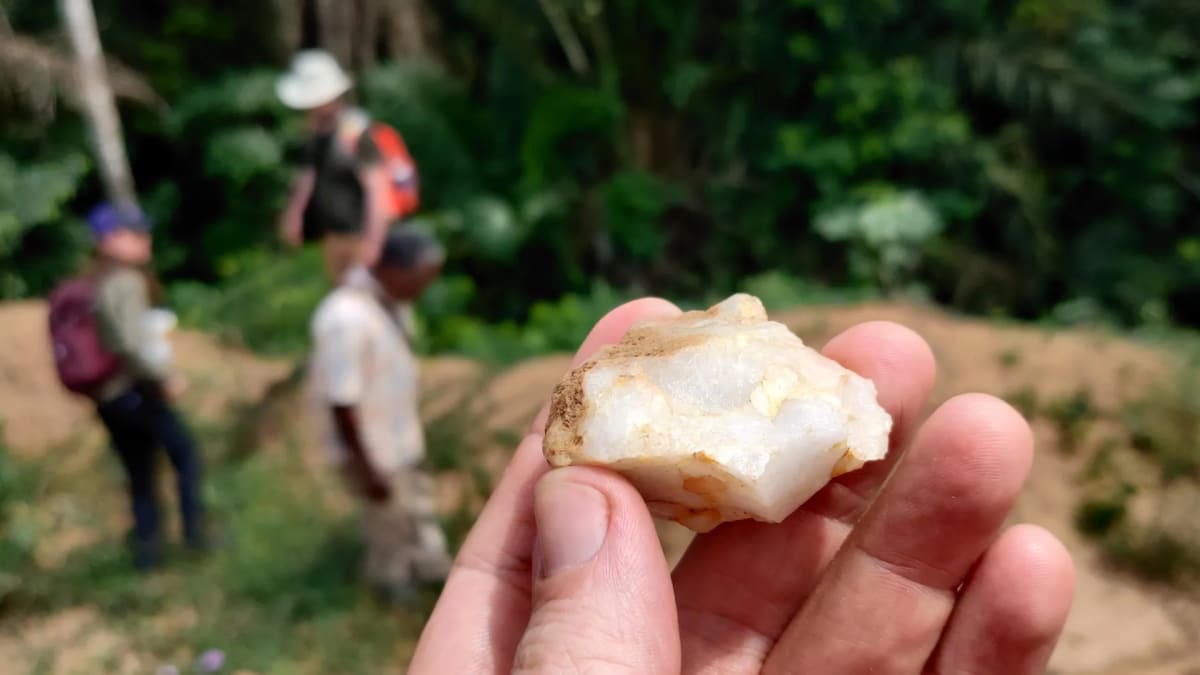
Researchers uncovered stone tools and plant remains showing that humans lived in tropical rainforests around 150,000 years ago. That's more than double the age of any previous evidence of rainforest living, which topped out at just 70,000 years ago in Southeast Asia.
The story began in the 1980s when Professor Yodé Guédé helped excavate a site called Bété I during a joint research mission. The team found ancient stone tools buried beneath layers of rainforest soil, but technology at the time couldn't reveal how old they were or what the environment looked like back then.
Fast forward to recently, when an international team returned with modern dating methods. Dr. James Blinkhorn of the University of Liverpool and the Max Planck Institute tracked down the original site with Professor Guédé's help and got to work before mining operations destroyed it forever.
Using techniques like Optically Stimulated Luminescence, scientists dated the tools to roughly 150,000 years ago. Then they analyzed pollen, tiny plant structures, and chemical traces in the soil to recreate the ancient environment.
The results were clear: this was a full rainforest, not some thin woodland strip. The samples showed humid forest plant waxes and very little grass pollen, proving humans weren't just passing through but actually living in one of Earth's most challenging environments.
Why This Inspires
This discovery completely rewrites what we thought we knew about human adaptability. Early Homo sapiens weren't limited to open grasslands and coastlines like textbooks suggested—they figured out how to thrive in dense jungles tens of thousands of years earlier than scientists believed possible.
Professor Eleanor Scerri, senior author of the study, summed it up perfectly: "Ecological diversity sits at the heart of our species." Different human populations lived in deserts, coasts, and forests, showing the incredible flexibility that likely helped us spread across the world while other human relatives disappeared.
The discovery also raises fascinating questions about how long humans have shaped tropical ecosystems through hunting, fire, and plant management. Researchers suspect many more ancient rainforest sites are still waiting to be found across Africa, hidden beneath vegetation where fossils rarely survive the hot, humid conditions.
Several unexplored sites in the region could reveal even older evidence of our rainforest-dwelling ancestors, proving once again that humans have always been survivors who adapt, innovate, and thrive wherever we go.
Based on reporting by Google: fossil discovery
This story was written by BrightWire based on verified news reports.
Spread the positivity!
Share this good news with someone who needs it