Ancient Humans Left Genetic Gifts in Modern DNA
Scientists discovered that Homo erectus, once thought extinct without descendants, passed genes to people living today. Ancient tooth proteins reveal a 400,000-year-old genetic thread connecting our most distant ancestors to modern Southeast Asians.
People in the Philippines and Papua New Guinea carry a tiny piece of DNA from humanity's most ancient relatives, and scientists just figured out how it got there.
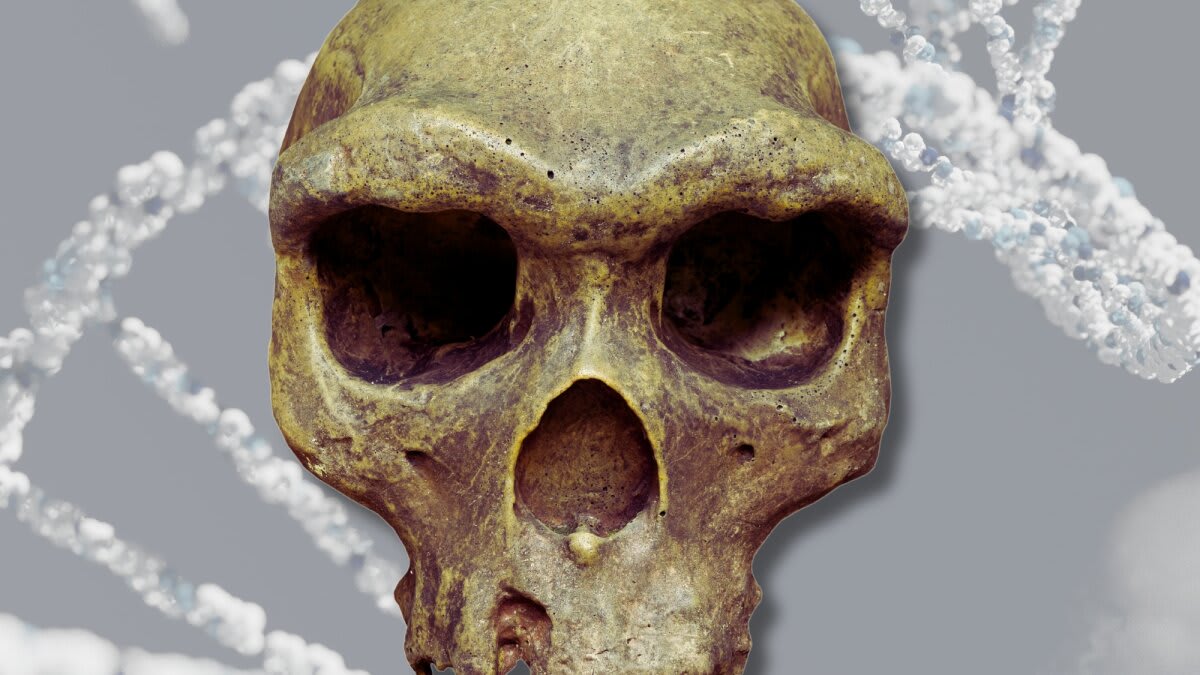
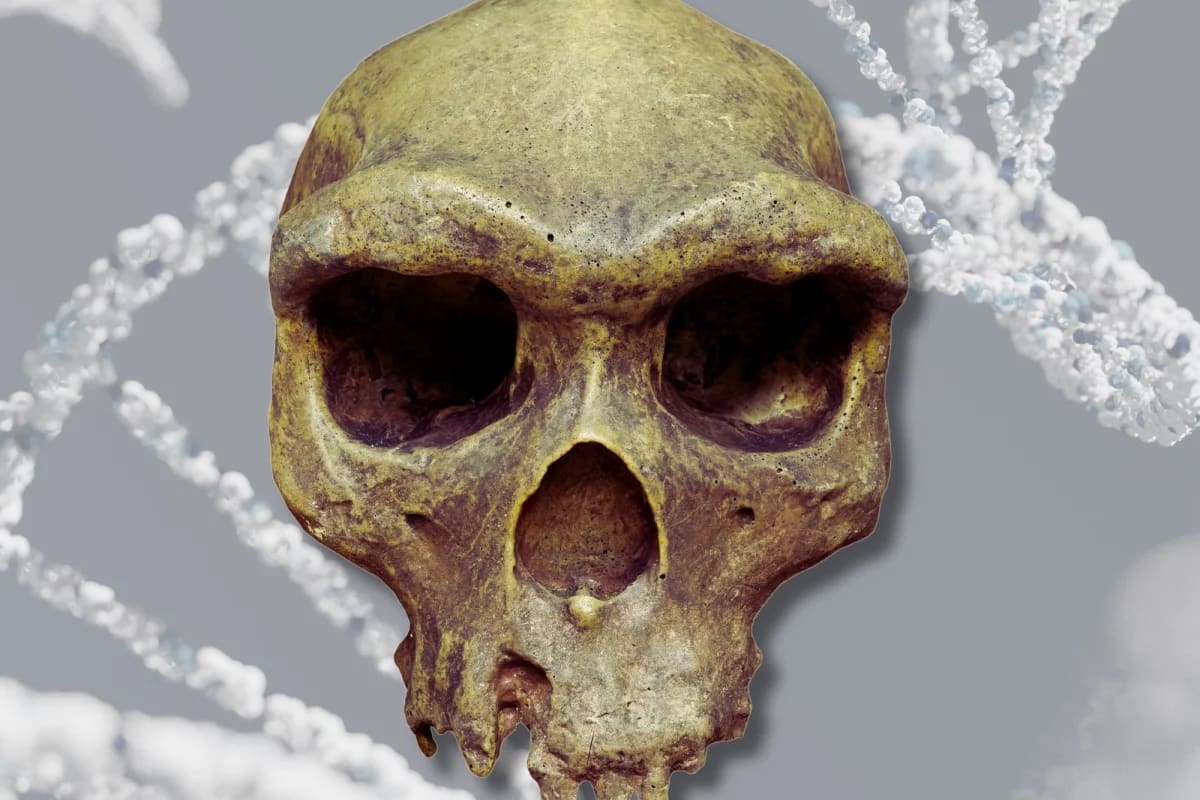
Researchers analyzing 400,000-year-old teeth from China made a discovery that rewrites what we thought we knew about human history. They found that Homo erectus, our ancient ancestor who left Africa nearly two million years ago, didn't simply vanish without a trace.
For decades, scientists believed Homo erectus was an evolutionary dead end. The textbook story went like this: modern humans emerged in Africa, spread across the world, and replaced every ancient human they met. Neanderthals, Homo erectus, and other relatives left no descendants.
That story is now completely wrong.
A team led by Qiaomei Fu from the Chinese Academy of Sciences studied teeth from three sites in China, including the famous "Peking Man" fossils. The teeth were far too old to contain DNA, but proteins in tooth enamel last much longer than genetic material.
What they found was remarkable. All six teeth shared a unique molecular signature never seen in any other human ancestor. But they also contained a variant that appears in Denisovans, the mysterious archaic humans known mainly from a Siberian cave.
That same variant shows up in 21% of people in the Philippines today and about 1% in India. The pattern suggests Homo erectus interbred with Denisovans around 400,000 years ago, and Denisovans later passed those genes to the ancestors of modern Southeast Asians and Pacific Islanders.
The discovery reveals something profound about human evolution. Interbreeding between different human lineages wasn't rare or exceptional. It was routine.
Modern humans outside Africa carry roughly 2% Neanderthal DNA. Papuans and Aboriginal Australians carry an additional 2 to 5% Denisovan ancestry. West Africans carry genetic signatures from an unidentified archaic lineage.
Why This Inspires
Our genomes aren't the product of a single unbroken lineage. They're mosaics assembled from contributions by multiple ancient groups, each adapted to their own environment.
Some Denisovan genes in Pacific Islander populations appear to influence immune function. The newly discovered Homo erectus variant's purpose remains unknown, but it could represent ancient adaptations that helped our ancestors survive in new environments.
The study also hints at mysteries still unsolved. Homo erectus survived in Indonesia until perhaps 100,000 years ago. The tiny "hobbit" species lived on Flores when modern humans arrived. Another human lineage occupied the Philippines.
None of these populations have yielded DNA yet. Scientists can now look for their molecular fingerprints too.
What seemed like separate branches on humanity's family tree turns out to be a tangled web of connection and exchange spanning millions of years. We carry pieces of our ancient relatives forward, a living testament to cooperation across the deepest divides of time.
More Images


Based on reporting by New Atlas
This story was written by BrightWire based on verified news reports.
Spread the positivity!
Share this good news with someone who needs it