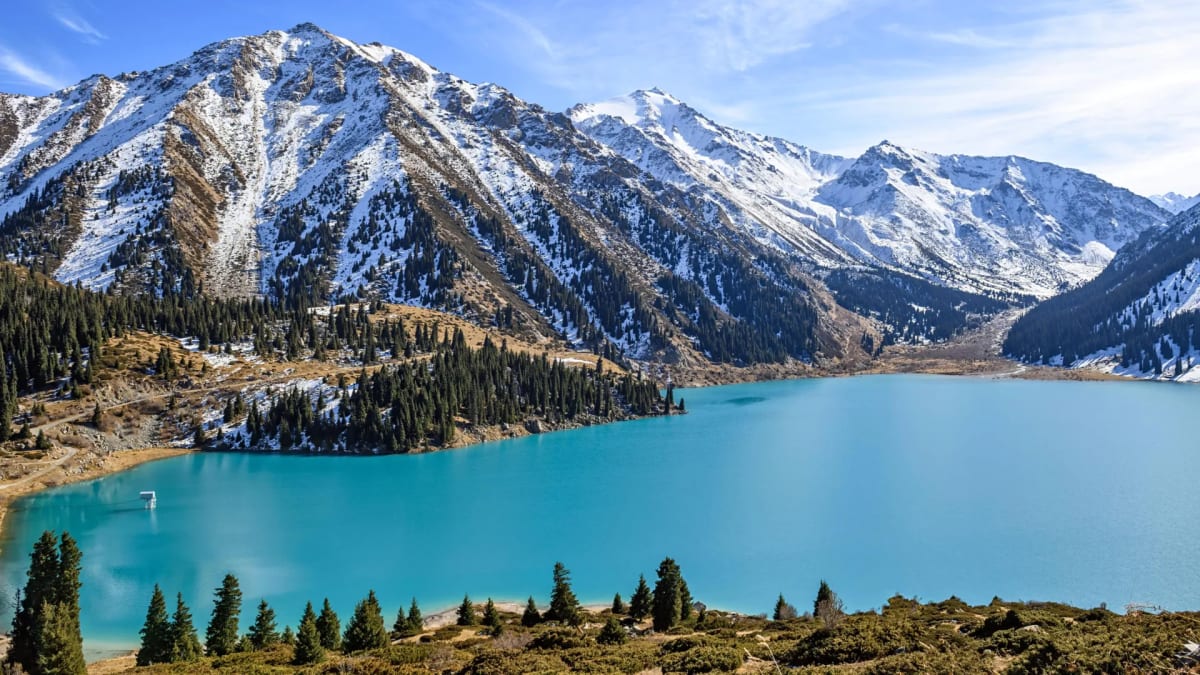
Lost Ocean Built Dinosaur-Era Mountains, Scientists Find
A vanished ocean shaped Central Asia's mountains millions of years ago, long before the Himalayas rose. New research reveals how ancient tectonic forces created dramatic landscapes that dinosaurs once roamed.
Scientists just solved a 250-million-year-old mystery about how Central Asia's mountains formed, and the answer lies beneath an ocean that no longer exists.
Researchers at Adelaide University discovered that the ancient Tethys Ocean played the lead role in building Central Asia's mountainous landscape during the Cretaceous period. Dinosaurs would have seen dramatic ridges similar to today's Basin and Range Province in the western United States.
The team analyzed over 30 years of geological data to reach their surprising conclusion. They expected climate change and deep Earth processes to explain the mountain building, but those forces barely left a mark.
"Climate change and mantle processes had only little influence on the Central Asian landscape, which persisted in an arid climate for much of the last 250 million years," said Dr. Sam Boone, who led the research as a post-doctoral researcher at Adelaide University. Instead, the distant Tethys Ocean's movements matched perfectly with periods of rapid mountain formation.
The Tethys Ocean once stretched across vast portions of the planet before gradually disappearing over millions of years. Today, only the Mediterranean Sea remains as its final remnant.
The ocean's influence reached thousands of kilometers inland through a fascinating process. As sections of ocean crust rolled back and subducted, they reactivated old geological fracture zones into parallel mountain ridges far from actual plate boundaries.
Why This Inspires
This discovery completely changes how scientists understand mountain building on Earth. For decades, researchers thought mountains formed primarily from nearby tectonic collisions or deep mantle activity, but this study shows distant oceanic forces can sculpt landscapes thousands of kilometers away.
The research method itself opens exciting possibilities. Associate Professor Stijn Glorie says his team is already applying the same approach to solve another geological puzzle closer to home: why Australia's break from Antarctica 80 million years ago left almost no trace in the thermal history of either continent.
Scientists used thermal history models that track how rocks cool as they rise toward Earth's surface during mountain building. By combining these models with data on ancient ocean movements, precipitation patterns, and mantle activity, they reconstructed hidden chapters of our planet's history.
The findings appeared in Nature Communications Earth and Environment. Understanding these ancient processes helps scientists predict how landscapes evolve and could shed light on mountain formation mysteries around the world.
Sometimes the biggest forces shaping our world come from places we can no longer see.
Based on reporting by Science Daily - Environment
This story was written by BrightWire based on verified news reports.
Spread the positivity!
Share this good news with someone who needs it