Hundreds Revive 20-Year Fishing Tradition in Karnataka
After a 20-year pause, hundreds of people gathered at a 118-acre tank in Karnataka for Kere Bete, a joyful summer fishing tradition that brings communities together. Participants traveled from across the region, each catching up to 25 kilos of fish while celebrating a beloved cultural ritual.
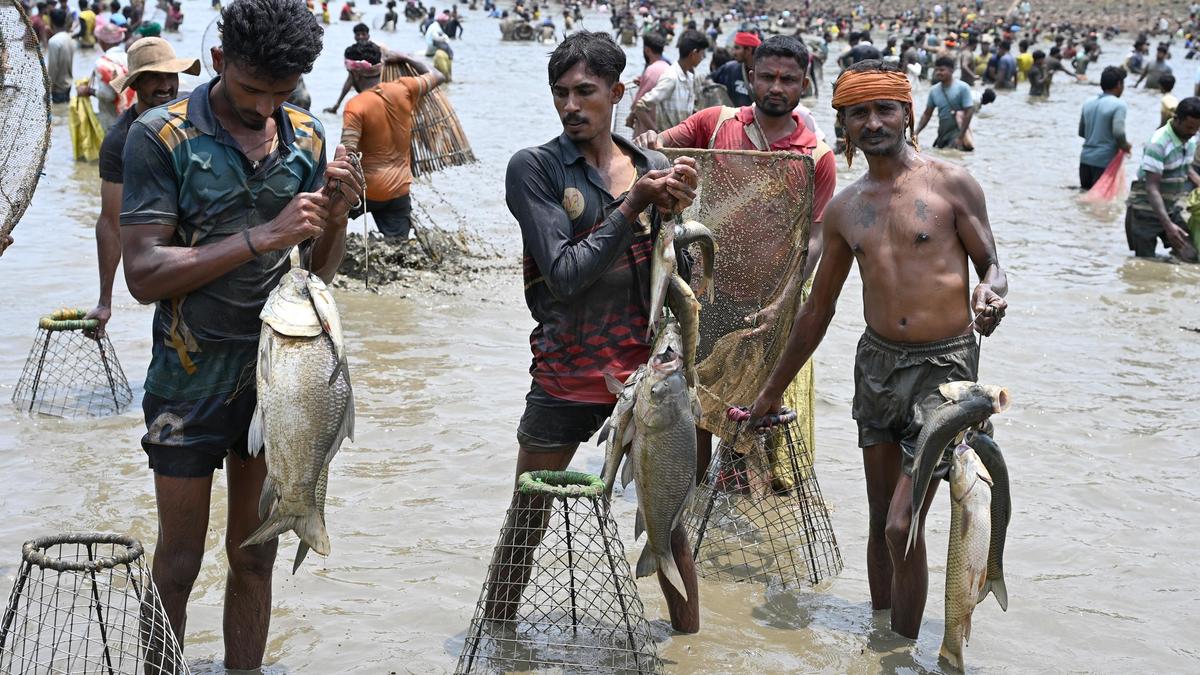
When a whistle pierced the air at 11:30 a.m. on May 7, hundreds of people surged toward the water in a spectacular wave, traditional bamboo traps in hand. This was Kere Bete, a centuries-old summer fishing tradition making its comeback at Chittur village in Karnataka after two decades.
The scene at the 118-acre tank looked like organized chaos mixed with pure joy. Participants from Sorab, Shikaripur, Sagar, and beyond descended on the second-largest tank in the region, each carrying their kuni, a cone-shaped bamboo trap designed to catch fish in shallow water.
Sandeep from Kannur village beamed as he hauled 10 kilograms of fresh fish from the water. "This must be around 10 kilos, more than sufficient for a family of six people," said Shivamurthy of Shigga village, gesturing at his bag with pride.
The tradition works beautifully for everyone involved. During summer, when water levels naturally drop, villagers who cultivate fish in the tank organize the event, giving the community a chance to harvest while celebrating together.
"This particular tank hadn't seen a Kere Bete in almost 20 years," said Nalamurthy M.P., a Chittur resident. "When neighbouring villages expressed interest, we knew it was time."
Word spread well in advance, and the response exceeded expectations. Participants paid 600 rupees per trap, assembled at the designated spot, then rushed into the water at the whistle's signal.
Within minutes, excited whispers ran through the crowd about who had landed the biggest catch. Those lucky enough to pull out a large fish paused for quick photographs, grinning from ear to ear, before wading back in for more.
The hunt continued for two hours under the blazing summer sun. Participants walked away with catches ranging from 10 to 25 kilos of various fish varieties, enough to feed their families and share with neighbors.
The Ripple Effect
For many participants, Kere Bete represents something deeper than just catching fish. Some veterans had already attended 20 to 25 events this season alone, traveling from village to village.
Mahesh from Ulavi village explained that the draw has nothing to do with luck. It's the ritual itself: the whistle, the rush into the water, the connection to tradition and community that keeps bringing people back, season after season.
"More than the catch, the participation is what makes it worthwhile," Shivamurthy noted. The revival of this 20-year-dormant tradition shows how communities can breathe new life into cultural practices that bring people together in celebration.
Based on reporting by The Hindu
This story was written by BrightWire based on verified news reports.
Spread the positivity!
Share this good news with someone who needs it