Hydrogen Storage Breakthrough Could Speed Clean Energy Future
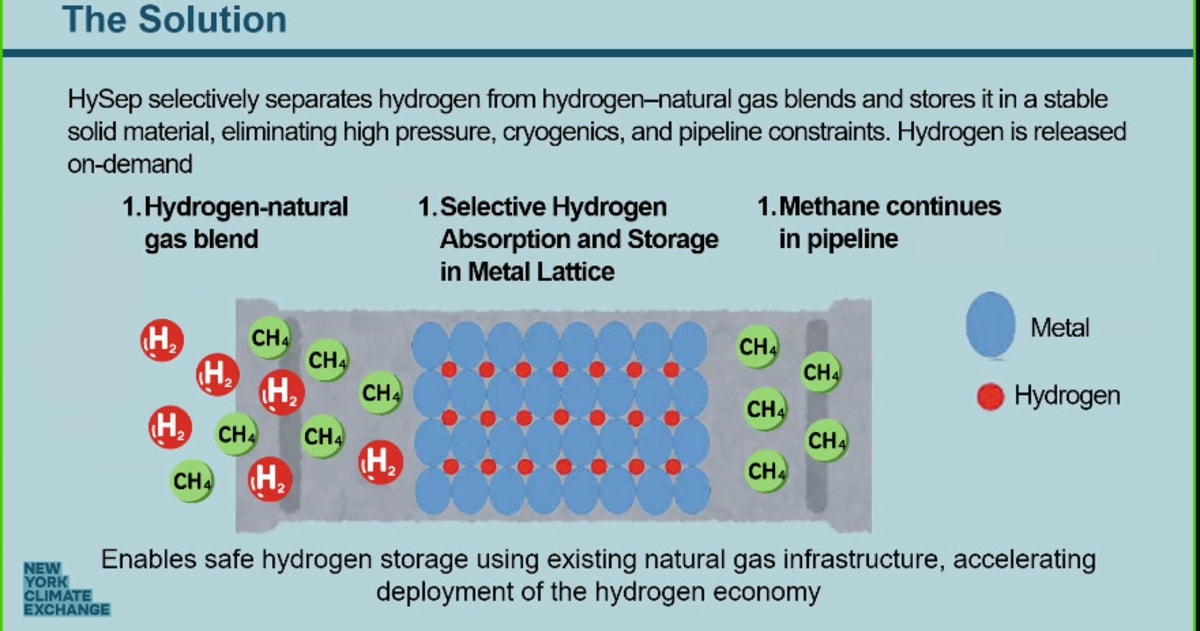
A Stony Brook researcher has developed a safer way to store hydrogen fuel using existing gas pipelines, transforming clean energy from a distant dream into near-term reality. Her system could unlock the potential of green hydrogen across transportation, industry, and power generation.
The biggest barrier to clean hydrogen energy isn't making it. It's storing and moving it safely.
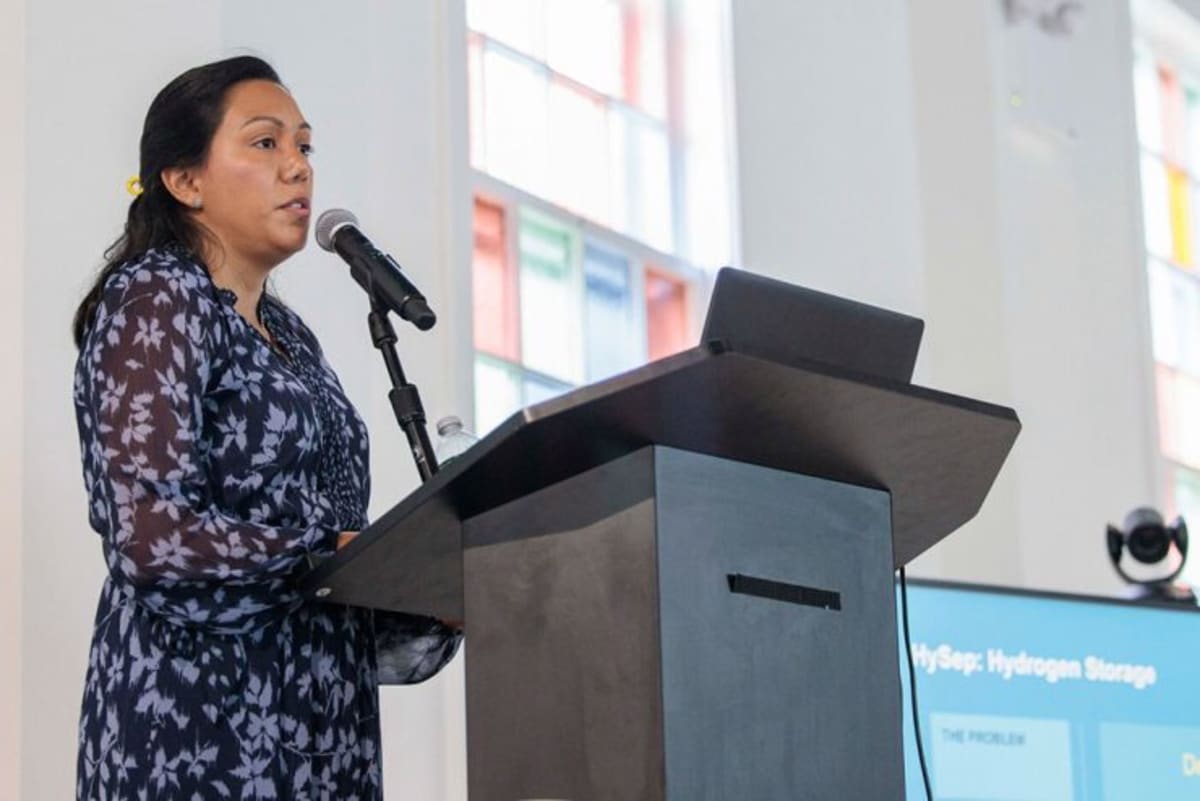
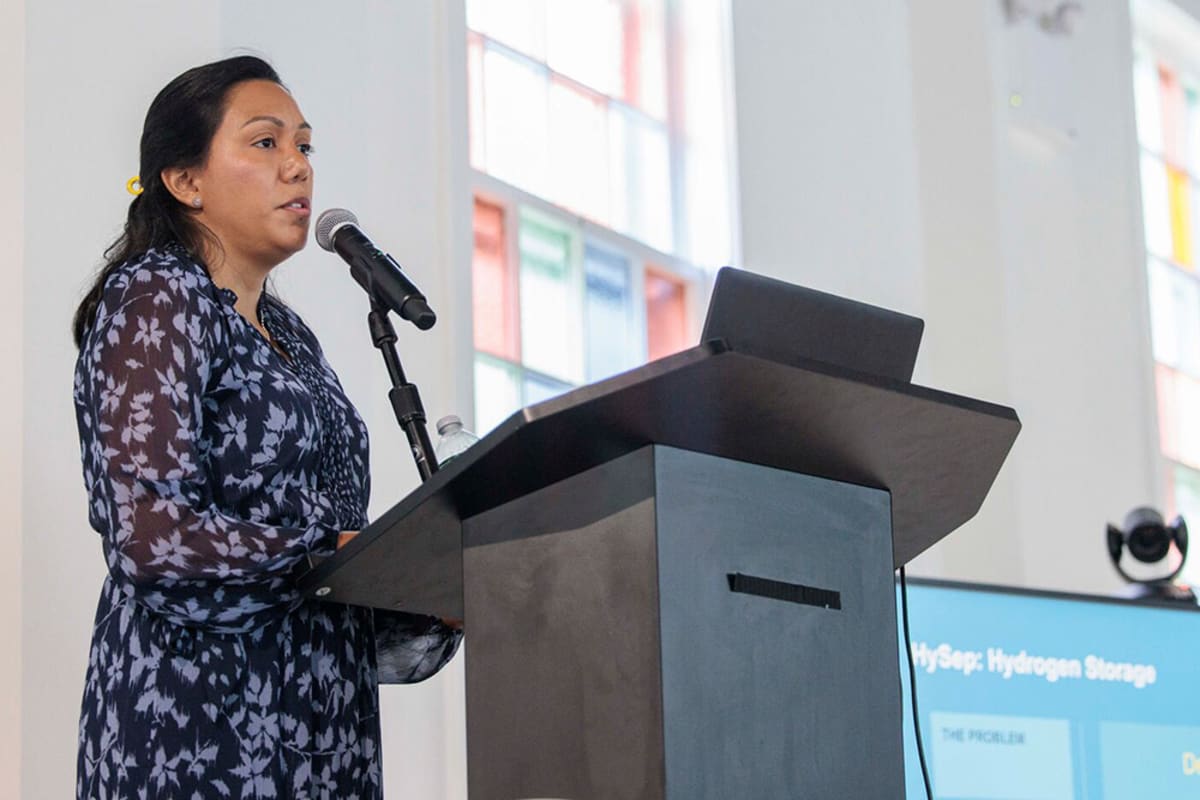
Stephanie Taboada, a materials science professor and founder of HySep, just showcased a solution that could change everything. As one of eight inaugural Climate Tech Fellows at The New York Climate Exchange, she presented technology that stores hydrogen safely using gas infrastructure that already exists.
Hydrogen has long been viewed as a promising clean fuel because it produces zero emissions when burned. The problem? Current storage methods are expensive, energy-intensive, or require building entirely new infrastructure from scratch.
Taboada's approach sidesteps that challenge entirely. "We know hydrogen has incredible potential as a clean fuel, but the question has always been how do we store it safely and move it efficiently," she explained during her February showcase. "Our goal is to create a solution that integrates with infrastructure that already exists."
That's the game changer. Using current gas networks dramatically lowers costs and cuts deployment time, turning hydrogen from "someday technology" to something communities could adopt soon.
Safety sits at the heart of HySep's design. "If we want hydrogen to play a serious role in decarbonization, we need storage systems that communities and utilities can trust," Taboada said. "Safety is not optional. It is foundational."
The six-month fellowship helped Taboada transition from academic researcher to startup founder. She received mentorship, venture development training, and funding to refine her commercialization strategy.
"As researchers, we're trained to think about discovery and validation," she noted. "The fellowship pushed me to think about customers, regulatory pathways, and what real-world deployment actually requires."
The Ripple Effect
If HySep succeeds, the impact reaches far beyond one technology. Practical hydrogen storage at scale could support decarbonization across multiple sectors simultaneously: trucks and ships that currently run on diesel, factories that need high-temperature heat, and power plants storing renewable energy.
Communities wouldn't need to wait decades for new infrastructure buildout. They could begin transitioning to clean hydrogen using the pipeline networks already beneath their streets.
Taboada emphasized that her vision extends beyond lab success. "This is about building technologies that don't stay in the lab; it's about creating solutions that communities can use and benefit from."
The timing matters too. As cities and countries set ambitious climate goals, they need solutions ready to deploy now, not in twenty years.
Clean energy just took a major step closer to your neighborhood.
More Images


Based on reporting by Google News - Tech Breakthrough
This story was written by BrightWire based on verified news reports.
Spread the positivity!
Share this good news with someone who needs it