Hyundai Partners 7 Indian Universities for EV Research
Hyundai Motor Group just expanded its electric vehicle research network across India to seven top universities, launching 39 projects to accelerate battery technology. The initiative pairs Korean automotive expertise with Indian engineering talent to build EV solutions designed specifically for India's market.
📺 Watch the full story above
India's electric vehicle future just got a major boost from an unexpected partnership between automakers and academia.
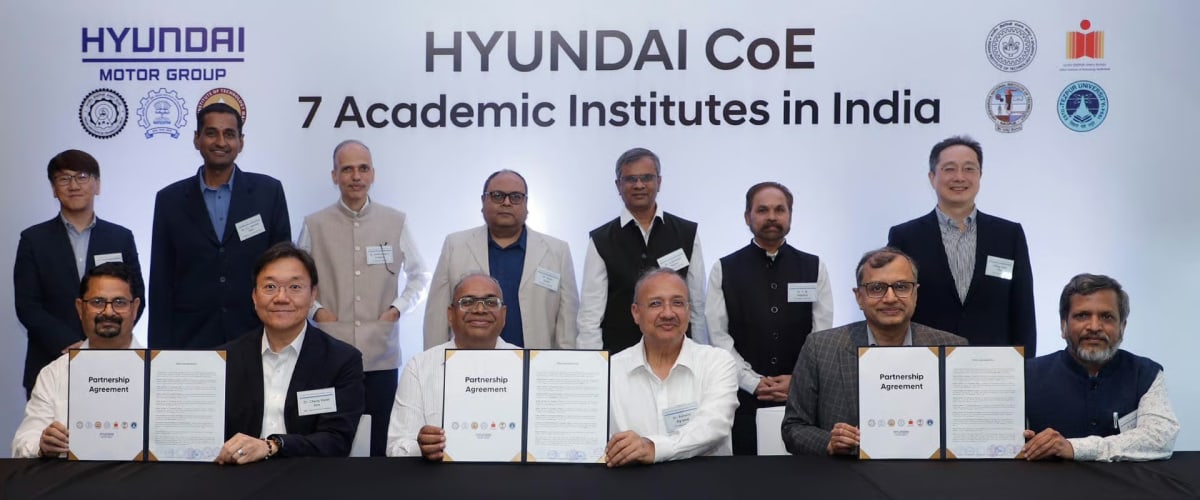
Hyundai Motor Group expanded its Center of Excellence program to include seven leading Indian universities, creating the country's largest academic-industrial network for battery and EV research. The network now includes IIT Madras, IIT Delhi, IIT Bombay, IIT Kanpur, IIT Hyderabad, VNIT Nagpur, and Tezpur University.
The expansion means 39 joint research projects are now underway across these campuses. Scientists and students are tackling everything from battery cell design to AI-powered vehicle-to-grid platforms that could let electric cars feed power back into homes during outages.
What makes this partnership special is its focus on India-specific challenges. Researchers aren't just copying solutions from other countries. They're developing battery technologies optimized for India's unique climate, road conditions, and driving patterns.
The program launched with three universities in 2025 and added four more partners this month through ceremonies in New Delhi. Hyundai executives joined deans from all seven institutions to formalize the agreements.
Students and professors involved get access to real-world industry challenges and funding for their research. A Korea Visiting Program will send Indian researchers to work alongside Korean scientists, sharing knowledge across borders.
The research agenda covers the essentials needed to make EVs practical and affordable: battery management systems, energy density improvements, safety features, and diagnostic tools. Each project aims to solve a piece of the puzzle holding back widespread EV adoption.
The Ripple Effect
This collaboration creates opportunities far beyond the lab. Engineering students gain hands-on experience with cutting-edge EV technology before graduation, building a skilled workforce ready to lead India's automotive transformation.
The partnership also positions India as a serious player in global EV innovation rather than just a market for imported technology. When these universities publish findings or develop patents, they strengthen India's reputation as an engineering hub.
Local battery production and EV component manufacturing could follow as research yields commercial applications. That means jobs, reduced import dependence, and cleaner air in India's congested cities.
Hyundai plans to expand beyond research labs with global e-conferences bringing together academics and tech forums uniting government, industry, and university leaders. The goal is transforming the Center of Excellence from a research program into a comprehensive hub driving India's entire EV ecosystem forward.
Chang Hwan Kim, who heads Hyundai's Electrification Energy Solutions, believes bringing together distinguished professors and emerging researchers will create powerful synergies benefiting both Hyundai and India's sustainable growth.
Seven universities, one automaker, and 39 projects working together prove that the future of transportation doesn't have to be built in isolation.
More Images
Based on reporting by CleanTechnica
This story was written by BrightWire based on verified news reports.
Spread the positivity!
Share this good news with someone who needs it