IAS Officer Raised $50K on Facebook for 100-km Road
When sick villagers in Manipur were carried on bamboo stretchers for five hours to reach help, one officer refused to wait for government promises. He turned to Facebook, his savings, and 250 neighbors with spades to build the road themselves.
For 30 years, the people of Tousem waited for a road that never came. Every time someone got sick in this remote corner of Manipur, they were strapped to bamboo stretchers, carried across a river, then walked for five hours to the nearest hospital.
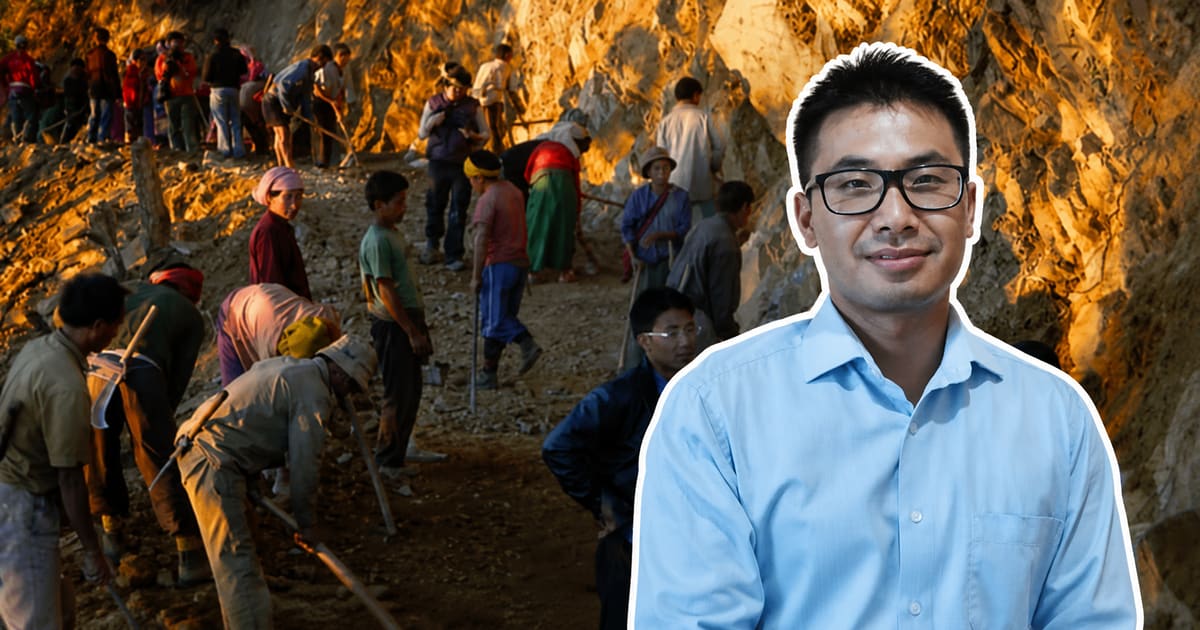
Armstrong Pame arrived in 2012 as the new sub-divisional magistrate and saw the bamboo stretchers himself. At 28, he was the first IAS officer from the Zeme Naga community, and he knew exactly how many times the government had surveyed, sanctioned, and abandoned this 100-kilometer stretch of road.
When he formally asked the state government for funding, they turned him down for lack of resources. So he stopped asking.
Pame put in 500,000 rupees of his own savings. His brother added 100,000, and his mother contributed a month of his late father's pension. Then he opened a Facebook page and asked strangers for help.
A donor in the United States pledged $2,500 overnight. A Sikh man in New York sent $3,000. Collection points opened across India and around the world, from Delhi to Toronto to London. Before anyone could process what was happening, 4 million rupees had poured in from people who had never heard of Tousem but understood what it meant to be forgotten.
The money could hire bulldozers but not pay for labor. On the first day of construction in August 2012, around 250 villagers showed up carrying spades and machetes, more than 100 of them women. When Pame asked what they were doing, one replied simply: "It is our road, we are doing it with you, Sir."
They cleared thickets with their hands. They supplied fuel, food, and lodging for work crews. When the monsoon forced a pause, they came back weeks later and kept going.
The Ripple Effect
Seven months after construction began, the People's Road opened on February 17, 2013. A stone monolith at Katangnam village carries the names of everyone who contributed, a permanent record of what happens when a community decides not to wait anymore.
Pame became known as the Miracle Man of Manipur. He was nominated for CNN-IBN Indian of the Year, flown to Facebook headquarters in California, and received multiple national awards. But the real miracle wasn't one officer's initiative, it was 250 people with spades who understood that their road would only exist if they built it themselves.
Today, Pame serves as a joint secretary in the Union Ministry of Higher Education. Every week, he opens his home to schoolchildren from across Tamenglong district for dinner, telling them he hopes it gives them "a zeal to do well to live their dreams."
The 100 kilometers of road still stands, built mostly with donations of a few hundred rupees at a time, proof that patience with broken promises has its limits and that communities given a chance to build for themselves rarely waste it.
More Images
%2Fenglish-betterindia%2Fmedia%2Fmedia_files%2F2026%2F08%2F26%2F1-2026-08-26-19-46-28.png)
%2Ffilters%3Aformat(webp)%2Fenglish-betterindia%2Fmedia%2Fmedia_files%2F2026%2F08%2F26%2F2-2026-08-26-20-01-32.png)

%2Ffilters%3Aformat(webp)%2Fenglish-betterindia%2Fmedia%2Fmedia_files%2F2026%2F08%2F26%2F3-2026-08-26-20-08-59.png)
Based on reporting by The Better India
This story was written by BrightWire based on verified news reports.
Spread the positivity!
Share this good news with someone who needs it