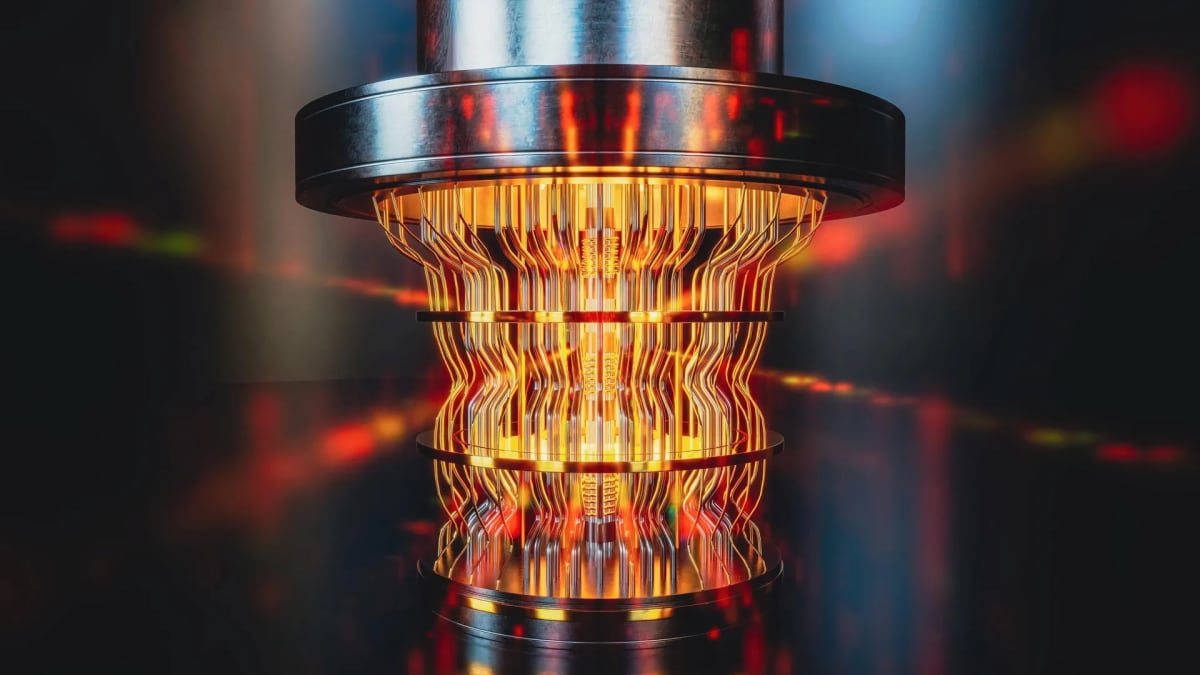
IBM Quantum Computer Solves Problem in 15 Minutes
A quantum computer just cracked a problem that would take conventional supercomputers an impractical amount of time, completing the task in about 15 minutes while proving its answer was reliable. This breakthrough marks a major step toward quantum computers we can actually trust.
Scientists have crossed a computing threshold that seemed almost impossible just years ago.
IBM researchers and a team from the University of Chicago built a quantum computer that solved a problem beyond the practical reach of today's most powerful classical computers. The quantum machine finished the calculation in roughly 15 minutes, but the real breakthrough wasn't just speed.
For the first time, researchers achieved something the quantum computing field has desperately needed: proof that the answer can be trusted. When quantum computers tackle problems too complex for classical machines to check, verifying the results becomes nearly impossible. It's like asking someone to grade homework when the problems are too hard for the teacher to solve.
The team cracked this challenge by developing a new approach to quantum computing that lets errors be detected during the calculation itself. The method preserves the computational difficulty that makes the problem hard for classical computers while adding structure that allows verification.
The experiment ran on 70 logical qubits, special units of quantum information protected from errors and noise. Think of them as reinforced building blocks that stay stable even when the quantum environment gets messy. The system performed thousands of complex operations while maintaining error rates 10 times lower than the underlying physical components.
"We are now firmly in the quantum advantage era," said Jay Gambetta, Director of IBM Research. The demonstration gives scientists and businesses a new foundation for trusting quantum computers as they tackle even bigger challenges.
Why This Inspires
This breakthrough matters because it solves two problems at once. Quantum computers have shown flashes of impressive speed before, but without reliable verification, those demonstrations remained more like laboratory curiosities than practical tools.
Now researchers have a path forward that combines speed with trust. The team made their circuits and experimental results publicly available through the Quantum Advantage Tracker, inviting other scientists to build on this work.
Bill Fefferman, Associate Professor at the University of Chicago, emphasized that verification advances could unlock practical applications for the next generation of quantum computers. His PhD student Soumik Ghosh added that these techniques strengthen experimental validation in ways that matter beyond the lab.
The implications stretch across industries that desperately need computing power beyond what today's machines can deliver: drug discovery, climate modeling, materials science, and optimization problems that affect everything from traffic flow to supply chains.
Quantum computing has long promised a revolution but struggled with the messy reality of unstable qubits and unverifiable results. This experiment shows those obstacles aren't insurmountable. We're watching the future of computing take shape in real time, one verified calculation at a time.
Based on reporting by Science Daily
This story was written by BrightWire based on verified news reports.
Spread the positivity!
Share this good news with someone who needs it