IIT Guwahati Uses Bacteria to Clean Toxic Lead Wastewater
Researchers at IIT Guwahati have developed a biological process that uses naturally occurring bacteria to remove toxic lead from industrial wastewater without harsh chemicals. The breakthrough could help protect millions of Indian children exposed to lead contamination from battery recycling plants.
Nearly 275 million children in India have dangerous levels of lead in their blood, mostly from contaminated wastewater that seeps into rivers and soil. Now, scientists have found a way to fight this invisible crisis using one of nature's smallest helpers: bacteria.
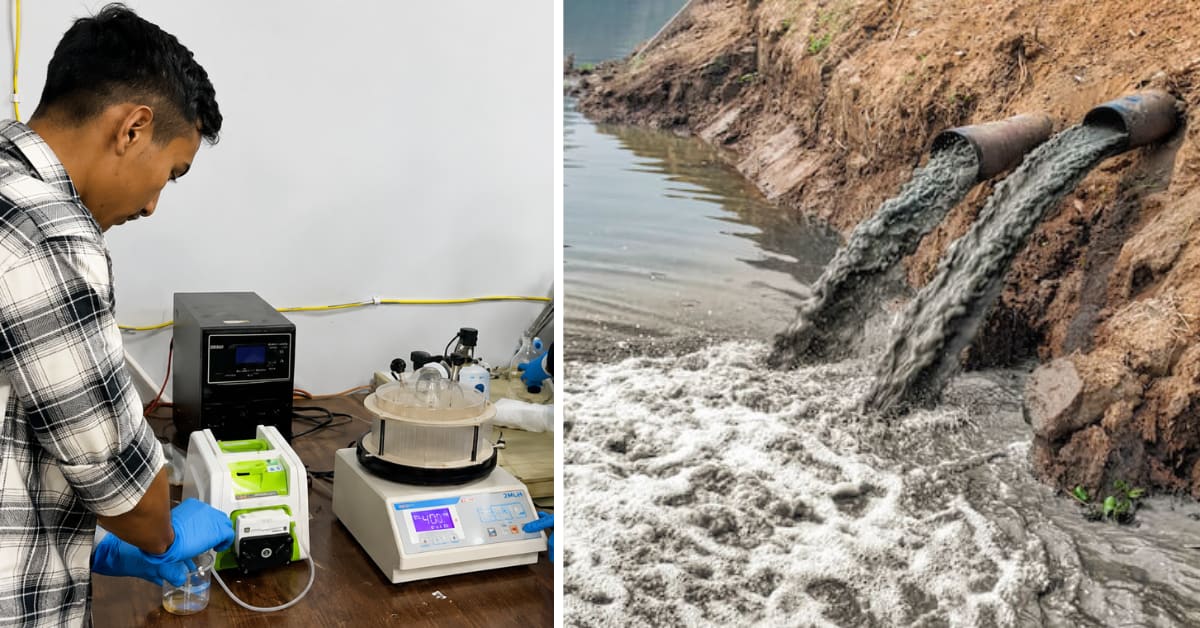
Researchers at IIT Guwahati developed a biological treatment system that pulls toxic lead out of acidic industrial wastewater. Instead of dumping chemicals into the water, they trained special bacteria to do the cleanup work naturally.
Professor Pranab Kumar Ghosh and research scholar Sreekanth Yadav Golla used sulphate-reducing bacteria, microorganisms that thrive in oxygen-free environments. These bacteria convert sulphate in wastewater into sulphide, which then reacts with dissolved lead to form lead sulphide, a solid mineral that's easy to remove.
The challenge was keeping the bacteria alive in such hostile conditions. Wastewater from battery recycling units is extremely acidic and loaded with heavy metals that kill most living organisms.
The team solved this by gradually training the bacteria to tolerate increasingly harsh conditions. Step by step, they acclimatized the microorganisms until they could survive and work in the very wastewater they were meant to clean.
The method worked. The biological reactor successfully removed lead and converted it into stable lead sulphide while producing far less hazardous sludge than traditional chemical treatments.
Safety tests on the leftover bio-sludge showed that most lead remained locked in stable forms that don't easily dissolve or move. Only tiny amounts of lead leached out, staying well below regulatory limits. This means the treated waste is much less likely to re-contaminate soil or groundwater.
The Ripple Effect
This breakthrough could transform how India's battery recycling, mining, and metallurgical industries handle contamination. Chemical treatments are expensive, time-consuming, and create mountains of toxic sludge that must be carefully disposed of or risk becoming another source of pollution.
The bacteria-driven approach offers a cleaner path forward. It tackles the problem at its source while generating less hazardous waste and potentially lowering treatment costs.
The researchers are now working to make the process more economical and exploring whether useful metals can be recovered during treatment. If the technology scales successfully, it could be deployed at recycling plants and industrial sites across India.
For the millions of children already affected by lead exposure, this innovation represents hope for a future where their water and soil are no longer quietly poisoned by industrial waste.
More Images
.png)
%2Fenglish-betterindia%2Fmedia%2Fmedia_files%2F2026%2F06%2F29%2Favantika-featured-image-template-26-2026-06-29-18-58-37.png)

Based on reporting by The Better India
This story was written by BrightWire based on verified news reports.
Spread the positivity!
Share this good news with someone who needs it