India Electrifies 99% of Railway, Outpaces China and Japan
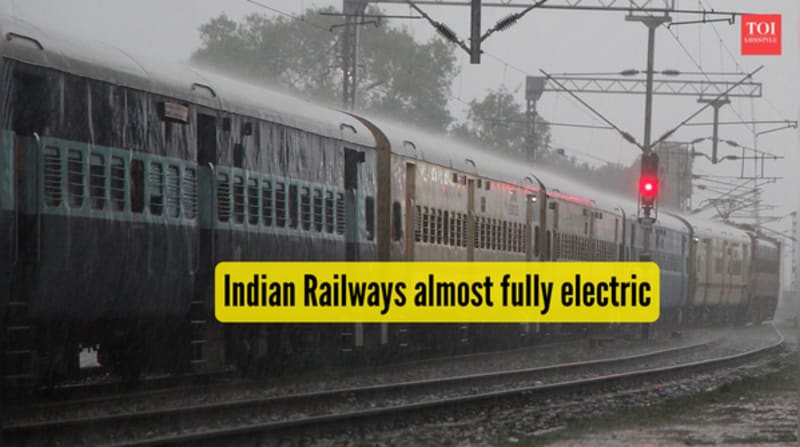
India has electrified 99.2% of its massive railway network, transforming from just 24% in 2000 to become one of the world's most electric rail systems. The achievement puts India ahead of global leaders like China, Japan, and France in rail electrification.
India just pulled off one of the biggest green transport wins in modern history, electrifying nearly its entire railway network in record time.
As of November 2025, Indian Railways has electrified 69,427 route kilometers, covering 99.2% of its broad gauge tracks. That puts the country ahead of rail powerhouses like China (82%), Japan (64%), and France (60%) in percentage of electrified routes.
The transformation happened remarkably fast. From 2004 to 2014, India electrified rail tracks at about 1.4 kilometers per day. Between 2019 and 2025, that pace exploded to 15 kilometers per day, a tenfold increase in speed.
The journey started small. In 1925, India launched its first electric train between Bombay Victoria Terminus and Kurla Harbour using a 1,500 Volt DC system. By the time India gained independence in 1947, only 388 route kilometers had been electrified, with steam and diesel locomotives dominating the landscape.
Progress crawled for decades. By 2000, just 24% of India's rail network ran on electricity. By 2017, that number had climbed to 40%. Then something shifted.
From 2014 to 2025, India electrified 46,900 route kilometers, pushing the network to near-complete electrification by 2024's end. The acceleration represents both an environmental commitment and an infrastructure revolution for a country that moves millions of passengers daily.
The Ripple Effect
India now joins an elite group led only by Switzerland, which achieved 100% electrification using renewable hydroelectric power. The switch from diesel to electric trains means cleaner air in cities and stations across India, reducing carbon emissions from one of the world's busiest transport systems.
The electrification also cuts operational costs. Electric trains cost less to run than diesel locomotives, savings that can improve service quality and affordability for everyday travelers. For a country where railways serve as the lifeline connecting remote villages to major cities, this matters enormously.
The speed and scale of India's achievement stands out globally. China operates the world's largest high-speed rail network but still relies on diesel for freight and remote routes. Japan's legendary Shinkansen runs entirely on electricity, but rural lines remain non-electrified. Even the United Kingdom, with one of the world's oldest rail systems, has electrified only 39% due to high upgrade costs.
India proved that a developing nation with vast geography and complex terrain could transform legacy infrastructure at unprecedented speed, creating a cleaner future for generations of travelers.
More Images

Based on reporting by Times of India - Good News
This story was written by BrightWire based on verified news reports.
Spread the positivity!
Share this good news with someone who needs it