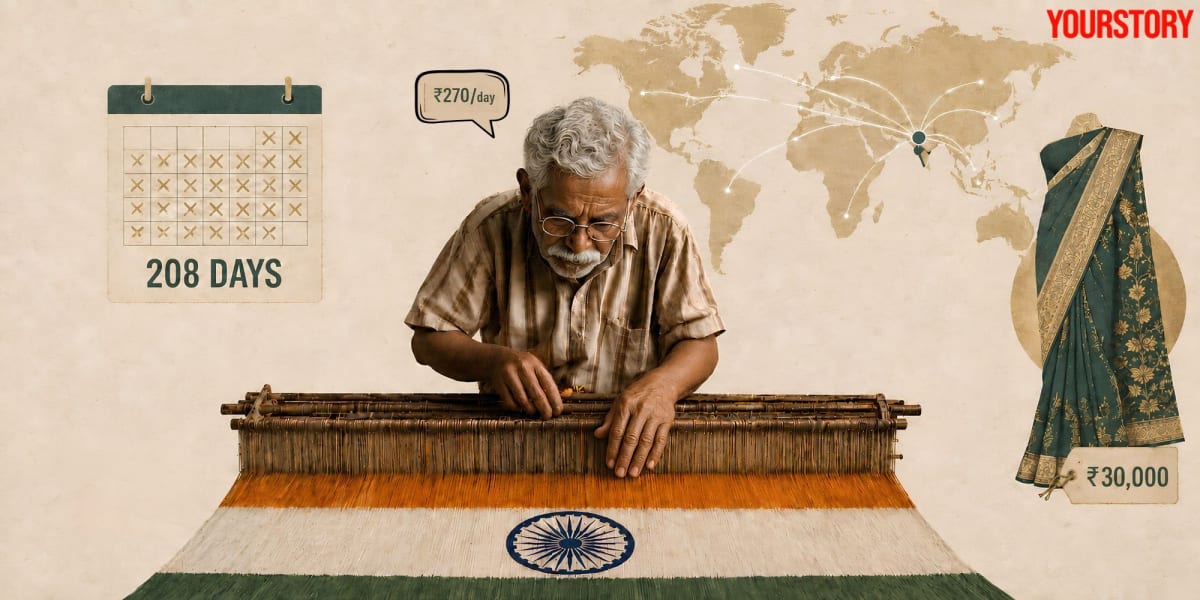
India Employs 3.5M Handloom Weavers Making 95% of Global Cloth
India produces 95% of the world's handwoven fabric and employs 3.5 million artisans keeping ancient weaving traditions alive. Now the country is working to ensure these skilled weavers earn sustainable livelihoods from their craft.
India has accomplished something remarkable: keeping alive weaving traditions that disappeared almost everywhere else during industrialization. More than 3.5 million weavers across the country still practice techniques passed down through generations, creating 95% of all handwoven fabric worldwide.
That achievement deserves recognition. But the bigger challenge is making sure these artisans can actually thrive doing what they do best.
The numbers tell a complex story. A handcrafted Kanjeevaram sari can sell for $350 or more in showrooms. Yet a recent study across five states found weavers adding about $85 in value per month on average, working around 200 days per year in rural areas.
The gap isn't about lazy middlemen or greedy retailers. Silk, dye, design, and retail costs all add up legitimately. The real issue is simpler: weavers sit idle two days out of every five because there isn't enough work.
Rural weavers averaged 201 working days in the most recent census, up from 183 previously. That's progress, but it means the core problem is getting consistent orders to the loom, not just better pay per piece.
The Ripple Effect
Women make up 72% of India's handloom workforce, more than 2.5 million artisans. Their income supports entire families and keeps craft villages economically viable. When weaving work increases, it creates ripples across rural communities where 89% of weavers live.
The solution is already taking shape. India launched certification programs to help customers identify authentic handwoven products and ensure premiums reach artisans. Fewer than 25% of weavers had bank accounts in the last census, but digital payment systems are slowly connecting them directly to distant buyers.
Design institutions and export channels are working to generate steady order flows. The goal isn't removing traders who finance materials and manage logistics. It's giving weavers visibility into pricing, access to multiple buyers, and bargaining power.
India kept these ancient skills alive through more than a century of industrialization. Now it's building the economic systems to turn survival into prosperity, one loom at a time.
More Images


Based on reporting by YourStory India
This story was written by BrightWire based on verified news reports.
Spread the positivity!
Share this good news with someone who needs it