India Hits 50% Clean Energy—Now Racing to Store It
On a single morning in July 2026, clean energy powered over half of India's electricity grid for the first time. The country's next challenge is making that power last after sunset.
For a few minutes on July 6, 2026, India reached a milestone no one had seen coming quite so fast. Clean energy sources met 50% of the country's electricity demand, five years ahead of the commitment made at the global climate summit.
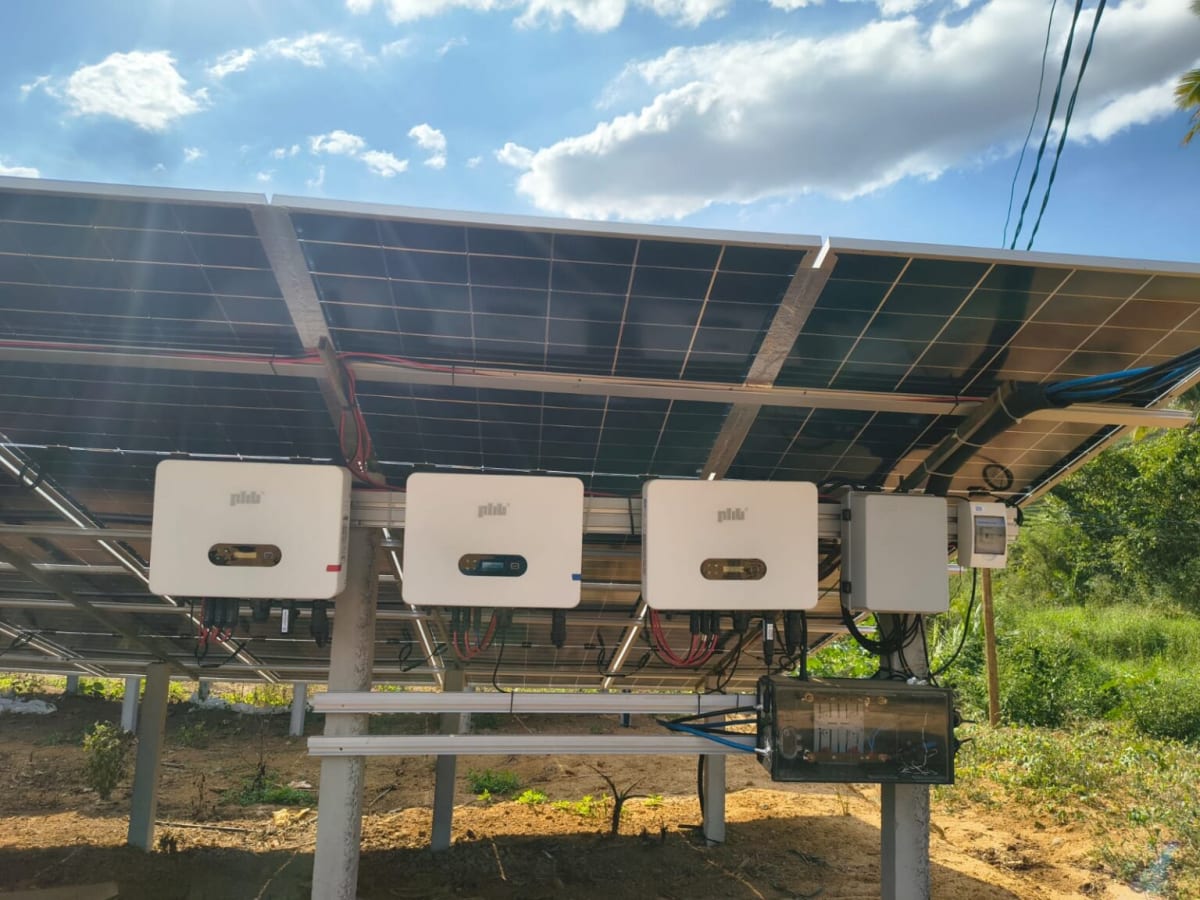
India's renewable capacity now sits at 282.7 GW, comfortably ahead of coal and gas at 250.8 GW. Solar farms stretch across deserts, wind turbines line coastal highways, and the world's largest renewable energy park in Kutch now covers an area five times the size of Paris.
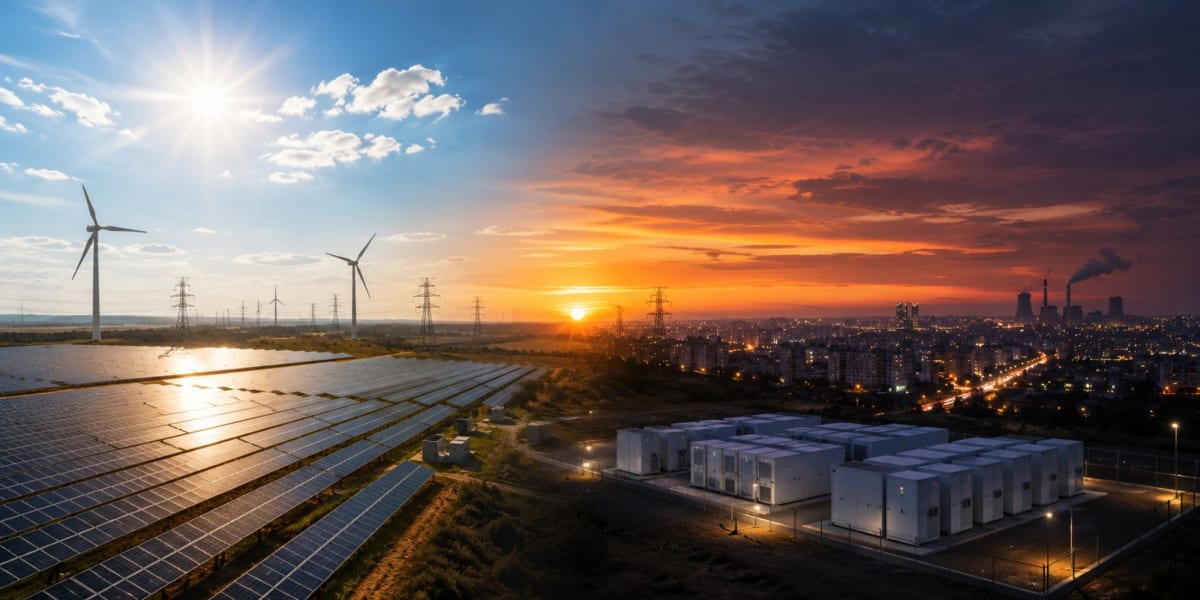
But by dinnertime that same day, coal was back in charge. Solar generates nothing after dark, and India's evening peak demand hits when families turn on lights, air conditioners hum, and cities light up.
The country is now racing to solve what engineers call the duck curve. Solar floods the grid at noon when demand is moderate, then disappears exactly when people need it most.
India's battery storage capacity jumped eleven times in a single year, reaching 8.5 GWh in early 2026. The government exempted customs duties on lithium-ion battery components, waived transmission charges for storage projects, and allocated billions in funding to close the evening gap.
Adani Green commissioned 3.37 GWh of battery storage at its massive Khavda site in just ten months, the largest deployment outside China. Tata Power, JSW Energy, and others are building out gigawatt-hours of capacity across Rajasthan and beyond.
The Ripple Effect
The smartest solution might also be the cheapest. India is starting to explore demand flexibility, where households and factories get paid to shift electricity use into solar hours.
A factory running machinery at 1 pm instead of 9 pm needs no new batteries. An electric vehicle charging at noon instead of midnight shrinks the evening peak without a single new power plant. A building making ice during the day can cool itself at night.
The United States already has up to 60 GW of aggregated demand flexibility, treating reduced consumption like generation. A hundred thousand air conditioners dialed back together for twenty minutes becomes a virtual power plant.
Tata Power launched Mumbai's first program in 2023, targeting 75 MW of peak reduction by coordinating when 61,000 consumers use electricity. It's a tiny start, but it shows what's possible when millions of devices work together.
India proved it could build renewable capacity faster than almost anyone predicted. Now it's proving it can build the systems to make that clean power work around the clock.
More Images




Based on reporting by YourStory India
This story was written by BrightWire based on verified news reports.
Spread the positivity!
Share this good news with someone who needs it