Smart Tech Helps Brazilian Solar Farms Beat Grid Limits
Brazilian solar installers are using clever controllers to install systems up to six times larger than utilities allow, powering local operations while staying within export rules. The breakthrough is helping farmers expand their businesses without waiting years for grid upgrades.
Coffee growers and farmers in Brazil are getting around strict power export limits with a simple but brilliant solution that lets them generate way more solar energy than their local grid can handle.
The problem started in 2024 when Brazilian utilities began restricting how much solar power small businesses could send back to the grid. In some regions, the limit dropped to just 7.5 kilowatts because local power lines couldn't handle electricity flowing backward from multiple solar installations.
For the Guisolphi family, specialty coffee producers in Espírito Santo, that tiny limit would have crushed their expansion plans. They needed serious power to process more beans, but the utility said they could only export enough electricity to run a few appliances.
Their solar installer, Alba Energia, had a better idea. They installed a system that generates 37.2 kilowatts but uses a smart controller to regulate what goes back to the grid. When the coffee operation needs power during the day, the system delivers it directly to their equipment. Only the leftover electricity, capped at 7.5 kilowatts, gets exported.
The approach worked so well that farmer Célio Marins Tatagiba used the same strategy to shift his irrigation schedule. He was watering crops at night because of special electricity rates but wanted to switch to daytime to make maintenance easier and reduce overnight labor costs.
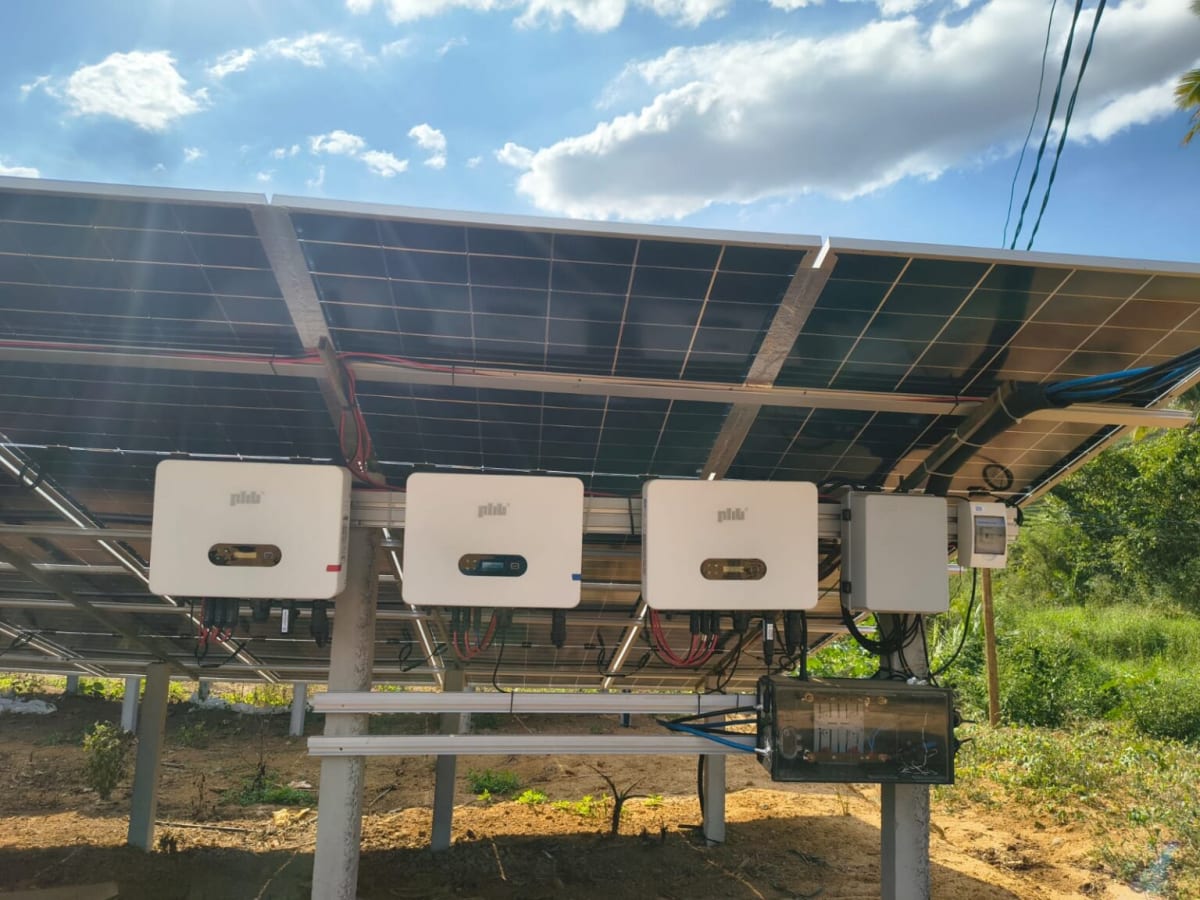
Alba installed a 48.36 kilowatt system with three inverters, even though the utility only approved 11 kilowatts of exports. The extra power runs his water pumps during the day, and the controller makes sure he never exceeds the grid limit.
Director Adalberto Vargas Ribeiro says the smart controllers connect two realities. If customers have equipment running, the solar electricity powers their operations directly. If demand drops, the system automatically limits what flows back to the grid.
The approach beats going fully off-grid, which Ribeiro rarely recommends. In Espírito Santo, power outages are uncommon, and local utilities like Santa Maria restore service quickly. Off-grid customers depend entirely on their installer for emergency support, which can mean longer waits when something breaks.
The Ripple Effect
This solution is opening doors for rural businesses across Brazil that were stuck between needing more power and facing grid constraints. Farmers no longer have to wait up to 12 months for their higher electricity usage to show up in utility records. Coffee processors, irrigators, and other agricultural operations can expand now instead of postponing growth.
The technology proves that creative engineering can turn roadblocks into pathways forward, giving small producers the energy independence they need while respecting grid limitations.
More Images


Based on reporting by PV Magazine
This story was written by BrightWire based on verified news reports.
Spread the positivity!
Share this good news with someone who needs it