Moroccan Team Cuts Solar Platform Drift by 72%
Scientists in Morocco invented a remarkably simple pulley system that keeps floating solar panels stable on water without using any sensors, motors, or electricity. The passive mechanism slashed horizontal drift by up to 72% while automatically following water level changes throughout the seasons.
Solar panels floating on reservoirs and lakes just got a brilliant upgrade that solves two problems at once, using nothing more than pulleys and counterweights.
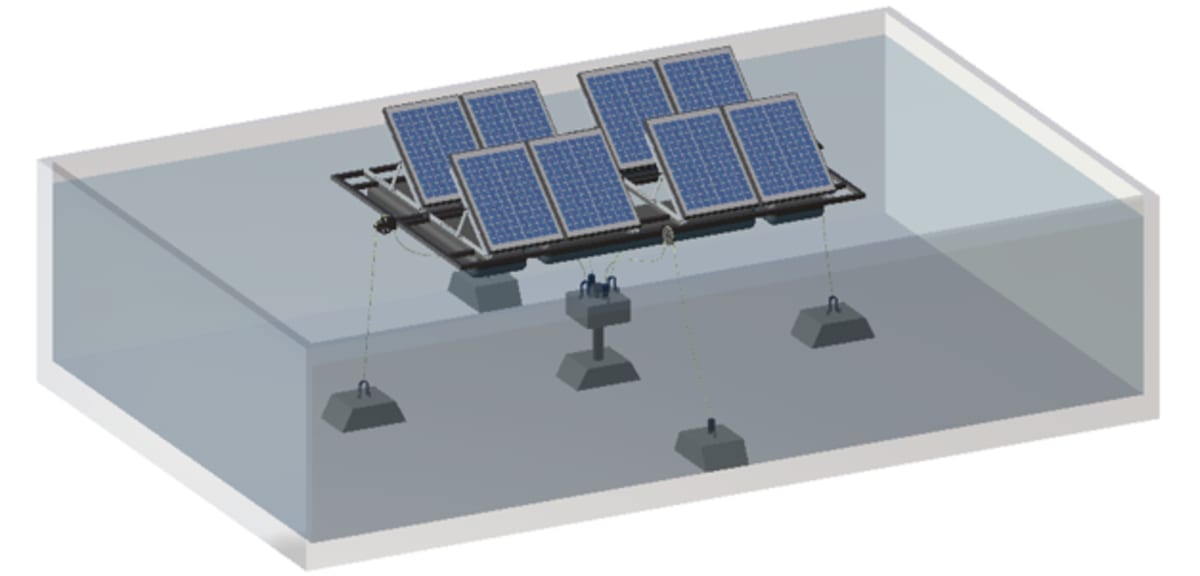
A research team from Morocco's Mohammed VI Polytechnic University designed a mooring system for floating solar installations that automatically adjusts to rising and falling water levels while keeping the platforms remarkably stable. The beauty lies in its simplicity: no sensors, no motors, no power required.
"Floating solar systems face two simultaneous mechanical challenges," explained lead researcher Nouhayla Sahlaoui. They must follow water levels that can shift several meters with the seasons while remaining stable against waves and wind.
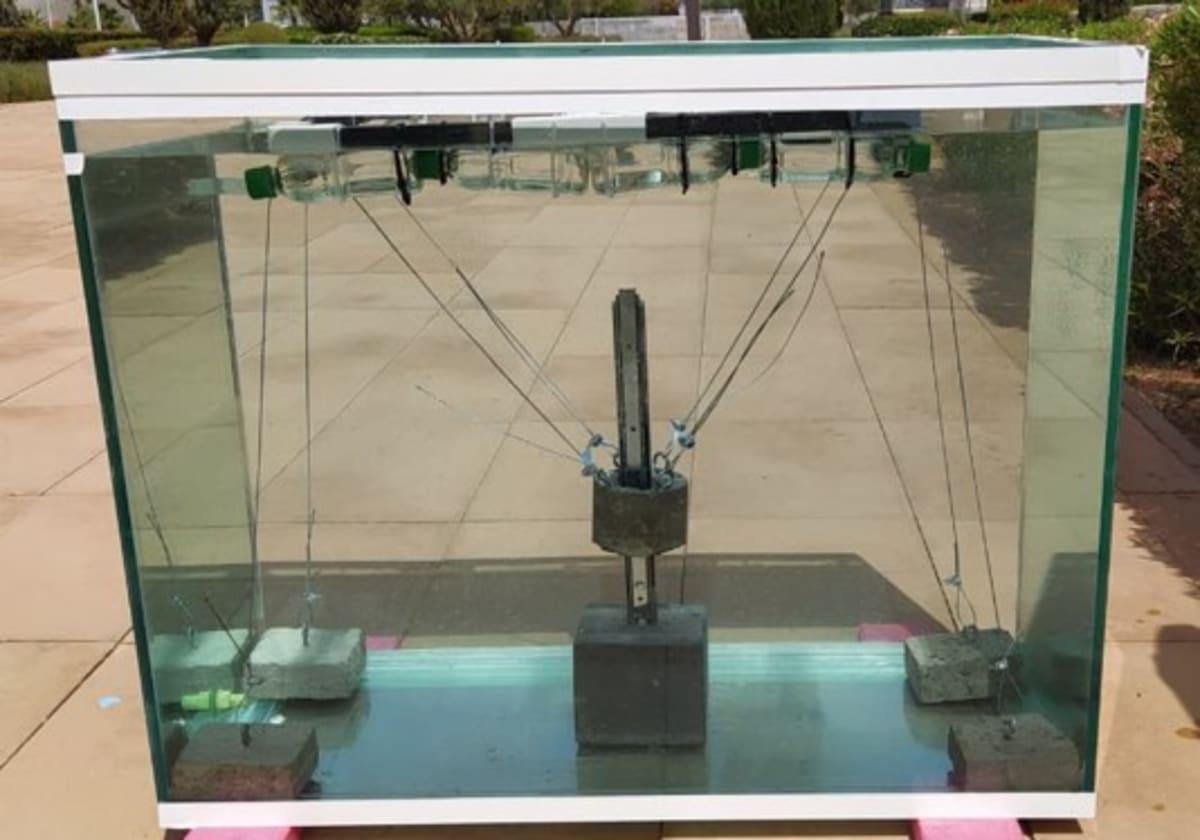
The team's solution uses a counterweight attached to pulleys beneath the platform. When water levels rise or fall, the counterweight moves up or down along a central vertical bar, keeping the platform at the correct depth automatically. That same bar prevents the entire platform from drifting too far horizontally.
The researchers built a laboratory model with an aluminum frame, 3D-printed connectors, and 11 plastic floats. They tested it in a glass basin and ran sophisticated computer simulations to measure its performance against traditional mooring systems.
The Bright Side
The results exceeded expectations. Compared to conventional mooring systems under identical wave conditions, the new design reduced drift along the main axis by 72% and perpendicular drift by 66%.
The water-level tracking proved equally impressive. The system achieved 75% tracking efficiency across the full depth range tested, with no tuning or adjustments needed. The geometry and counterweight ratio did all the work.
This matters for remote installations where maintenance is costly and difficult. Floating solar farms typically sit on reservoirs, irrigation ponds, or hydroelectric facilities where water levels fluctuate significantly. A system that manages itself without external power or regular servicing could make these installations far more practical and affordable.
The team is already planning the next steps: scaling up to operational size, testing with real water conditions, and eventually deploying a pilot system in the field. They published their findings in Scientific Reports to help other researchers build on their work.
What started as a basic engineering challenge became a lesson in elegant problem solving. Sometimes the best innovations don't require cutting-edge technology, just creative thinking about how simple mechanical principles can work together. This pulley system proves that passive solutions can outperform active ones when the design is right.
More Images


Based on reporting by PV Magazine
This story was written by BrightWire based on verified news reports.
Spread the positivity!
Share this good news with someone who needs it