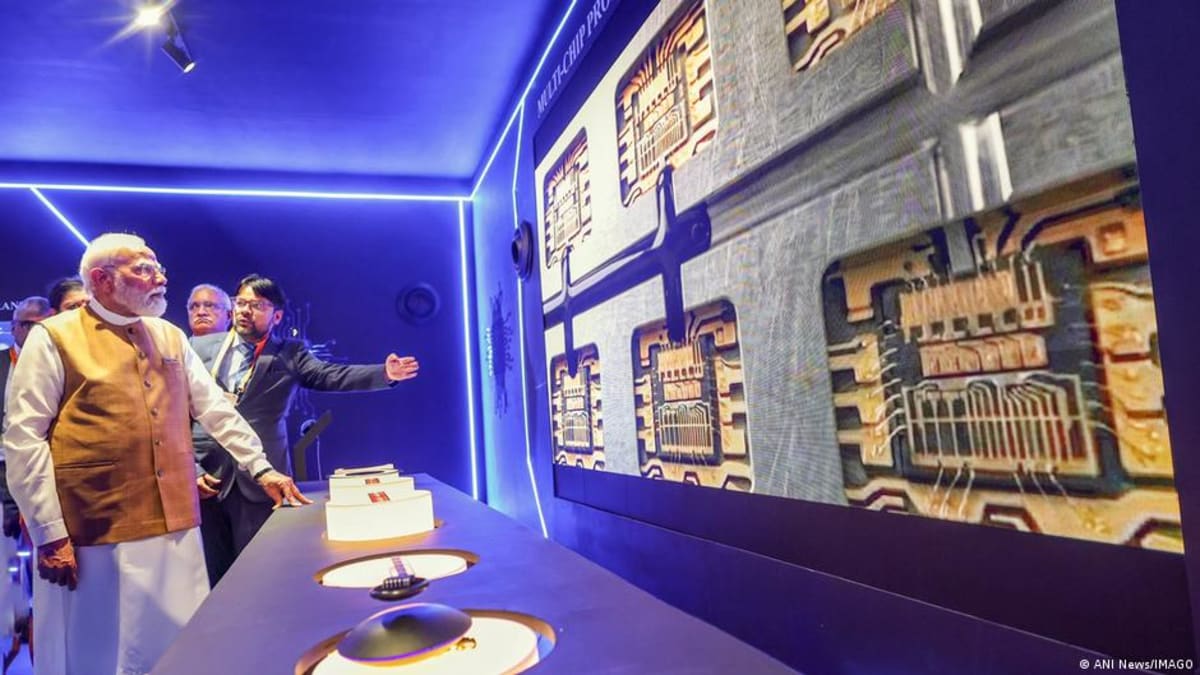
India Invests $13B to Become Global Chip Manufacturing Hub
India just launched a $13.2 billion program to transform itself into a major semiconductor manufacturer, aiming to reduce the world's dangerous dependence on Taiwan for 90% of advanced chips. The country already designs some of the world's most sophisticated chips but now wants to manufacture them at scale.
India is making its biggest bet yet to change how the world makes computer chips, and the timing couldn't be more important.
The country just approved a massive $13.2 billion semiconductor program called Semicon 2.0. It builds on an earlier $9 billion initiative and targets every part of chip production, from design and manufacturing to packaging and training workers.
Right now, more than 90% of the world's most advanced semiconductor chips come from Taiwan. When COVID-19 disrupted supply chains, car manufacturers worldwide had to halt production because they couldn't get enough chips. The crisis exposed a harsh reality: the global economy relies dangerously on a handful of manufacturers in one small region.
India already has serious chip design credentials. Thousands of engineers in cities like Bengaluru, Hyderabad and Noida design sophisticated chips for tech giants like Nvidia, AMD, Qualcomm and Texas Instruments. But designing chips and manufacturing them are two different challenges.
"India already has the expertise to design sophisticated semiconductor chips," said V Kamakoti, director of the Indian Institute of Technology in Madras. "The bigger challenge is manufacturing them."
That's exactly what India wants to change. US chipmaker Micron Technology and two Indian companies, Kaynes Semicon and CG Semi, have already begun commercial production under the first phase of India's semiconductor program. Twelve fabrication and packaging projects have received approval so far.
The government wants India's domestic semiconductor market to reach between $100 billion and $110 billion by 2030. The goal is to meet up to three quarters of India's electronics demand through locally designed and manufactured chips.
The Ripple Effect
India's push could reshape global semiconductor supply chains and reduce dangerous concentration in one region. Countries around the world, including the US, Japan, South Korea and the EU, have launched multi-billion-dollar programs to attract chipmakers and build more resilient supply chains.
The challenge is enormous. A cutting edge fabrication plant costs more than $20 billion and requires uninterrupted electricity, massive amounts of ultra-pure water, and an extensive network of suppliers providing specialized chemicals and precision equipment. But India is betting it can overcome these obstacles.
The shift matters for everyone. Modern semiconductors power everything from smartphones and electric vehicles to aircraft and military systems. A more diverse, distributed manufacturing base means a more stable supply of the technology that runs modern life.
India's transformation from chip designer to chip manufacturer could help the world build a safer, more resilient tech future.
More Images

Based on reporting by DW News
This story was written by BrightWire based on verified news reports.
Spread the positivity!
Share this good news with someone who needs it