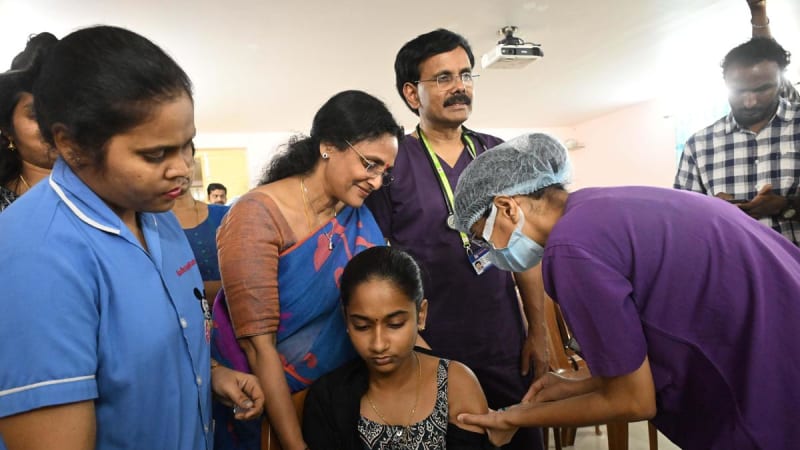
India Launches Major Push to Prevent Cervical Cancer
India is transforming cervical cancer prevention with widespread screening and vaccines, targeting a disease that kills one Indian woman every few minutes. New screening programs have already reached over 100 million women, offering hope in a country that accounts for nearly one-third of global cervical cancer deaths.
Every few minutes, an Indian woman dies from cervical cancer, but that devastating statistic is starting to change. India has screened more than 100 million women for a disease that is almost entirely preventable with early detection and vaccination.
The country faces a staggering burden, with over 122,000 new cervical cancer cases reported annually. Cervical cancer ranks as the second most common cancer among Indian women, yet 75% of patients aren't diagnosed until the disease has already spread, dramatically reducing survival rates.
Here's the breakthrough: nearly all cervical cancers stem from high-risk strains of Human Papillomavirus (HPV), and they develop slowly over years. That means there's a wide window for prevention and early treatment.
The National Health Mission has launched a massive screening program for women aged 30 to 65 across the country. Simple visual inspections, Pap smears, and HPV tests can catch precancerous changes before they become life-threatening, and many of these screenings can happen at basic primary care facilities.
Vaccination offers even more powerful protection. HPV vaccines prevent infection from the strains responsible for 80 to 85% of cervical cancer cases in India. Girls and young women between 9 and 26 years old benefit most from vaccination, ideally before becoming sexually active.
A common misconception is holding women back: many believe only older women face cervical cancer risk. The truth is that young adults often contract HPV shortly after becoming sexually active, and the virus can persist for years before developing into cancer. Nearly 75% of sexually active adults will acquire at least one HPV infection during their lifetime.
India has also developed its own HPV test kits, making screening more accessible and affordable across the country. These homegrown solutions are particularly important in rural and resource-limited areas where healthcare access has traditionally been limited.
Why This Inspires
What makes this story genuinely hopeful is how preventable cervical cancer actually is. Unlike many cancers linked to complex genetic factors, this one has clear prevention pathways: vaccination, regular screening, and early treatment of precancerous changes.
India's comprehensive approach combines education, accessible screening, and locally developed medical tools. The country is proving that even with limited resources, systematic prevention programs can reach hundreds of millions of women.
The survival rate for cervical cancer diagnosed early approaches 100%, compared to just 46% for cases caught at advanced stages in India. Every woman screened is another chance to catch the disease when it's still easily treatable.
With informed choices and sustained awareness, India has a real opportunity to protect women across generations from a disease that doesn't have to be deadly.
Based on reporting by The Hindu
This story was written by BrightWire based on verified news reports.
Spread the positivity!
Share this good news with someone who needs it