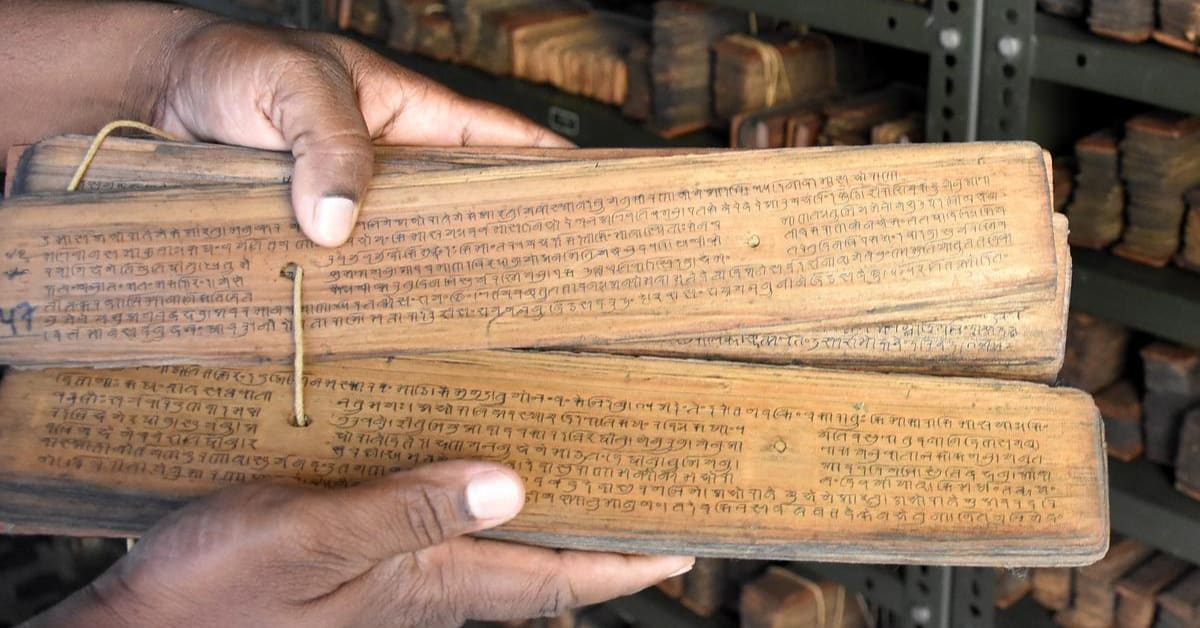
India Saves Ancient Palm Leaf Libraries With Oil and Science
Millions of centuries-old manuscripts written on palm leaves are being rescued across India using traditional herbal oils and modern climate-controlled labs. These fragile texts contain poetry, medicine, and astronomy that would otherwise crumble into dust.
Before paper reached India, scribes carved knowledge onto dried palm leaves that were thinner than cardboard. Hundreds of years later, conservators are racing to save these fragile libraries before humidity, insects, and time erase them forever.
Across India, millions of ancient manuscripts survive on palm leaves, birch bark, and cloth. Palm leaves are the most delicate, easily cracking in heat or attracting termites in tropical climates.
Scribes used leaves from palmyra or talipot palms, drying and polishing them before inscribing text with metal tools. They rubbed ink made from soot into the grooves, then tied the leaves between wooden covers to protect them.
These manuscripts hold texts in Sanskrit, Tamil, Telugu, Malayalam, and other languages. According to the National Mission for Manuscripts, India may possess one of the world's largest manuscript collections spread across temples, monasteries, libraries, and private homes.
Preservation has always been challenging. Ancient custodians treated leaves with lemongrass oil and citronella oil to keep them flexible and repel bugs. Turmeric-based treatments fought microbes naturally.
Some communities stored manuscripts above kitchen hearths where smoke reduced moisture and deterred pests. Custodians regularly aired out collections before monsoon season, knowing that even brief neglect could destroy centuries of knowledge.
Why This Inspires
Today, traditional wisdom meets modern science in temperature-controlled archive rooms. Conservators use soft brushes, magnification tools, and regulated humidity to stabilize fragile leaves without damaging the ancient script.
At the CP Brown Research Centre for Languages, researchers clean manuscripts with surgical spirit and lemongrass oil. At Andhra University, thousands of palm-leaf manuscripts dating back to the eighth or ninth century are being digitized so scholars can study them without repeatedly handling the originals.
High-resolution imaging can reveal faded writing invisible to the naked eye. Digital archives make these texts accessible to researchers worldwide without risking further damage to the physical manuscripts.
The National Mission for Manuscripts, launched in 2003, has documented millions of manuscripts across India. Universities from Assam to South India are creating digital databases that transform how scholars access this knowledge.
These preservation efforts protect more than old texts. They safeguard medical formulas, astronomical calculations, philosophical debates, and poetry that shaped South Asian culture for centuries.
Every rescued manuscript represents knowledge that nearly disappeared and now lives on for future generations to discover.
More Images
%2Fenglish-betterindia%2Fmedia%2Fmedia_files%2F2026%2F05%2F26%2F1-2026-05-26-17-43-22.png)

%2Ffilters%3Aformat(webp)%2Fenglish-betterindia%2Fmedia%2Fmedia_files%2F2026%2F05%2F26%2F2-2026-05-26-17-44-11.png)
%2Ffilters%3Aformat(webp)%2Fenglish-betterindia%2Fmedia%2Fmedia_files%2F2026%2F05%2F26%2F4-2026-05-26-17-45-11.png)
Based on reporting by The Better India
This story was written by BrightWire based on verified news reports.
Spread the positivity!
Share this good news with someone who needs it

%2Fhttps%3A%2F%2Ftf-cmsv2-smithsonianmag-media.s3.amazonaws.com%2Ffiler_public%2F15%2F3b%2F153b5427-10f9-4ad6-b039-8823a36efc6f%2Fhd100065orig.jpg)