India Takes 100 Deep-Tech Startups to France Before G7
India is showcasing its innovation power on the global stage, bringing over 100 cutting-edge startups to France just before the G7 summit. It's a bold declaration that the world's largest democracy is ready to be a creator, not just a consumer.
When India's Prime Minister arrives in Nice, France on June 14, he'll be inaugurating something bigger than a trade show. He'll be announcing that India has arrived as a deep-tech innovator.
Bharat Innovates, led by the Ministry of Education, is bringing 100 to 120 of India's best deep-tech startups to France right before the G7 summit begins. More than 1,800 startups applied for the chance to represent their country on one of the world's biggest stages.
The final selection spans 13 critical sectors: semiconductors, artificial intelligence, space technology, defense, green energy, medical tech, agriculture, and more. These aren't apps or delivery services. These are companies building rocket engines, designing chips, and solving problems that matter globally.
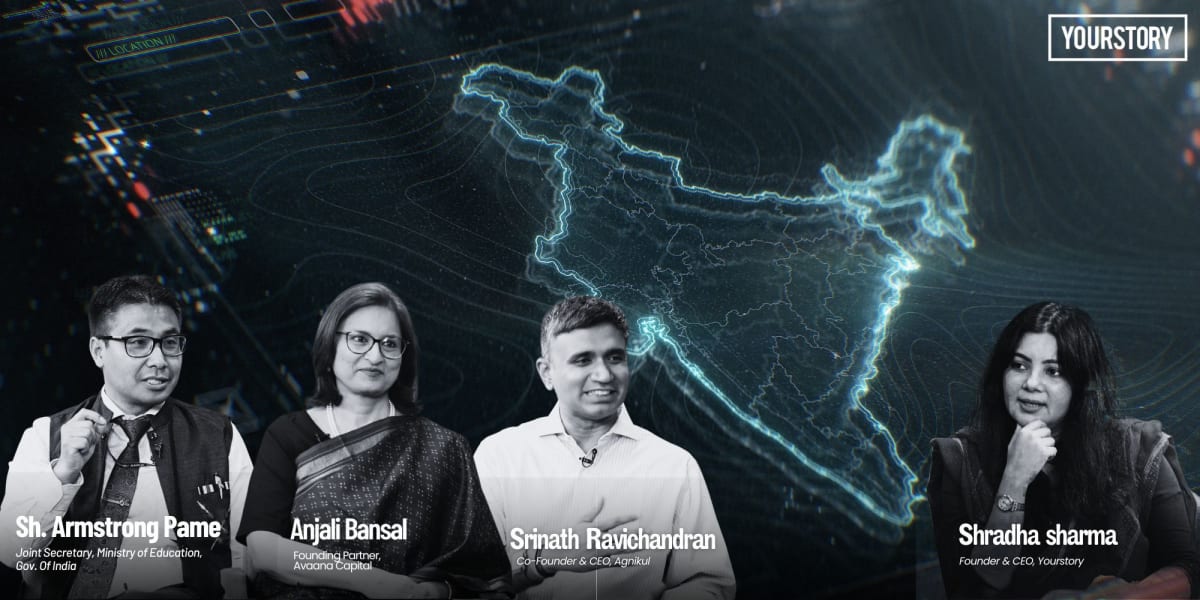
"For a really long time, we have been seen only as a consumer of products and some technologies," said Armstrong Pame, Joint Secretary in the Ministry of Education. "What Bharat Innovates intends to promote is to showcase that the best of innovation is coming out of India."
The venue choice tells its own story. Nice sits next to Sophia Antipolis, Europe's first innovation ecosystem, home to 2,400 companies across 2,400 hectares. India is literally knocking on Europe's innovation door.
Anjali Bansal, Founding Partner of Avaana Capital, calls it "the magic trifecta." Policy support is unprecedented, capital is flowing in, and India's talent pool is massive. The government has committed one lakh crore rupees (about $12 billion) to research and development, which she expects to create a 5x multiplier effect.
Srinath Ravichandran knows what it takes to build in deep tech. His company, Agnikul Cosmos, created the world's first 3D-printed single-piece semi-cryogenic rocket engine. When he started, people thought he was joking about building rockets in India.
Not anymore. "Today is actually the easiest point to get started," Ravichandran said. "Policy, capital, general acceptance. If your heart is in the right place, the government is going to have your back."
The event also puts Indian universities center stage for the first time. Fifteen to twenty institutions, including IITs and IIMs, will showcase their work alongside global universities, with international partnerships expected to be signed during the event.
India has 46 million students in higher education, the largest English-speaking student population in the world. That's not just a statistic. It's the raw material for the next generation of global innovation.
The Ripple Effect
This moment represents more than trade diplomacy. For thousands of Indian founders working in labs and garages, it's validation that their work matters on a global scale. When a government backs innovation this loudly, it changes what seems possible.
The shift from consumer to creator doesn't happen with policy alone. It happens when rocket scientists stop feeling like they're joking and start feeling like they're building the future.
India's deep-tech wave is just beginning, and the world is about to notice.
More Images

Based on reporting by YourStory India
This story was written by BrightWire based on verified news reports.
Spread the positivity!
Share this good news with someone who needs it