India Tests Homegrown Buoy to Boost Offshore Wind Power
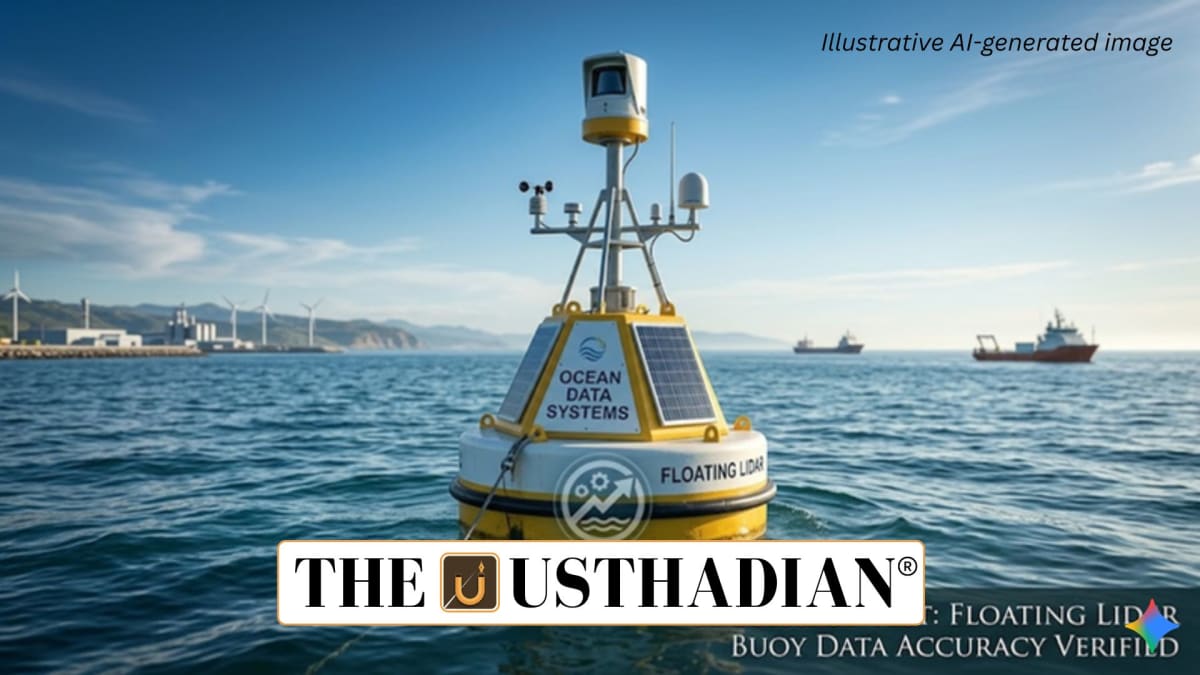
India just successfully tested its first homegrown floating wind measurement system off the Tamil Nadu coast, a breakthrough that could unlock the country's massive offshore wind energy potential. The technology will help identify the best spots to build ocean wind farms without relying on expensive foreign equipment.
India just took a major leap toward cleaner energy by successfully testing a sophisticated floating buoy that measures ocean winds with pinpoint accuracy. The National Institute of Ocean Technology deployed the device near Muttom coast in Tamil Nadu, proving that India can build advanced marine technology without depending on other countries.
The buoy uses LiDAR technology, which works like radar but with lasers instead of radio waves. It shoots laser pulses into the air and analyzes how particles bounce them back, creating a detailed map of wind speeds and directions at different heights above the ocean.
Why does a floating buoy matter so much? Because India's coastline holds enormous potential for offshore wind farms, especially along Tamil Nadu and Gujarat. Ocean winds blow more steadily than land winds, making offshore turbines more reliable energy producers. But building wind farms in the ocean is expensive and risky without knowing exactly where the best winds are.
Traditional methods use fixed towers called meteorological masts, which are costly to install in deep water. This floating buoy costs less, works in harsh marine conditions, and sends real-time data back to shore automatically. It can stay out at sea for months, continuously gathering the precise information engineers need to plan effective wind farms.
The timing couldn't be better. India has committed to reaching 500 gigawatts of renewable energy capacity by 2030, an ambitious goal that requires every clean energy source available. Offshore wind remains largely untapped in India, but data from these buoys will change that.
The Ripple Effect
This successful test opens the door to deploying similar buoys all along India's 7,500-kilometer coastline. Each buoy will gather years of wind data, helping identify the most productive locations for offshore wind farms. That means more reliable renewable energy flowing to homes and businesses, reducing dependence on fossil fuels.
The indigenous technology also means India can export this expertise to other developing nations facing similar challenges. Countries across Asia and Africa with long coastlines could benefit from affordable wind measurement systems. India's innovation in marine technology strengthens its position as a leader in practical climate solutions.
The research doesn't just serve wind energy either. The atmospheric and ocean data collected helps improve weather forecasting, understand climate patterns, and support marine research. Scientists gain valuable information about how our oceans and atmosphere interact.
India is proving that developing nations can lead in clean energy innovation, not just follow.
More Images




Based on reporting by Google: wind energy success
This story was written by BrightWire based on verified news reports.
Spread the positivity!
Share this good news with someone who needs it