Indian Artisans Reach Global Markets Through Their Phones
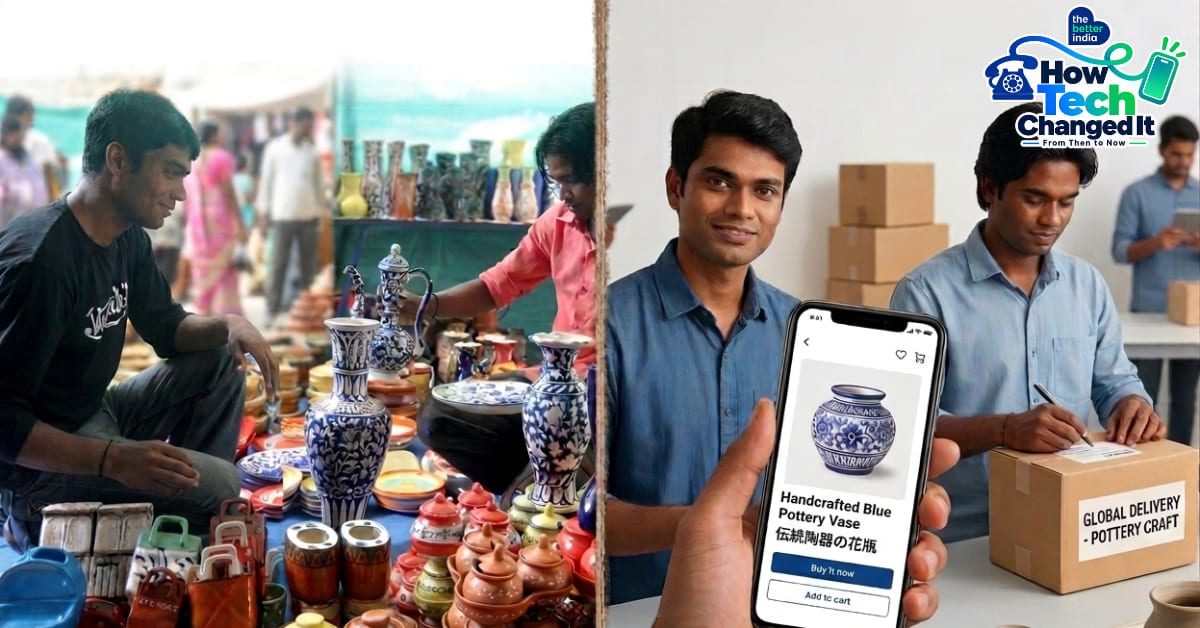
Traditional craftspeople in India are breaking free from local markets by selling their handmade goods online. Technology is helping village artisans find customers thousands of miles away without changing how they make their crafts.
A woman stitching embroidered bags in a Kutch village can now sell directly to someone in Mumbai, Delhi, or even New York without ever leaving her home.
Pabiben Rabari grew up surrounded by Rabari embroidery, a traditional craft passed down through generations of women in her community. When restrictions on wedding embroidery threatened to make the elaborate craft disappear in the 1990s, women adapted by creating a faster technique called Hari Jari. Pabiben turned this into the Pabi Bag, a product people outside Kutch wanted to buy.
The real change came in 2015 when she launched Pabiben.com. Today, her website connects more than 300 women artisans with customers around the world. Instead of waiting for buyers to visit local markets, these craftswomen now reach shoppers who discover them online.
Khurja, a town in Uttar Pradesh, tells a similar story on a larger scale. For over 600 years, potters there have shaped clay into hand-painted ceramics, earning the town the nickname "India's Ceramic City." Buyers once had to travel to Khurja or work through wholesalers to purchase the pottery.
Now anyone can order Khurja mugs, planters, and dinner sets with a few clicks. The ceramics have even reached international markets. The potters still shape vessels by hand using the same techniques their ancestors used, but the path to customers has completely changed.
This shift extends beyond individual artisans. More than 50,000 small retailers and neighborhood stores across India have joined online marketplace programs like Amazon's Local Shops. These businesses keep their physical locations but gain access to customers they could never reach before.
The Ripple Effect
Technology is preserving traditional crafts by making them economically viable for a new generation. Young artisans see that their inherited skills can support their families without requiring them to move to cities for work. Communities that might have lost their craftspeople to migration are finding reasons to stay together.
The village bazaar hasn't disappeared, but its walls have stretched across state lines and oceans, carried by smartphones and delivery trucks.
One stitch, one brushstroke, and one ceramic bowl at a time, India's traditional craftspeople are writing a new chapter where heritage meets opportunity.
More Images
%2Fenglish-betterindia%2Fmedia%2Fmedia_files%2F2026%2F09%2F15%2Fonline-shopping-2026-09-15-13-08-51.png)
%2Ffilters%3Aformat(webp)%2Fenglish-betterindia%2Fmedia%2Fmedia_files%2F2026%2F09%2F15%2Fonline-shopping-2026-09-15-13-10-24.png)
%2Ffilters%3Aformat(webp)%2Fenglish-betterindia%2Fmedia%2Fmedia_files%2F2026%2F09%2F15%2Fonline-shopping-2026-09-15-13-14-28.png)
Based on reporting by The Better India
This story was written by BrightWire based on verified news reports.
Spread the positivity!
Share this good news with someone who needs it