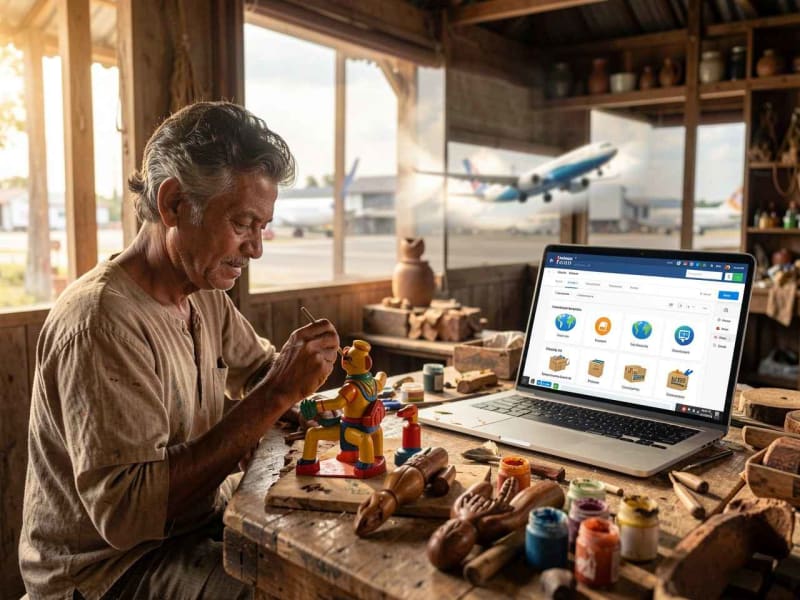
Indian Craft Village Goes Digital, Drawing Global Tourism
Nearly 150 traditional toy makers in India's Kondapalli village learned e-commerce skills, potentially transforming cultural tourism patterns. The Ratan Tata Innovation Hub training could reshape how global travelers discover India's craft heritage.
A small village of wooden toy carvers in India just learned to sell online, and the move could change where millions of tourists go next.
The Ratan Tata Innovation Hub recently trained nearly 150 artisans in Kondapalli, a village near Vijayawada in Andhra Pradesh, in global e-commerce strategies. These craftspeople have carved traditional wooden toys for centuries, but until now, reaching international customers meant waiting for buyers to find them.
The timing aligns with India's tourism surge. The country welcomed 9.95 million foreign visitors in 2024, with the United States sending 1.8 million travelers and the United Kingdom contributing over one million. Andhra Pradesh saw foreign visits jump from 60,426 to 262,431 in a single year.
International travelers increasingly seek authentic cultural experiences over standard sightseeing. Heritage crafts offer exactly that immersion. When artisans can showcase their work digitally, they become destinations themselves.
Vijayawada's Gannavaram Airport, just 25 kilometers from Kondapalli, handled 1.38 million passengers in the 2024-25 fiscal year. Improved regional connectivity makes visiting craft villages easier than ever. Visitors landing in major cities increasingly add these regional stops to their itineraries.
The Ripple Effect
The digital training extends beyond individual artisan income. Airlines operating India routes are watching regional tourism patterns closely. United Airlines, British Airways, and Air India all maintain strong connections between India and top visitor markets including Australia, Canada, Germany, France, Singapore, and Malaysia.
When secondary destinations gain visibility, travel patterns shift. Passengers book longer stays. Hotels in tier-two cities see more weekend bookings. Cultural tourism creates jobs beyond the craft itself, from guides to drivers to hospitality workers.
Major hospitality brands like Marriott and Hyatt already operate in nearby cities serving business travelers. Experience-driven tourism adds leisure demand to their existing customer base. Germany sent over 250,000 travelers to India in 2024, and France contributed more than 200,000. Both markets show strong interest in handmade products and sustainable tourism.
Foreign exchange earnings from tourism reached ₹2.93 trillion in 2024. When craft villages become e-commerce savvy, they don't just preserve tradition. They create economic value that keeps younger generations engaged in heritage work.
India now offers e-visas to 167 countries, removing barriers that once slowed travel growth. As access improves and regional airports expand, the villages that master digital visibility stand to benefit most.
One digital training session in a wooden toy village might seem small, but it connects centuries-old craftsmanship to global markets hungry for authentic experiences.
Based on reporting by Google News - Germany Innovation
This story was written by BrightWire based on verified news reports.
Spread the positivity!
Share this good news with someone who needs it