Indian Family Grows Living Ganesha From Wheat Seeds
For 31 years, the Marathe family has celebrated Ganesh Chaturthi without leaving a single idol behind in nature. Their secret? A living Ganesha made entirely from mud, wheat seeds, and prayer that returns to the earth completely.
When Pratiksha Marathe saw thousands of festival idols littering Mumbai's Dadar Chowpatty beach after celebrations ended, she knew her family needed a different approach. What started as concern has become a 31-year tradition that transforms worship into something alive.
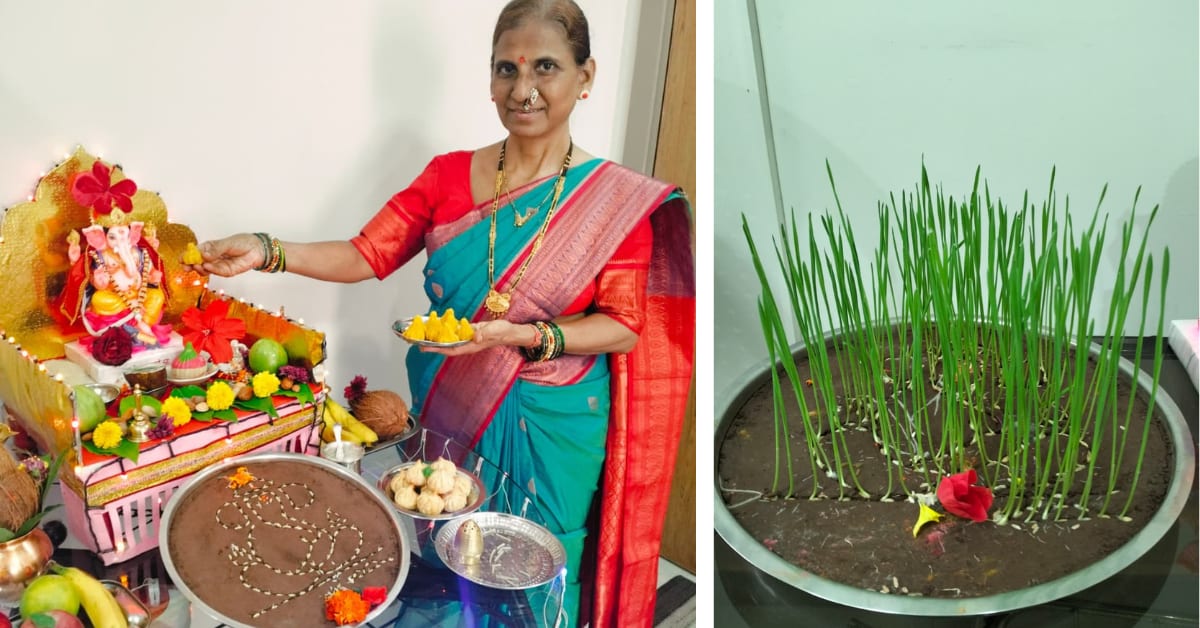
The Marathe family in Kalyan, Maharashtra, creates their Ganesha from materials that seem almost too simple. A plate, sifted mud, wheat kernels, and water. No plaster, no paint, no chemicals.
Three days before Ganesh Chaturthi, Pratiksha's father spreads an inch of filtered mud into an 18-inch plate. Pratiksha carefully draws Ganesha's outline while her mother selects quality wheat seeds, placing each kernel along the lines with space to grow.
The family sprinkles water over the plate while reciting the Gayatri Mantra 12 times. Then they wait.
By day two, tiny green shoots push through the mud. The transformation captivates neighborhood children who stop to watch Bappa grow. By the fifth day, the wheatgrass reaches nearly a foot tall, and from the right angle, Ganesha's form becomes unmistakably clear.
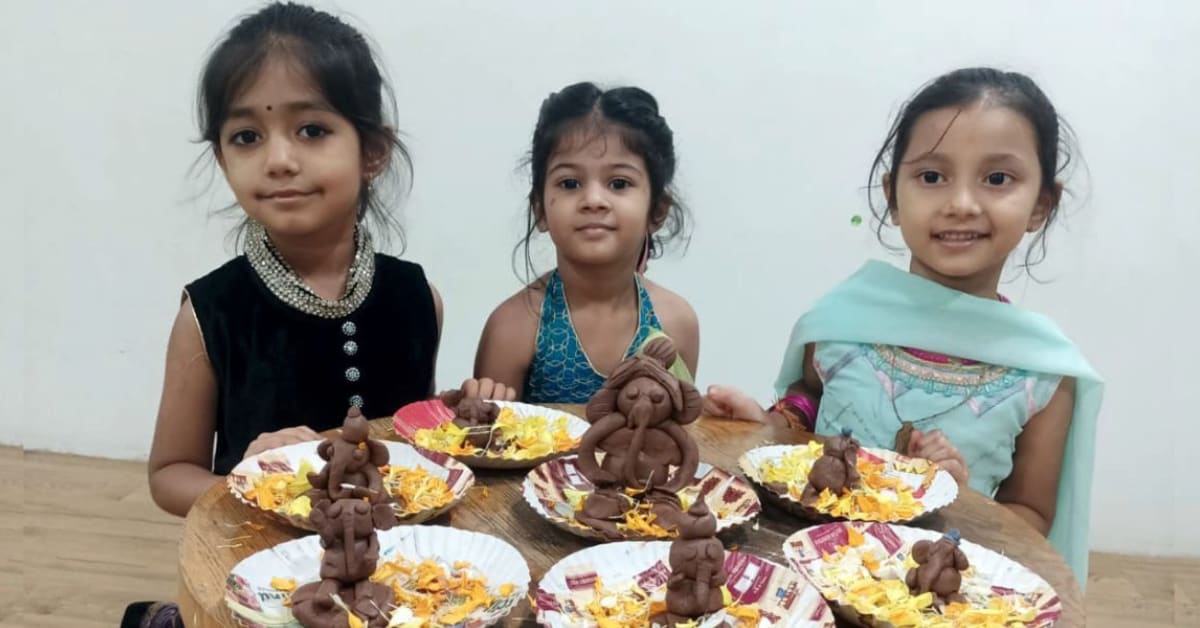
"It feels like therapy to create your own version of Ganesha," Pratiksha says. The practice began during the 2020 pandemic when getting traditional idols became difficult. The family had learned about Vanaspati Ganesh through their connection with Manashakti Research Centre in Lonavala.
Why This Inspires
The Marathe family proves that devotion doesn't require leaving environmental damage behind. Their living Ganesha offers an answer to a question many festival celebrants are asking: how do we honor tradition while honoring nature?
They still perform morning and evening aartis. They still make homemade modaks and laddoos. They still gather with neighbors and friends for their two-day celebration. The joy remains intact.
The difference happens after the festival ends. Instead of immersing an idol that won't fully dissolve, the wheatgrass returns completely to the soil. Nothing remains in lakes or beaches. Nothing takes years to decompose.
For a family that began with conventional plaster idols in 1995, the evolution feels natural. They tried Shadu clay but questioned whether even natural materials truly returned to nature without a trace. The wheat seed method answered that uncertainty with something better than biodegradable: it's living.
What means the world to devotees can now be accepted by nature too. After three decades of celebrating, the Marathe family has found a way to make both possible at once.
More Images
%2Fenglish-betterindia%2Fmedia%2Fmedia_files%2F2026%2F09%2F11%2Fganesh-chaturthi-2026-09-11-17-26-30.png)
%2Ffilters%3Aformat(webp)%2Fenglish-betterindia%2Fmedia%2Fmedia_files%2F2026%2F09%2F11%2Fganesh-chaturthi-2026-09-11-17-27-14.png)
%2Ffilters%3Aformat(webp)%2Fenglish-betterindia%2Fmedia%2Fmedia_files%2F2026%2F09%2F11%2Fganesh-chaturthi-2026-09-11-17-28-05.png)
Based on reporting by The Better India
This story was written by BrightWire based on verified news reports.
Spread the positivity!
Share this good news with someone who needs it