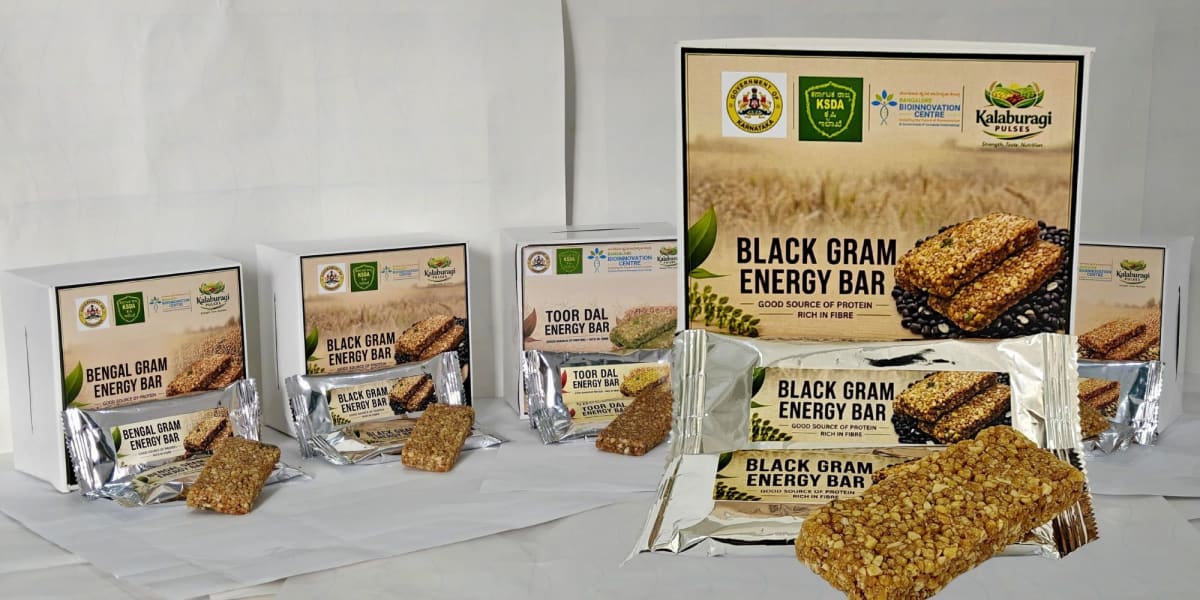
Indian Farmers Turn Pulses Into Protein Bars at Home
A science center in Bangalore is helping farmers in Kalaburagi turn their pulse crops into ready-to-eat energy bars, keeping more profits in their community. The innovation could transform how rural India adds value to its harvest.
Farmers in Kalaburagi, India have always grown pulses, but they've watched middlemen take their crops and most of the profits. That might be changing thanks to six new energy bar recipes designed to keep the value where the work happens.
The Bangalore Bioinnovation Centre created the bars using locally grown pulses like toor dal, black gram, green gram, and Bengal gram. Each 30-gram bar contains about 4 grams of protein and gets its sweetness from jaggery instead of refined sugar.
The bigger idea goes beyond nutrition. Kalaburagi ships tons of raw pulses out of the region every year, and other companies process them into higher-value products elsewhere. This project flips that model by giving local farmers and cooperatives the recipes and know-how to do the processing themselves.
"Karnataka has strong agricultural production, but the next opportunity is to create more value from what we grow," said Priyank Kharge, Karnataka's Minister for IT and Biotechnology. The bars use pulse crisps mixed with roasted peanuts, oats, and pumpkin seeds, with no synthetic preservatives or artificial colors.
Dr. Mohamad Adil, who leads the Bioinnovation Centre, sees the bars as proof of concept. "We are demonstrating a possible pathway for value addition that can eventually be taken up by farmer organizations, self-help groups, and small businesses in the region," he explained.
The center is now running shelf-life tests, nutritional validation, and taste trials. If those go well, they'll transfer the technology to farmer cooperatives and local entrepreneurs who want to start their own small-scale production.
The Ripple Effect
This model could spread far beyond Kalaburagi. India produces over 25 million tons of pulses annually, much of it in rural regions where farmers earn thin margins. If communities can process their own crops into packaged foods, they capture manufacturing jobs, marketing revenue, and brand value that currently goes to urban processors.
The Kalyana Karnataka Bio-Economy Mission, which funded the project, is already looking at similar approaches for red bananas, sugarcane, and other regional crops. The goal is building a complete local value chain where farmers aren't just growing ingredients but creating finished products.
Small food businesses and self-help groups in Kalaburagi will be the first to test whether the model works at scale.
For now, six varieties of pulse-based energy bars sit ready in Bangalore labs, waiting to make the journey back to the fields where their ingredients began.
More Images




Based on reporting by YourStory India
This story was written by BrightWire based on verified news reports.
Spread the positivity!
Share this good news with someone who needs it