Indian Robots Now Inspect Ocean Depths Navy Divers Can't Reach
A Kochi startup just landed a $5.6 million Navy contract for underwater robots that go deeper and stay longer than human divers. EyeROV's machines now inspect dams, ships, and tunnels across 150 projects in some of the world's most dangerous waters.
Checking a dam wall 300 meters down used to mean risking a diver's life. Now a robot does it better, safer, and records every crack it finds.
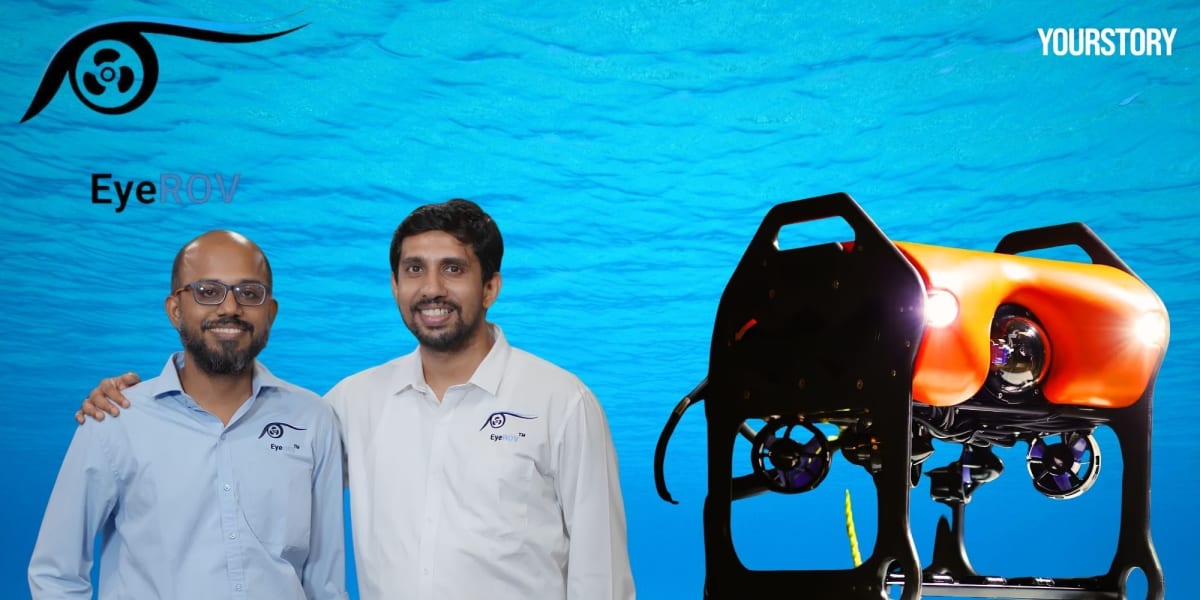
EyeROV, founded in Kochi by IIT graduates Johns T Mathai and Kannappa Palaniappan, builds underwater robots that inspect infrastructure human divers cannot safely reach. The company's machines dive to 450 meters and can travel 10 kilometers into underwater tunnels, carrying sensors that detect corrosion, cracks, and structural damage in real time.
The technology started as a tool to help fishermen find fishing zones. But the founders saw a bigger problem: critical infrastructure like ship hulls, oil rigs, and hydroelectric dams needed regular inspection, and sending divers down was slow, expensive, and often impossible below certain depths.
Getting industries to trust a robot over a trained diver was the real challenge. Mathai has said the breakthrough came when India's Defense Research and Development Organization became an early customer, validating the TUNA robotic system for naval laboratories. That government stamp of approval opened doors across both public and private sectors.
In September 2025, the Indian Navy awarded EyeROV a contract worth 47 crore rupees (about $5.6 million) for underwater robotic systems. That single order dwarfs the company's total funding, which crossed $2 million after a February 2026 investment round led by AWE Funds and Unicorn India Ventures.
The client list now spans 80 organizations across 150 completed projects. Tata Power, Adani, ONGC, and Maersk use the robots for industrial inspections. The Navy, Coast Guard, and DRDO deploy them for defense applications. EyeROV even ran projects in Antarctic waters.
The business model works two ways. Large organizations buy the robots outright for regular use. Smaller operators hire EyeROV to run inspections as a service, paying only when they need the work done. A port authority that inspects twice a year can access the technology without buying a million-dollar machine.
The Ripple Effect
The robots do more than replace dangerous jobs. They make inspections possible that weren't happening at all because the risk or cost was too high. Infrastructure gets checked more often, problems get caught earlier, and maintenance happens before failures do. That means safer dams, more reliable power plants, and ships that stay seaworthy longer.
The technology also keeps India's infrastructure expertise in India. Before EyeROV, most advanced underwater inspection required foreign companies with imported equipment. Now Indian ports, oil platforms, and naval facilities can get world-class inspection from a homegrown solution.
EyeROV is using its new funding to develop additional robot models and expand into international markets, where the global subsea inspection industry is worth billions. But the company has already proven the harder part: that Indian deep tech can win the trust of the most demanding customers, one dangerous dive at a time.
The robots are getting better, the orders are getting bigger, and the divers are getting safer.
More Images

Based on reporting by YourStory India
This story was written by BrightWire based on verified news reports.
Spread the positivity!
Share this good news with someone who needs it