Indian Solar Cell Breaks 30% Efficiency Barrier
Scientists in India just cracked a major solar power challenge, creating a new type of solar cell that converts over 30% of sunlight into electricity. This breakthrough could make clean energy cheaper and more efficient for millions.
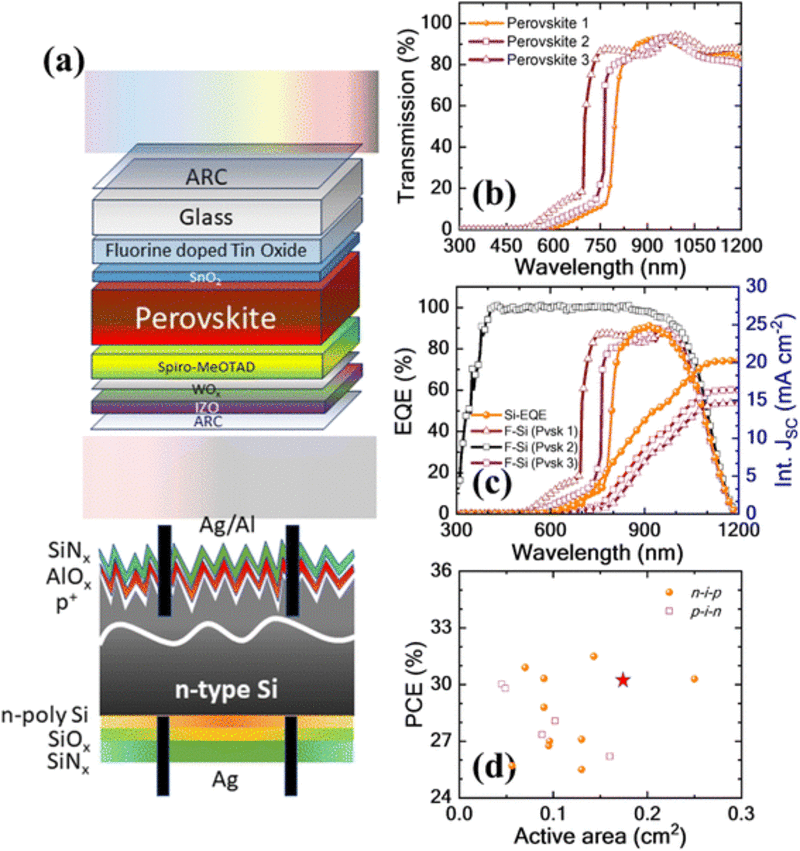
Researchers at the Indian Institute of Technology Bombay have built a solar cell that achieves 30.2% efficiency, a significant leap forward in renewable energy technology. For context, most commercial solar panels today convert around 15-20% of sunlight into usable electricity.
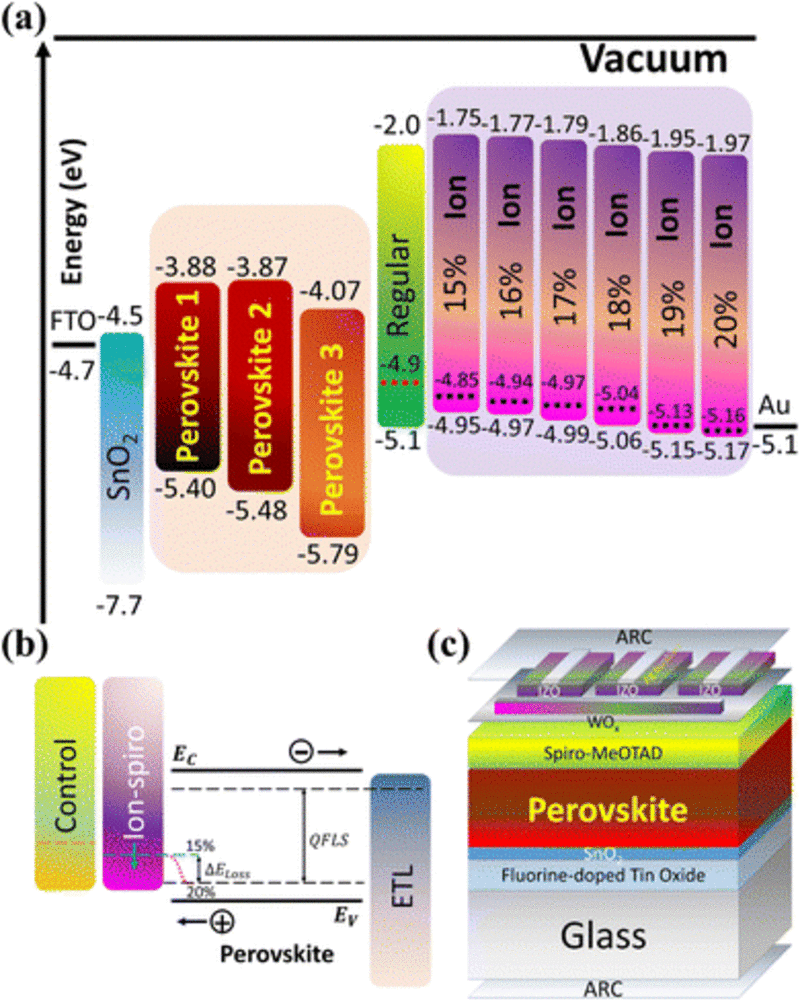
The breakthrough centers on a transparent tandem solar cell that stacks two different light-absorbing materials. The top layer uses perovskite, a promising material that's been challenging to stabilize, while the bottom uses silicon, the workhorse of current solar panels.
What makes this special is the clever engineering between these layers. The team developed a new interface material that solves a persistent problem: getting different materials to work together without losing energy at their connection points.
Lead researcher Dinesh Kabra explains that previous attempts required custom-tailoring each component to match specific materials, making manufacturing complex and expensive. Their universal design works across multiple material combinations, simplifying production dramatically.
The team also tackled a manufacturing bottleneck. Traditional production methods required waiting 24 hours for chemical processes to complete. Their new approach eliminates this delay, bringing commercial viability closer to reality.
Testing showed the cells maintained performance under heat and continuous sunlight, addressing durability concerns that have plagued perovskite solar technology. The devices showed improved stability thanks to fewer defects at the critical interfaces between materials.
Why This Inspires
This isn't just incremental progress. Breaking the 30% efficiency barrier with stable, potentially mass-producible technology represents years of painstaking work paying off. The researchers demonstrated improvements of 2-5% in voltage output and 6-7% in energy conversion across different configurations.
The broader impact could be transformative. Higher efficiency means fewer panels needed to generate the same power, reducing costs and installation space. For countries like India facing growing energy demands while combating climate change, homegrown solar innovations offer a path toward energy independence.
The research team published their findings in the Royal Society of Chemistry journal, opening their methods to the global scientific community. Other researchers can now build on this foundation, potentially accelerating the timeline to market.
Commercial solar technology improves gradually, with each percentage point representing millions in research investment. Jumping above 30% efficiency while solving stability and manufacturing challenges simultaneously puts this innovation in rare territory.
The next steps involve scaling from laboratory cells to full-size panels, but the fundamental science is proven. Clean energy just got a significant boost from an unexpected source, proving that breakthrough innovations can emerge from anywhere.
More Images

Based on reporting by PV Magazine
This story was written by BrightWire based on verified news reports.
Spread the positivity!
Share this good news with someone who needs it