Indian Startups Turn Temple Flowers Into Incense, Leather
Four Indian companies are collecting discarded temple flowers and transforming them into incense sticks, natural leather alternatives, and other useful products. The ventures are tackling tons of floral waste while creating jobs for local women.
Every day, thousands of marigolds, roses, and jasmine flowers arrive at Indian temples as offerings, only to be thrown away hours later. Four innovative startups decided those flowers deserved a better ending.
In Kanpur, Ankit Agarwal watched discarded temple flowers flow into the Ganga River and wondered if there was another way. He founded Phool in 2017 to collect those flowers and turn them into incense sticks and wellness products. His team went further, developing Fleather, a leather alternative made entirely from flower waste that could replace animal leather in products.
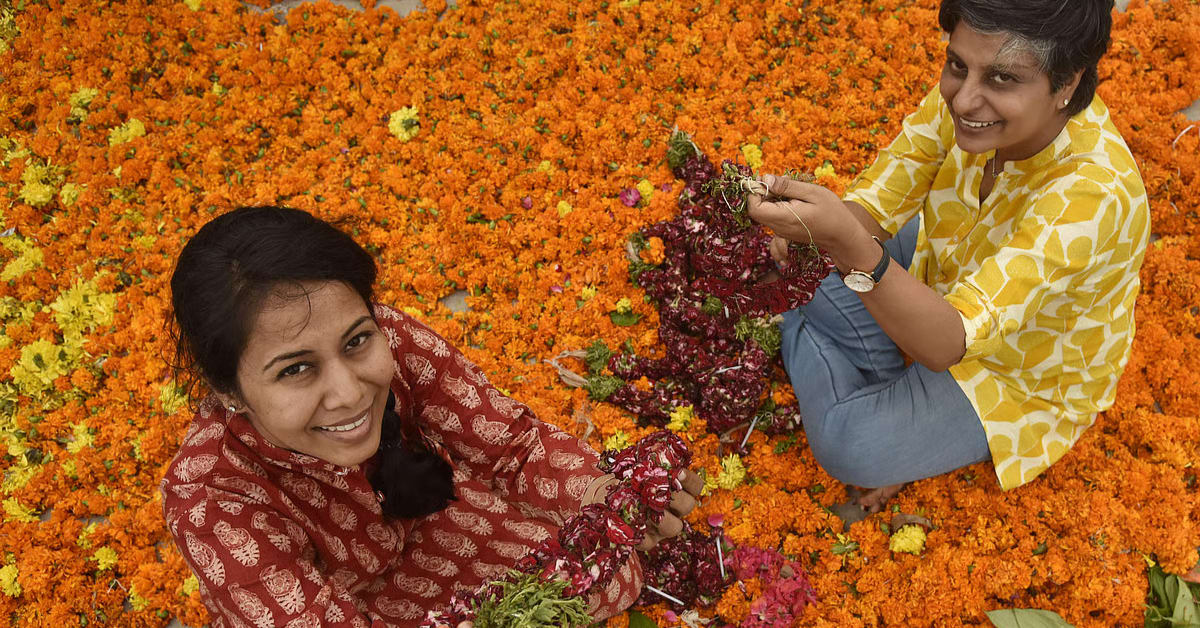
Across India, other entrepreneurs noticed the same opportunity. Maya Vivek and Minal Dalmia started HolyWaste in Hyderabad in 2018, working with temples, flower vendors, and event planners to gather floral waste. Their team sorts, dries, and processes flowers through a system they call FloRejuvenation, creating incense, natural fertilizers, scented cones, and soaps.
In Gurugram, Poonam Sehrawat visited a temple and saw fresh flowers being discarded right after prayers. She launched Aaruhi Enterprise in 2019 with Pinki Yadav, collecting floral waste from temples across Delhi-NCR and handcrafting it into dhoop, incense, decorative pieces, and air fresheners.
Up in Himachal Pradesh, Ravinder Prashar took a different approach. He partnered with a local university to develop incense sticks using temple flowers, natural portions, and essential oils without any charcoal or synthetic chemicals. His venture, Yuvan, was supported by the state's Chief Minister's Startup Scheme.
The Ripple Effect
These ventures are solving two problems at once. They're keeping tons of flowers out of rivers and landfills while creating meaningful work for local communities, especially women who sort, process, and craft the floral waste into finished products.
The work happens mostly in small workshops where women can earn income through home-based processing and handcrafting. What started as simple waste collection has grown into a circular economy model that respects the ritual importance of temple flowers while giving them a practical second life.
The innovations keep expanding too. Phool's Fleather biomaterial shows how flower waste can move beyond incense and fertilizer into completely new categories, potentially replacing materials that harm animals or the environment.
These founders aren't trying to change how people worship or celebrate. They're simply asking what happens next, after the prayers end and the garlands come down. Their answer turns waste into worth, one flower at a time.
More Images
%2Fenglish-betterindia%2Fmedia%2Fmedia_files%2F2026%2F09%2F17%2Fflower-waste-2026-09-17-16-36-51.png)
%2Ffilters%3Aformat(webp)%2Fenglish-betterindia%2Fmedia%2Fmedia_files%2F2026%2F09%2F17%2Fphool-2026-09-17-16-28-33.png)
%2Ffilters%3Aformat(webp)%2Fenglish-betterindia%2Fmedia%2Fmedia_files%2F2026%2F09%2F17%2Fflower-waste-2026-09-17-16-29-32.png)
%2Ffilters%3Aformat(webp)%2Fenglish-betterindia%2Fmedia%2Fmedia_files%2F2026%2F09%2F17%2Fflower-waste-2026-09-17-16-27-54.png)
Based on reporting by The Better India
This story was written by BrightWire based on verified news reports.
Spread the positivity!
Share this good news with someone who needs it