Indian Startups Turn Temple Flowers Into Jobs and Income
Social enterprises across India are transforming millions of tonnes of waste into steady paychecks for women and waste pickers. From temple flowers to cigarette butts, these innovators are proving trash can build livelihoods while saving the planet.
India's waste problem is becoming India's jobs solution, thanks to entrepreneurs who see opportunity where others see garbage.
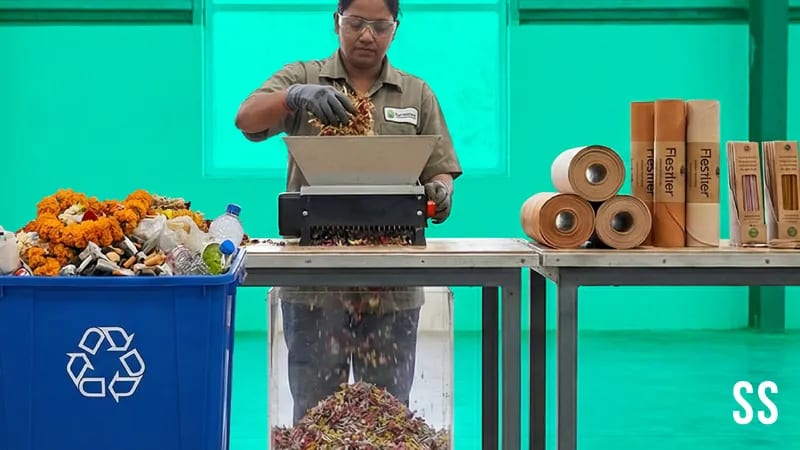
Every day, temples across India discard tonnes of flowers that usually end up polluting rivers. Ankit Agarwal saw something different. His company Phool now collects those flowers and transforms them into incense sticks, wellness products, and even plant-based leather called "Fleather." The labor-intensive process employs women and low-income workers who earn steady wages while keeping organic waste out of waterways.
The cigarette butt might be the world's most overlooked resource. Brothers Naman and Vipul Gupta founded Code Effort to collect and recycle millions of discarded butts daily. Their team of waste pickers and women artisans in Noida turns tobacco into compost, paper into stationery and mosquito repellents, and filters into textile fibers. What was litter becomes livelihood.
Saahas Zero Waste, started by Wilma Rodrigues, processes over 100 tonnes of waste every single day. Food scraps become compost or biogas for cooking. Dry waste transforms into recycled products that re-enter the market. The model creates jobs while tackling India's mounting waste crisis.
These companies represent a shift from informal waste picking to organized social enterprises. Workers get regular income, safer conditions, and dignity. Communities get cleaner streets and waterways.
The Ripple Effect
The impact extends far beyond the workers directly employed. When temple flowers stop polluting the Ganges, entire ecosystems benefit. When women earn steady incomes, families gain stability and children stay in school. When waste becomes a resource instead of a problem, cities become more livable for everyone.
India's recycling revolution shows that climate solutions and poverty solutions don't have to compete. The same innovations that divert waste from landfills put food on tables. The same business models that clean rivers create jobs where they're needed most.
These entrepreneurs prove that sustainability works best when it includes everyone, especially those who've always handled society's waste but rarely shared in society's wealth.
One person's trash really can be another person's paycheck, and that's a waste management system worth celebrating.
---
More Images


Based on reporting by YourStory India
This story was written by BrightWire based on verified news reports.
Spread the positivity!
Share this good news with someone who needs it