India's 100-Year-Old Guava Now Feeds Millions of Farmers
A chance seedling discovered in Pune in 1924 has become India's most successful guava variety, producing 56 kg of fruit per tree across 3.71 lakh hectares. The Sardar guava now supports millions of farmers and transformed barren land into thriving orchards.
A single guava seedling found in Pune a century ago has quietly become one of India's greatest agricultural success stories.
In 1924, Dr. Gurdev Singh Cheema spotted something special among the plants at the Imperial Fruit Research Institute in Ganeshkhind, Pune. He selected promising seedlings from the Allahabad Safeda variety, and by 1927, one plant stood out so dramatically that it earned its own name: L-49, now known as the Sardar guava.
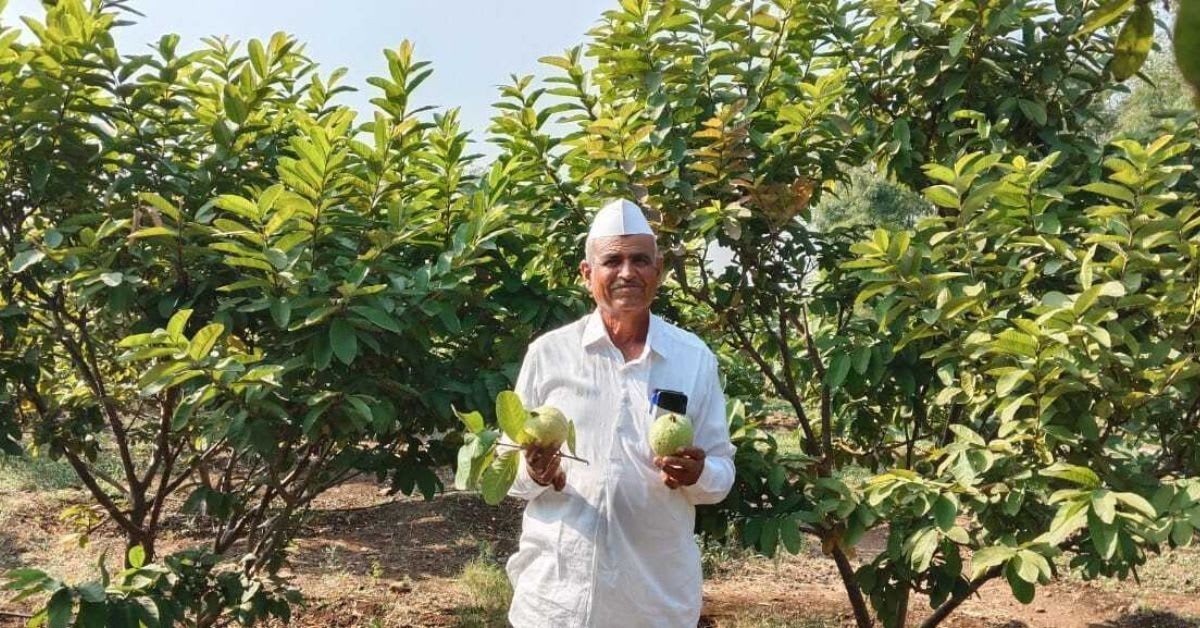
The numbers tell an extraordinary story. Each Sardar guava tree produces up to 56 kg of fruit annually, far more than most varieties. The fruit matures quickly, in just 120 to 130 days, with smooth skin and sweet, firm flesh that works beautifully fresh or processed into juice, jelly, and sweets.
Dr. Cheema, later honored as Udyan Mahirshi (sage of horticulture), saw potential beyond a single variety. In 1934, he shipped premium Alphonso mangoes to King George V, earning royal appreciation and establishing India's reputation for world-class fruit cultivation.
Today, Sardar guava blankets 3.71 lakh hectares across India, producing 56.06 lakh metric tonnes of fruit. Uttar Pradesh leads production, with orchards stretching across Allahabad, Farrukhabad, Aligarh, and Badaun, where guava has become part of the region's cultural identity.
The variety thrives everywhere from Madhya Pradesh's Jabalpur to Andhra Pradesh's Godavari belt, Gujarat's Bhavnagar to West Bengal's 14,000 hectares of orchards. Tamil Nadu farmers in Madurai and Coimbatore value it for consistent yields and strong market demand.
Perhaps most remarkably, Sardar guava has transformed lives in unexpected places. In Bihar's Vaishali and Banka districts, villages like Sarsai and Putia converted barren land into productive orchards through dryland horticulture schemes. This shift strengthened livelihoods, reduced migration, and proved that fruit cultivation could anchor entire communities.
Maharashtra alone contributes 1.95 lakh metric tonnes from 21.52 thousand hectares, showcasing western India's dominance in guava production.
The Ripple Effect
What began as one scientist's careful observation has cascaded into opportunity for millions. Farmers who once struggled with unpredictable crops now harvest reliable income from trees that produce year after year. Villages that lost young people to migration now keep families together through thriving orchards.
The Sardar guava demonstrates how patient scientific work combined with nature's gifts can create lasting change. From a single seedling in 1924 to millions of trees feeding India today, this humble fruit carries forward Dr. Cheema's vision of prosperity rooted in the soil.
A century later, that morning magic in guava orchards continues, one sweet harvest at a time.
More Images
%2Fenglish-betterindia%2Fmedia%2Fmedia_files%2F2026%2F03%2F10%2Ftbi-featured-image-46-2026-03-10-22-28-30.jpg)
%2Ffilters%3Aformat(webp)%2Fenglish-betterindia%2Fmedia%2Fmedia_files%2F2026%2F03%2F10%2Fguava-orchard-2026-03-10-22-25-02.jpeg)
%2Ffilters%3Aformat(webp)%2Fenglish-betterindia%2Fmedia%2Fmedia_files%2F2026%2F03%2F10%2Fguava-2026-03-10-22-25-29.jpeg)
Based on reporting by The Better India
This story was written by BrightWire based on verified news reports.
Spread the positivity!
Share this good news with someone who needs it