India's 4 Ancient Cheeses Thriving Before Processed Brands
Long before processed cheese reached Indian supermarkets, mountain communities were smoking curds over wood fires and drying milk into survival food that lasted through Himalayan winters. From Sikkim to Jammu to Bengal, these traditional cheeses tell stories of climate adaptation and cultural preservation.
Centuries before imported cheddar appeared on Indian grocery shelves, communities across the subcontinent had already mastered their own ways of turning milk into cheese.
In the high Himalayas, herders dried milk into rock-hard nuggets that could survive months without refrigeration. Along Bengal's river ports, cheesemakers smoked salted curds over wood fires, creating flavors that still carry traces of Portuguese trade routes. In Jammu's pastoral regions, communities shaped fermented milk into discs that melted into stretchy street food.
These aren't lost traditions. They're living food cultures that adapted to India's heat, humidity, and geography in ways European aging techniques never could.
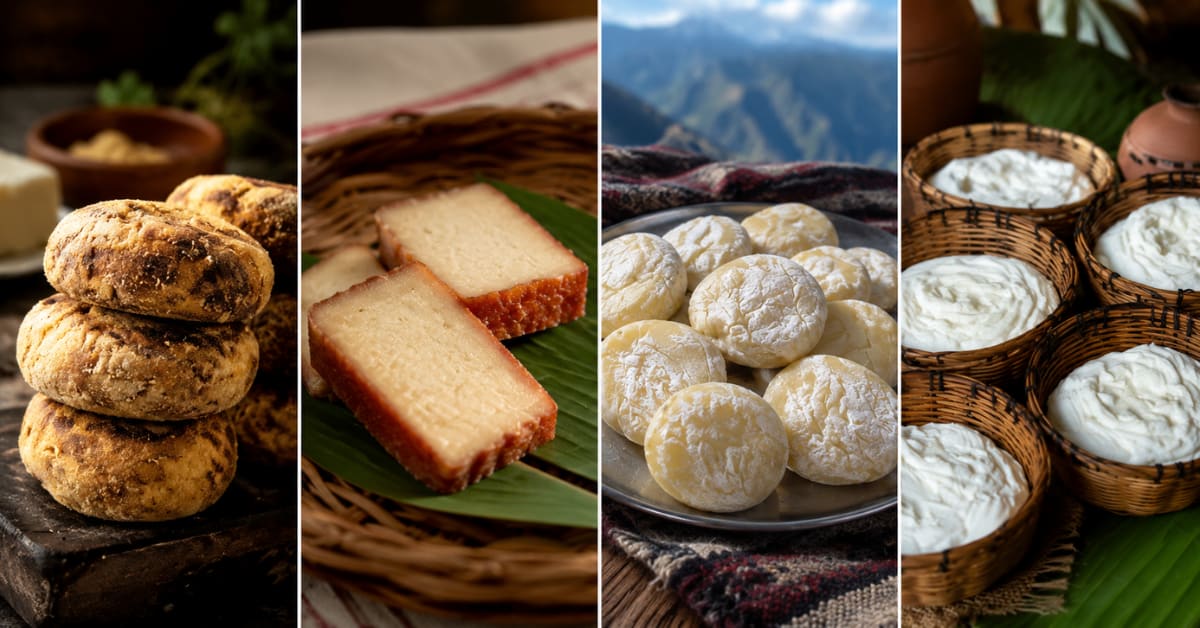
Chhurpi emerged in Sikkim, Darjeeling, Arunachal Pradesh, Nepal, and Bhutan as survival food for mountain life. Made from yak or cow's milk, it comes in two forms: soft chhurpi resembles cottage cheese and goes into soups and momos, while the hard version gets dried until it becomes dense enough to chew for hours.
The hard variety became portable nutrition for herders crossing difficult terrain in regions where refrigeration was impossible. Its mildly smoky, earthy taste comes from repeated boiling, pressing, and drying over wood fires.
In Jammu's Udhampur and Chenani regions, the Gujjar and Bakerwal communities developed kalari, a cheese often compared to mozzarella for the way it melts and stretches. But kalari existed in local food traditions long before global cheese comparisons became trendy.
The transformation happens on the pan. Placed on a hot tawa, kalari fries in its own fat until the outside crisps while the inside turns molten and stretchy. Street vendors tuck it into kulchas with chutney, creating one of Jammu's most recognizable snacks.
Near the Hooghly River in West Bengal, Bandel cheese carries the imprint of Portuguese settlements from centuries past. Small, salty, dry, and dense, this smoked cheese was shaped by techniques introduced by Portuguese settlers and missionaries who once shaped trade across the region.
The cheese is usually crumbled over toast, salads, or pasta. Its sharp saltiness once helped preserve it in Bengal's humid climate, and it survived for decades mostly within Anglo-Indian and Bengali Christian households.
Why This Inspires
These cheeses represent something more valuable than nostalgia. They show how communities solved preservation challenges using local resources, climate knowledge, and generations of experimentation. Each variety adapted to its environment: drying for the Himalayas, smoking for humid Bengal, quick-cooking for pastoral economies.
Today, these traditional cheeses are reappearing on restaurant menus and artisanal food shelves. What sustained mountain herders and river communities for centuries is now being recognized as part of India's layered culinary heritage, proving that innovation doesn't always mean looking forward.
More Images
%2Fenglish-betterindia%2Fmedia%2Fmedia_files%2F2026%2F05%2F29%2Findian-cheese-6-2026-05-29-19-20-46.png)

%2Ffilters%3Aformat(webp)%2Fenglish-betterindia%2Fmedia%2Fmedia_files%2F2026%2F05%2F29%2Findian-cheese-2-2026-05-29-18-37-03.png)
%2Ffilters%3Aformat(webp)%2Fenglish-betterindia%2Fmedia%2Fmedia_files%2F2026%2F05%2F29%2Ffamous_kalaadi_of_ramnagar-2-2026-05-29-18-39-25.jpg)
Based on reporting by The Better India
This story was written by BrightWire based on verified news reports.
Spread the positivity!
Share this good news with someone who needs it