India's 6 Samosas: Square, Cabbage-Filled & Potato-Free
From triangular potato classics to square mutton-filled lukhmi, India's regional samosas break every rule you thought defined the beloved snack. On World Samosa Day, discover how six states turned one Central Asian import into six completely different comfort foods.
The samosa you picture in your mind might not exist in half of India, and that's the beautiful part.
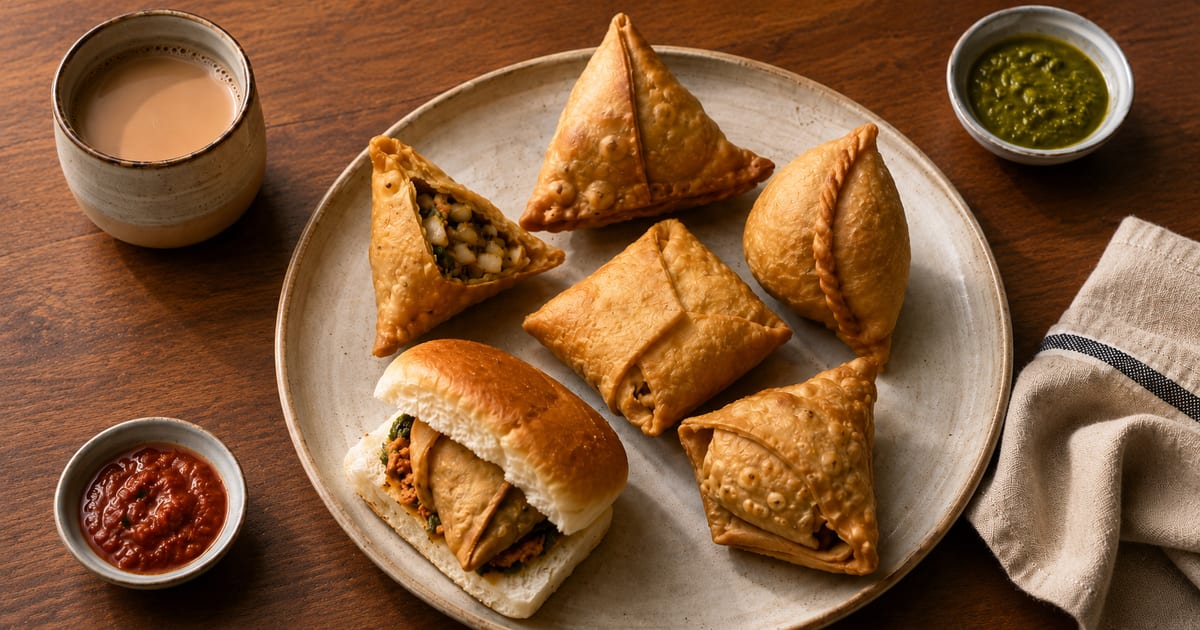
This beloved fried pastry arrived in India centuries ago from Central Asia, carried by Arab traders who packed minced-meat triangles into their saddlebags. Once it reached Indian kitchens, nearly every region rebuilt it from scratch, keeping only the idea of stuffed, fried dough and reimagining everything else.
In Punjab and Delhi, the samosa became the version most people recognize: thick-crusted triangles packed with potatoes, green peas, raisins and cashews. It's sold hot outside cinema halls and office canteens, always served with sweet tamarind chutney and spicy green chutney on the side.
Travel east to West Bengal, and the same snack shrinks into the singara. The pastry becomes noticeably thinner and flakier, filled with finely cut potatoes, peanuts and a hint of sweetness instead of tangy spices.
Karnataka tosses out potato almost entirely. Their bakeries built reputations on onion samosas, thin-skinned and sharply spiced, with keema versions running a close second.
Hyderabad's lukhmi breaks two samosa rules at once. The dough is cut into flat squares instead of triangles, and the filling is strictly spiced mutton mince, never potato or any vegetarian substitute.
Gujarat's patti samosa swaps starch for finely shredded cabbage, wrapped in a covering that fries up lighter and crunchier than northern versions. The light seasoning lets the vegetable's natural sweetness shine through.
Mumbai doesn't just change what goes inside the samosa. The city's samosa pav tucks the entire fried pastry into a soft bread roll spread with chutneys, turning a single snack into a handheld meal sold at railway stalls citywide.
The Bright Side
Line up all six versions and a pattern emerges. The samosa never traveled as a fixed recipe, only as an idea flexible enough to carry whatever each region already loved eating. That adaptability turned a Central Asian import into something that feels utterly indigenous in six completely different ways, each one celebrated in its home state as the "real" samosa.
World Samosa Day on September 5th celebrates that beautiful disagreement, proving that sometimes the best way to preserve a tradition is to let every generation and every region break the rules.
More Images
%2Fenglish-betterindia%2Fmedia%2Fmedia_files%2F2026%2F09%2F02%2F1-2026-09-02-18-40-06.png)

%2Ffilters%3Aformat(webp)%2Fenglish-betterindia%2Fmedia%2Fmedia_files%2F2026%2F09%2F02%2F2-2026-09-02-18-47-25.png)
%2Ffilters%3Aformat(webp)%2Fenglish-betterindia%2Fmedia%2Fmedia_files%2F2026%2F09%2F02%2F3-2026-09-02-18-48-14.webp)
Based on reporting by The Better India
This story was written by BrightWire based on verified news reports.
Spread the positivity!
Share this good news with someone who needs it