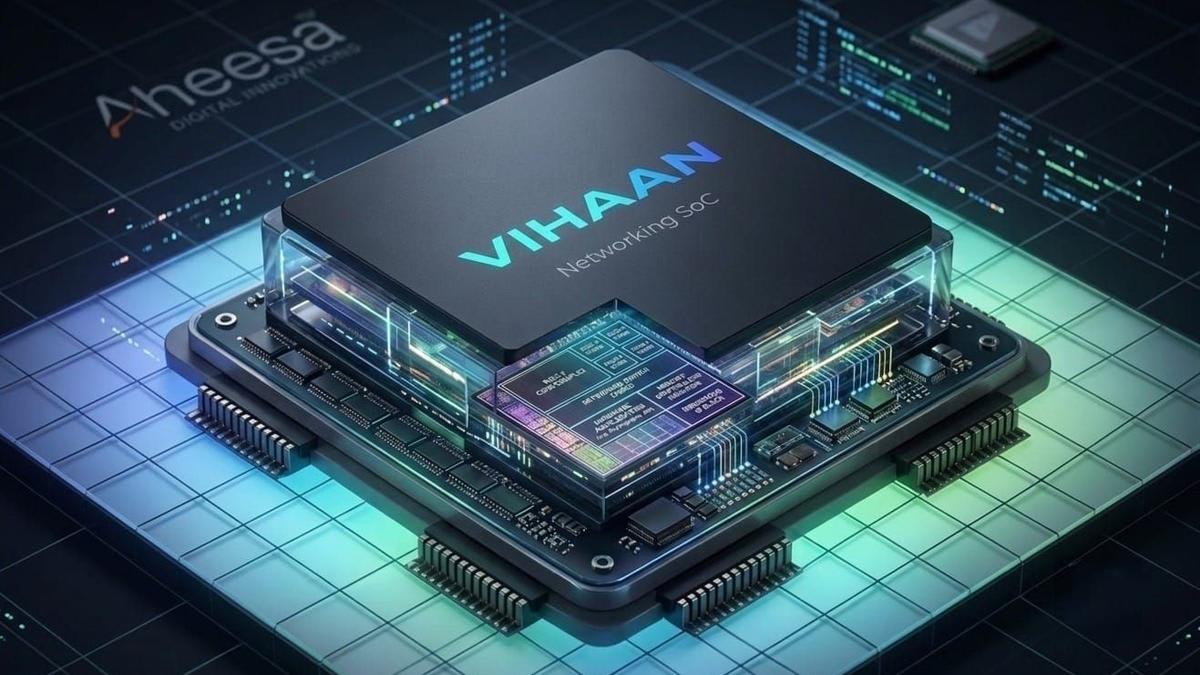
India's Aheesa Chips Nails First-Try Silicon Success
A Chennai startup just achieved a rare semiconductor milestone on Independence Day, successfully testing its indigenous networking chip on the very first attempt. India's growing chip design ecosystem is turning government backing into real technical wins.
Chennai-based Aheesa Digital Innovations just pulled off something that typically takes semiconductor companies multiple expensive tries: their VIHAAN networking chip worked perfectly the first time.
The startup taped out the chip on Republic Day and achieved first-pass silicon success on Independence Day 2026. This rare accomplishment means their design was so precise that the manufactured chip functioned exactly as planned without needing costly redesigns.
VIHAAN is an indigenous broadband networking System-on-Chip built using India's own VEGA microprocessor. The chip targets fiber broadband applications and is now headed toward production tape-out by 2027, moving India closer to homegrown semiconductor manufacturing.
Aheesa received crucial support from India's Design Linked Incentive Scheme, which has become a launchpad for the country's semiconductor ambitions. The company also raised about Rs 40 crore from Tamil Nadu's infrastructure fund and private investors earlier this year to accelerate development.
The broader picture shows India's chip design ecosystem gaining real momentum. Companies supported under the DLI Scheme have collectively achieved over 30 chip design tape-outs and raised more than $100 million in venture capital funding.
The government has made chip design tools available to 455 organizations, including 350 academic institutions and 105 startups. Under the Chips to Startup Programme, 71 academic institutions have completed 245 chip designs, building the talent pipeline India needs.
Recent wins include Vervesemi Microelectronics achieving first-pass success with a motor controller chip and Netrasemi successfully testing a 12-nanometer Vision SoC. Indian startups are now designing chips for satellites, drones, defense systems, automobiles, AI systems, and smart meters.
The Ripple Effect
Semiconductor chip design contributes up to 50 percent of overall value in the chip industry and accounts for 15 to 35 percent of electronics product costs. By mastering this critical skill, India is capturing high-value work that has long been dominated by a handful of countries.
The government's Semicon 2.0 initiative, approved with Rs 1.27 lakh crore in funding, aims to build a complete ecosystem covering design, manufacturing, advanced packaging, equipment, materials, and skilled workforce development.
For a country that imports the vast majority of its semiconductors, each successful tape-out represents progress toward technological self-reliance and economic opportunity.
India is proving it can compete in one of the world's most demanding industries, one perfectly designed chip at a time.
Based on reporting by Google News - Startup Success
This story was written by BrightWire based on verified news reports.
Spread the positivity!
Share this good news with someone who needs it