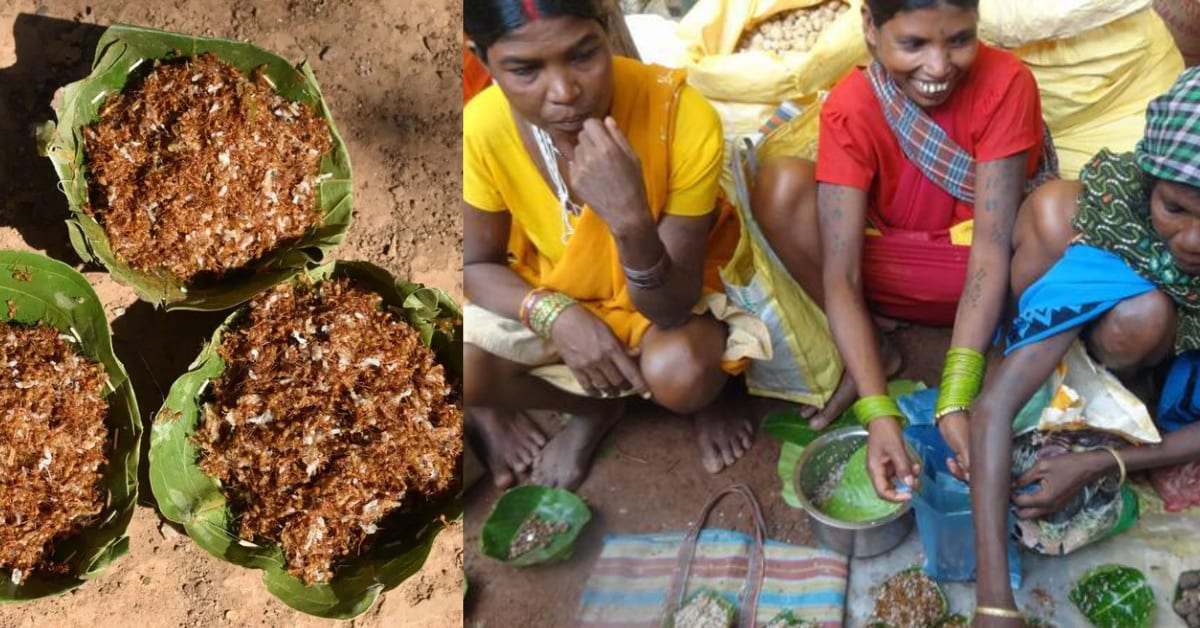
India's Ant Chutney Wins National Heritage Tag
A centuries-old chutney made from red weaver ants in eastern India just earned official recognition for its cultural importance. The fiery condiment showcases how Indigenous communities have practiced sustainable, nutritious eating long before it became trendy.
Deep in the forests of Odisha's Mayurbhanj district, tribal communities have been making medicine and food from an unexpected ingredient: red weaver ants. Now their traditional kai chutney has received India's prestigious Geographical Indication tag, bringing national attention to a practice that's fed families for generations.
The process is beautifully simple. Collectors gather red weaver ants and their larvae from intricate leaf nests woven high in the forest canopy, then grind them with salt, garlic, ginger, and chilies into a spicy, tangy paste. The result is sharp, smoky, and intensely flavorful.
But this isn't just about taste. The chutney serves as both food and folk medicine in communities that have long understood what scientists are only now confirming.
Research from Odisha University of Agriculture and Technology found the ants pack serious nutrition. They're loaded with protein, calcium, iron, magnesium, zinc, and vitamin B12, offering crucial nutrients in regions where diverse food sources can be scarce.
Local healers have used ant-infused oils for generations to treat fungal infections, skin inflammation, and joint pain. Families serve the chutney during flu season and illness, believing it boosts appetite and supports recovery. The formic acid that gives the ants their painful bite may also provide their healing punch.
Why This Inspires
At a time when experts worldwide are searching for sustainable protein sources to combat climate change, Indigenous communities in Mayurbhanj have been living the answer all along. Insects require far fewer resources than conventional livestock and produce a fraction of the greenhouse gas emissions.
The GI tag does more than celebrate tradition. It protects the cultural knowledge of communities whose food systems have always been climate-friendly, proving that some of our best solutions for the future already exist in the wisdom of the past.
For the tribal families of Mayurbhanj, kai chutney was never a trend or a novelty. It's simply what feeding your family with respect for the forest looks like, and now the rest of India is finally paying attention.
More Images
%2Fenglish-betterindia%2Fmedia%2Fmedia_files%2F2026%2F05%2F22%2Fant-chutney-2026-05-22-18-21-53.png)
%2Ffilters%3Aformat(webp)%2Fenglish-betterindia%2Fmedia%2Fmedia_files%2F2026%2F05%2F22%2Fant-chutney-1-2026-05-22-18-24-23.png)

%2Ffilters%3Aformat(webp)%2Fenglish-betterindia%2Fmedia%2Fmedia_files%2F2026%2F05%2F22%2Fant-chutney-2-2026-05-22-18-27-02.png)
Based on reporting by The Better India
This story was written by BrightWire based on verified news reports.
Spread the positivity!
Share this good news with someone who needs it


%2Fhttps%3A%2F%2Ftf-cmsv2-smithsonianmag-media.s3.amazonaws.com%2Ffiler_public%2F12%2F05%2F120524e1-9e51-48cf-8d22-2d033533e6ef%2Fodyssey-fragment.png)