The Surprising History Behind Kolkata's Potato Biryani
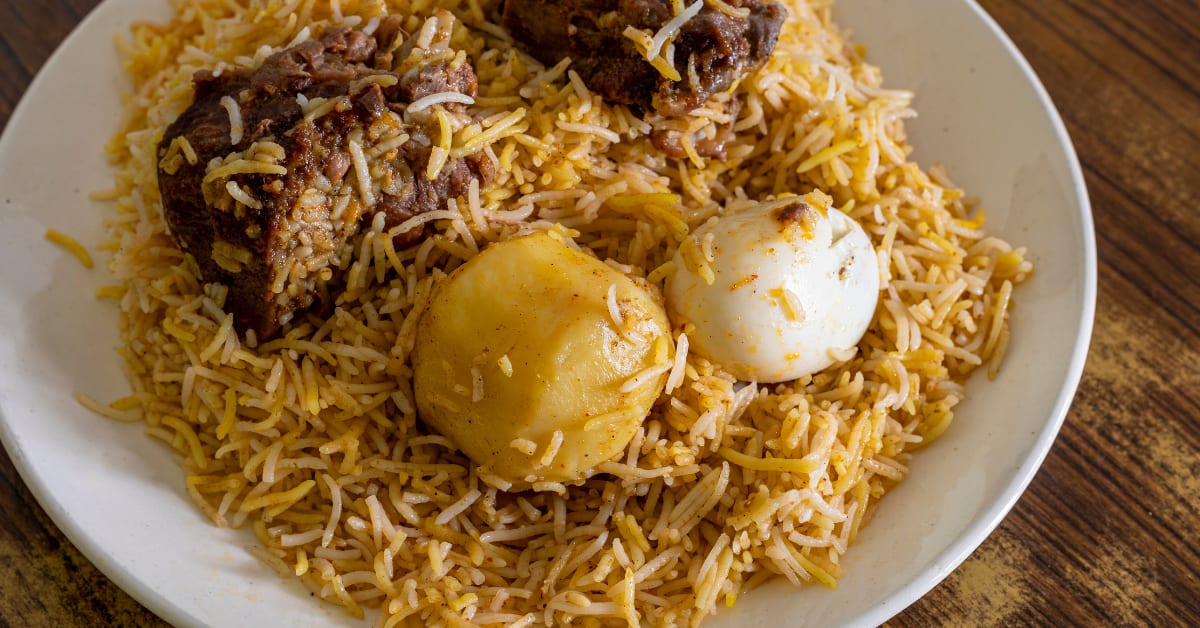
The potato in Kolkata biryani wasn't added because of poverty—it was a culinary innovation brought by an exiled Nawab in 1856. This humble ingredient became central to Bengal's food identity through migration, tradition, and love.
For Kolkata residents, biryani without potato feels wrong the moment the plate arrives.
When Nawab Wajid Ali Shah was exiled from Awadh to Calcutta in 1856 by the British, he brought an entire culture with him. Royal cooks trained in Awadhi dum pukht cooking settled in Metiabruz along the Hooghly River, slowly transforming the neighborhood into a transplanted Lucknow.
These master chefs prepared biryani using delicate spices, saffron, and slow-cooked meat stock in sealed clay pots over low heat for hours. The result was fragrant, restrained, and nothing like the fiery Hyderabadi version most people know today.
For generations, Bengalis heard the same story about the potato: the exiled Nawab had lost his wealth, meat became too expensive, so cooks added potatoes as a cheap filler. It's a tidy narrative about colonial decline and kitchen survival.
But historians now say the timeline doesn't match. In the mid-1800s, potatoes were still relatively new in Indian kitchens, introduced by European traders and not yet the everyday staple we know today.
If potatoes were unfamiliar and somewhat novel, adding them to royal biryani may have signaled innovation rather than poverty. Food historians point to older meat-rice traditions where potatoes already appeared in pulao and similar dishes, making the pairing less unusual than it seems now.
Why This Inspires
What makes this story beautiful isn't correcting history—it's how Kolkata transformed a misunderstood ingredient into something essential. A well-made biryani potato absorbs stock, marrow, saffron, and rendered fat until it tastes richer than the meat beside it.
The potato carries the flavor of the entire pot in one soft, golden piece. In Bengali homes, it's waited for, saved, and often claimed before anyone else can reach it.
While people in other cities dismiss the potato as unnecessary, Kolkata made it part of the dish's emotional architecture. What began with an exiled ruler and displaced cooks became a culinary tradition that defines an entire city's food memory.
The potato in Kolkata biryani was never about making do with less—it was about making something entirely its own.
More Images
.png)
%2Fenglish-betterindia%2Fmedia%2Fmedia_files%2F2026%2F05%2F21%2Fbiriyani-2026-05-21-19-30-42.png)

Based on reporting by The Better India
This story was written by BrightWire based on verified news reports.
Spread the positivity!
Share this good news with someone who needs it
%2Fhttps%3A%2F%2Ftf-cmsv2-smithsonianmag-media.s3.amazonaws.com%2Ffiler_public%2F15%2F3b%2F153b5427-10f9-4ad6-b039-8823a36efc6f%2Fhd100065orig.jpg)