India's Asiatic Lions Hit 891, Now Roam Beyond Gir Forest
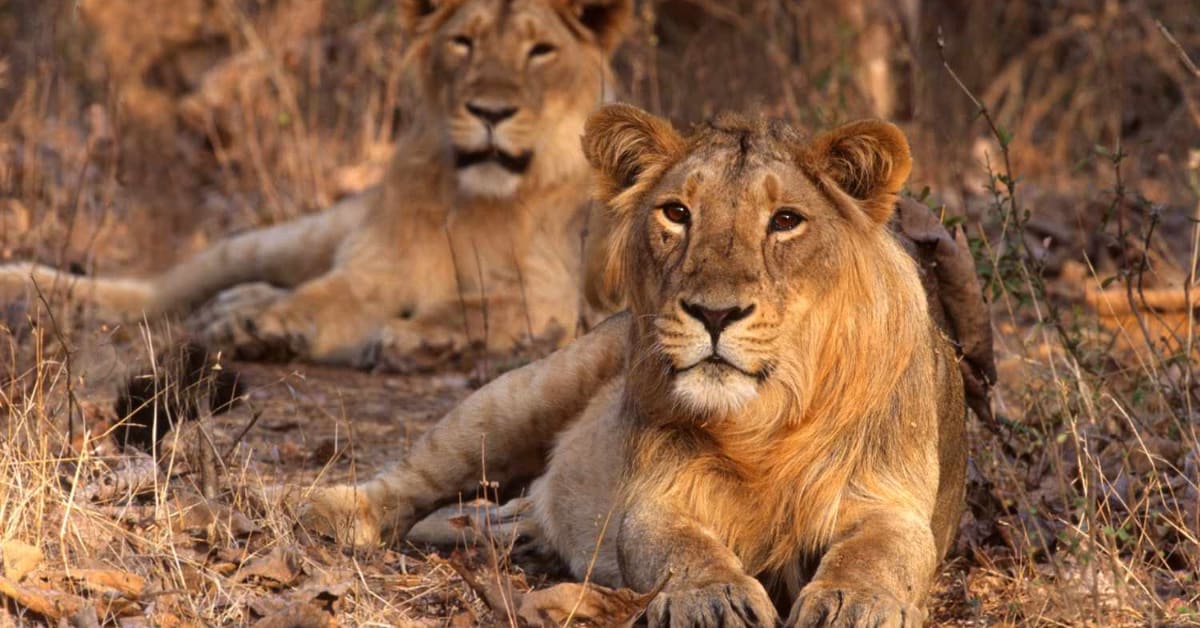
Gujarat's Asiatic lion population has surged 32% to 891 in five years, but more than half now live outside protected forests among farms and villages. This remarkable recovery is creating a new conservation challenge: how humans and lions share space.
When a farm owner in Gujarat discovered a dead lion at the bottom of his 30-foot well last August, it captured a wildlife success story with an unexpected twist. India's Asiatic lions have bounced back so strongly that they're running out of protected forest to call home.
The numbers tell an extraordinary tale of recovery. Gujarat's 2025 Lion Population Estimation counted 891 Asiatic lions, up from 674 in 2020. That's a 32 percent jump in just five years for a species once on the brink of extinction.
But here's where the story gets complicated. Only 394 of those lions were found in Gir National Park and other protected areas. The remaining 497 now roam farms, coastal settlements, village edges and grazing grounds across nine satellite populations.
The lions are spreading into entirely new territories. Three satellite populations appeared for the first time in the 2025 count, including areas along the Bhavnagar coast and the Babra-Jasdan region. These aren't wilderness areas but human-dominated landscapes where people work, live and raise families.
The overlap is creating difficult moments. Recent months brought several human-lion conflicts across the region, including fatal encounters in Amreli and Bhavnagar districts. When such incidents occur, forest officials track and sometimes capture the animals involved.
Wildlife biologist Ravi Chellam says the real challenge isn't individual problem lions but the fundamental shift in where lions live. "The issue is not that lions have begun appearing where they were not expected," he explains. "It is that the places where they are expected to live and the places where people live are overlapping."
Conservation experts are now grappling with what success looks like when wildlife populations exceed their protected habitats. The lion population includes 196 adult males, 330 adult females, 140 sub-adults and 225 cubs. The count involved over 3,200 trained personnel using individual identification methods and artificial intelligence systems.
Why This Inspires
This story matters because it shows conservation can work, even when the results look different than expected. For decades, protecting endangered species meant keeping them away from people. The Asiatic lion's recovery suggests a more complex future where humans and wildlife must learn to share landscapes.
The challenge ahead isn't saving the Asiatic lion from extinction but figuring out how people and predators coexist in the same neighborhoods. That's a better problem to have than the alternative, and one that shows just how far conservation has come.
More Images
%2Fenglish-betterindia%2Fmedia%2Fmedia_files%2F2026%2F09%2F08%2Flion-gir-2026-09-08-19-07-00.png)
%2Fenglish-betterindia%2Fmedia%2Fmedia_files%2F2025%2F11%2F20%2Fwild-at-heart-banner-image-microsite-banner-2025-11-20-16-17-04.jpg)
%2Ffilters%3Aformat(webp)%2Fenglish-betterindia%2Fmedia%2Fmedia_files%2F2026%2F09%2F08%2Flion-gir-1-2026-09-08-19-08-51.png)
Based on reporting by The Better India
This story was written by BrightWire based on verified news reports.
Spread the positivity!
Share this good news with someone who needs it