India's Cleanest Air Found in 5 Northeastern Towns
Five small towns in Meghalaya and Mizoram recorded India's lowest pollution levels in WHO data, with readings as clean as some of the world's healthiest cities. Their secret might lie in their hills, small populations, and distance from industrial centers.
While Delhi and Mumbai battle smog alerts, five quiet towns in India's northeast are breathing some of the cleanest air in the country.
WHO's latest air quality database reveals that Lunglei, Tura, Nongstoin, Dawki, and Kolasib recorded annual PM2.5 concentrations between just 6 and 8 micrograms per cubic meter. To put that in perspective, these readings rival some of the world's cleanest cities.
Four of these five towns sit in Meghalaya and Mizoram, tucked into the hilly landscapes of India's northeast. Lunglei and Tura share the top spot at 6 micrograms per cubic meter, while Kolasib rounds out the list at 8.
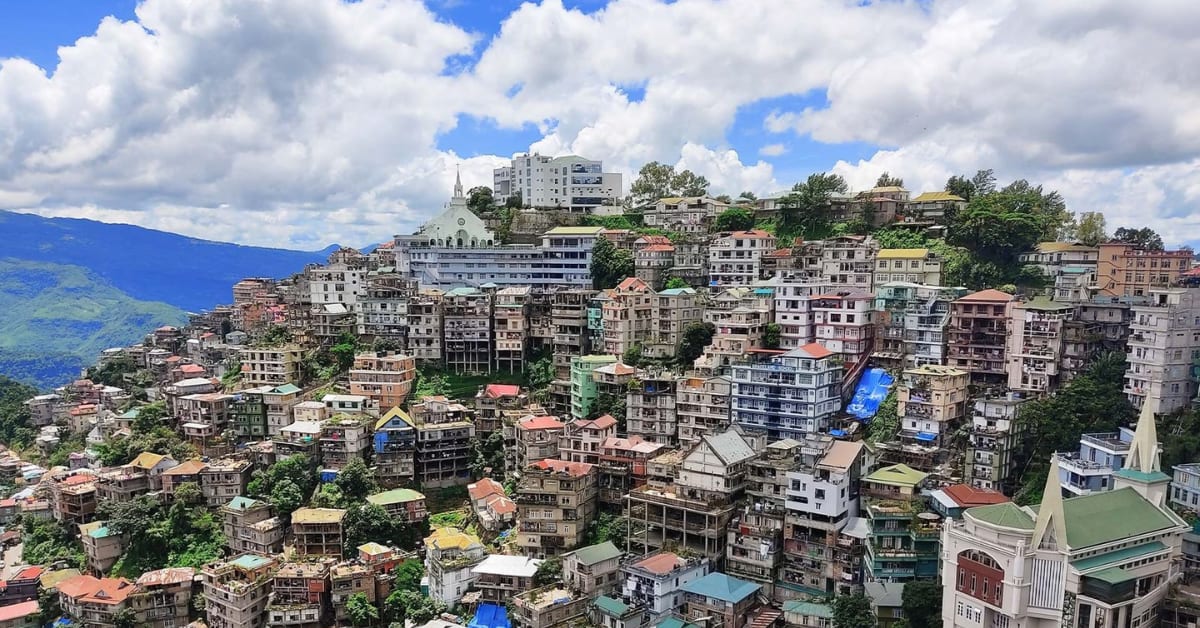
These aren't the tourist hotspots people typically think of when imagining clean mountain air. Tura sits in the foothills of the Garo Hills as Meghalaya's second-largest town after Shillong. Lunglei perches at 1,222 meters altitude in southern Mizoram, near the Bangladesh border.
Nongstoin, headquarters of West Khasi Hills, and Dawki, a border town known more for its crystal-clear Umngot River than its size, complete Meghalaya's presence on the list. Kolasib in northern Mizoram represents the fifth location.
PM2.5 refers to tiny particles 2.5 micrometers or smaller that can come from vehicle exhaust, industrial emissions, and burning fuels. These particles are small enough to enter lungs and bloodstreams, making air quality measurements critical for public health.
The Bright Side
What makes these northeastern towns special isn't just what they have but what they don't. Unlike India's massive metropolitan regions, these settlements maintain small urban footprints with minimal traffic congestion, limited construction activity, and little industrial pollution.
Their geography helps too. Hills and forests surround most of these locations, creating natural barriers and cleaner atmospheric conditions. The relatively sparse populations mean fewer emission sources competing for the same airspace.
The WHO cautions that these measurements come from 2021 and shouldn't be read as current rankings. The database doesn't comprehensively cover every Indian location, and monitoring methods vary between places. Still, the pattern is clear: smaller northeastern hill towns consistently show lower pollution levels than major urban centers.
The data reminds us that India's air quality story has two sides. While major cities work to combat pollution, parts of the country already demonstrate what cleaner air looks like and perhaps offer lessons about balancing development with environmental health.
These five towns prove that breathing easy is still possible in India.
More Images
%2Fenglish-betterindia%2Fmedia%2Fmedia_files%2F2026%2F09%2F22%2Fair-2026-09-22-14-21-16.png)

%2Ffilters%3Aformat(webp)%2Fenglish-betterindia%2Fmedia%2Fmedia_files%2F2026%2F09%2F22%2Fair-1-2026-09-22-14-25-58.png)
%2Fenglish-betterindia%2Fmedia%2Fmedia_files%2F2026%2F09%2F18%2Fkoraput-2026-09-18-19-04-07.png)
Based on reporting by The Better India
This story was written by BrightWire based on verified news reports.
Spread the positivity!
Share this good news with someone who needs it