India's 'Desert Lynx' Bounces Back in Rajasthan
The caracal, a mysterious wild cat that lost 90% of its range in India, now has confirmed breeding populations in Rajasthan's deserts. India just launched its first national conservation plan to save this elusive species from disappearing completely.
For the first time in decades, caracals are raising families in the dunes of western India, and scientists finally have proof.
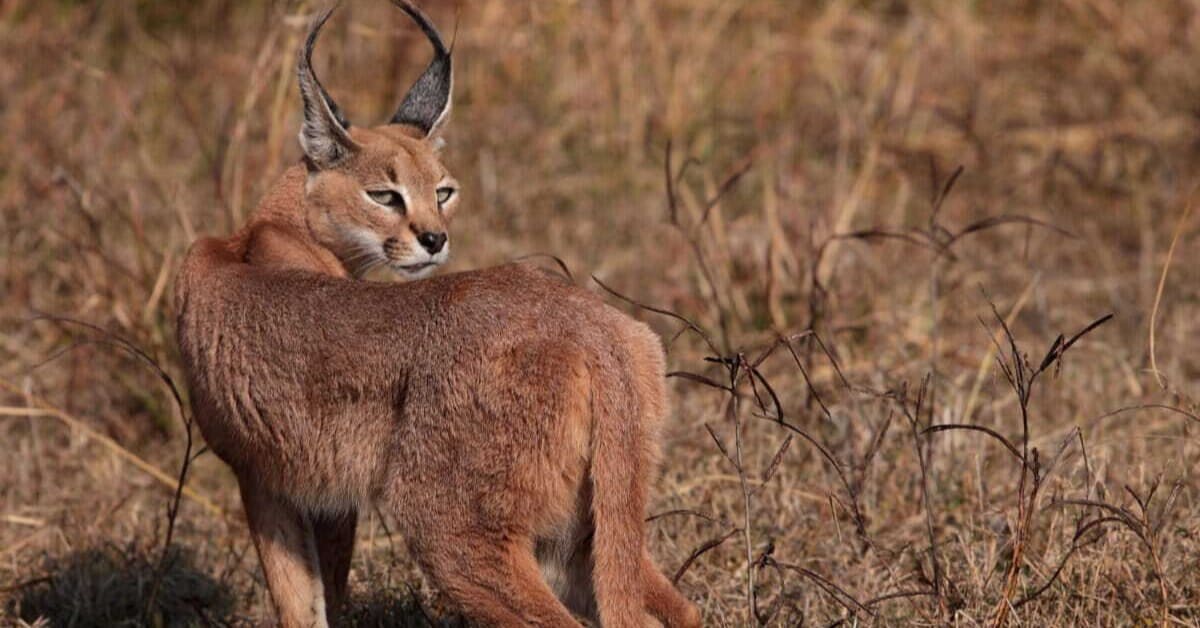
Known locally as Siyahgosh or "black ear," this medium-sized wild cat with distinctive black-tufted ears nearly vanished from India without most people noticing. The species lost over 90% of its historical range in the past century, slipping quietly toward extinction as its desert and scrubland homes disappeared.
But recent radio-collaring studies along the India-Pakistan border in Jaisalmer have documented something remarkable: family groups. Forest officials verified at least three caracals in the Shahgarh Bulge and Ramgarh regions, confirming the cats aren't just hanging on but actively breeding.
That discovery just triggered India's first-ever national masterplan to bring the species back from the brink. The Wildlife Institute of India is now leading a coordinated effort focused on two massive landscapes in Rajasthan where caracals still roam.
The first is the Thar desert landscape, designed as a continuous corridor connecting Jaisalmer's dunes with the Rann of Kutch. The second stretches across the Greater Ranthambore area, including national parks and forests where large predators like tigers are less common, giving smaller carnivores like caracals room to thrive.
For a species that can travel hundreds of square kilometers across desert terrain, connected habitat isn't a luxury. It's survival.
Why This Inspires
This isn't just about saving one charismatic cat. The Salim Ali Centre for Ornithology and Natural History will now map caracal habitat across India, filling in massive knowledge gaps about where these animals still exist and how they're adapting.
Scientists want to understand what caracals eat, how they move, and whether they're learning to live alongside humans on agricultural edges. These aren't just academic questions. The answers will guide real interventions that could reverse a century of decline.
According to Wildlife Institute of India Director Gobind Sagar Bhardwaj, this marks the country's first comprehensive, science-driven framework for the species. Instead of relying on occasional sightings, researchers will track measurable patterns that show whether recovery efforts actually work.
The caracal's story shows what's possible when countries commit to species before they blink out completely. India waited until the last moment, but didn't wait too long.
Young caracals now have a fighting chance to find mates, claim territory, and keep their ancient lineage alive in the deserts their ancestors knew. That's worth celebrating.
---
More Images
%2Fenglish-betterindia%2Fmedia%2Fmedia_files%2F2026%2F05%2F05%2Fwatermelon-2026-05-05-09-43-04.png)
%2Fenglish-betterindia%2Fmedia%2Fmedia_files%2F2025%2F11%2F20%2Fwild-at-heart-banner-image-microsite-banner-2025-11-20-16-17-04.jpg)

%2Ffilters%3Aformat(webp)%2Fenglish-betterindia%2Fmedia%2Fmedia_files%2F2026%2F05%2F05%2Fwatermelon-1-2026-05-05-09-49-35.png)
Based on reporting by The Better India
This story was written by BrightWire based on verified news reports.
Spread the positivity!
Share this good news with someone who needs it