India's First Female IAS Officer Defied Doubters in 1952
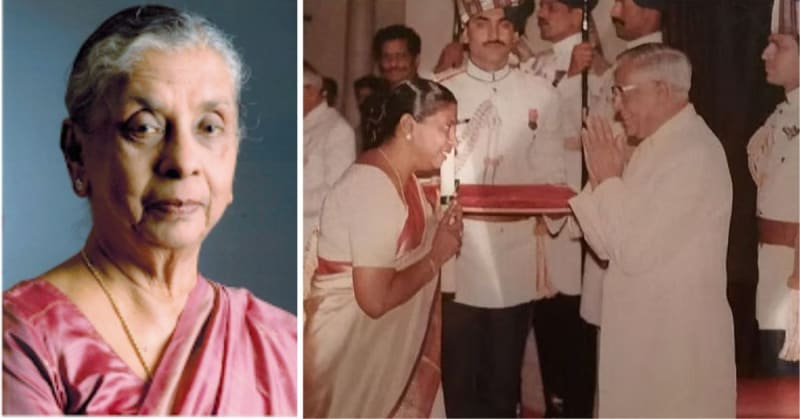
When Anna Rajam Malhotra applied to join India's elite civil service in 1952, even the interview panel told her to choose something "more suited to women." She became the nation's first female IAS officer instead, opening doors for thousands who followed.
When Anna Rajam Malhotra applied to join India's elite civil service in 1952, even the interview panel told her to choose something "more suited to women." She became the nation's first female IAS officer instead, opening doors for thousands who followed.
Anna grew up in Kozhikode, Kerala, working as a clerk at an accountant's office where few professional paths existed for women. Her engineer cousin brought home a civil service exam application in 1950, and a family friend paid the steep 140 rupee fee because Anna's family couldn't afford it.
During her interview, former Governor General Chakravarti Rajagopalachari told Anna he didn't approve of women in public service. She argued back: "You should give me a chance." He relented and posted her to Hosur, a border town where she'd complete the same rigorous training as male officers, including horseback riding and shooting.
Her first major test came when a herd of elephants wandered from Denkanikottai forest into farmland near Hosur, terrifying villagers. Anna remembered that elephants fear loud noises, so she asked residents to bring tins and cans. Together they marched toward the herd, creating a thunderous clang that drove the animals back toward the forest.
The story made headlines, and many men were outraged. "What! A woman in the IAS? A she-elephant storming into the bastion of bull-elephants?" critics wrote. Some questioned whether she could handle riots or give orders to shoot.
Anna answered with decades of quiet excellence. She pushed the Madras government to expand electricity access to rural communities. As agricultural secretary during Indira Gandhi's tenure, she helped shape Green Revolution policies that transformed India's food production.
The Ripple Effect
Anna's determination created lasting change beyond her own career. She completed an eight-state agricultural tour with a fractured ankle because the work mattered more than her discomfort. She spearheaded the construction of Mumbai's Nhava Sheva port, now one of India's busiest, earning her the Padma Bhushan in 1989.
Through roles as additional secretary of animal husbandry and fisheries, chairperson of the National Seeds Corporation, and countless field postings, Anna never raised her voice to be heard. Her competence, fairness, and unshakeable resolve won over skeptical colleagues in rooms designed for men only.
Today, women comprise over 30 percent of IAS officers in India. Every single one walks through doors Anna first opened with persistence, courage, and the simple insistence that she deserved a chance.
More Images
%2Fenglish-betterindia%2Fmedia%2Fmedia_files%2F2026%2F02%2F25%2Fanna-rajam-1-2026-02-25-13-07-24.jpg)
%2Ffilters%3Aformat(webp)%2Fenglish-betterindia%2Fmedia%2Fmedia_files%2F2026%2F02%2F25%2Fanna-rajam-2026-02-25-11-19-59.jpg)
%2Fenglish-betterindia%2Fmedia%2Fpost_attachments%2Fuploads%2F2024%2F07%2F30-1721645253.jpg)
Based on reporting by The Better India
This story was written by BrightWire based on verified news reports.
Spread the positivity!
Share this good news with someone who needs it