India's First Homegrown Chip Earns Designer Top Honor
The scientist who led India's first indigenous microprocessor just received one of the nation's highest civilian awards. His work helps India break free from foreign chip dependency in defense and tech.
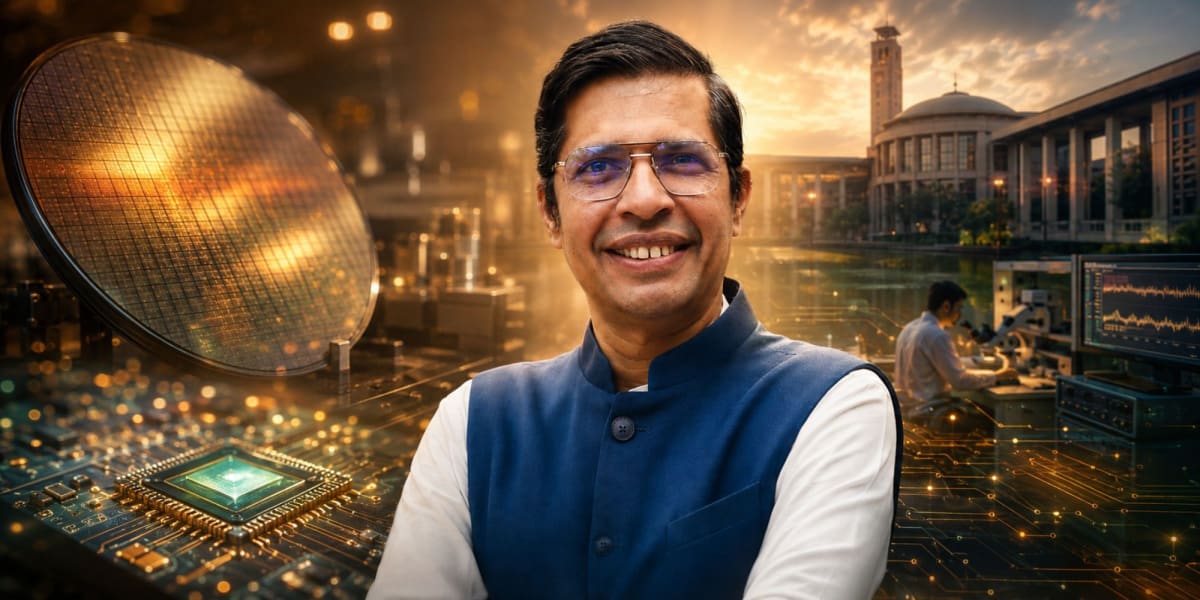
Veezhinathan Kamakoti, the computer scientist behind India's first homegrown microprocessor, has been awarded the Padma Shri for 2026. The recognition celebrates decades of patient, foundational work that's helping India build its own semiconductor future.
As director of the Indian Institute of Technology Madras, Kamakoti led the team that designed Shakti, a processor family built entirely in India. Unlike the imported chips that power nearly everything from phones to weapons systems, Shakti gives the country control over the technology inside its most sensitive devices.
The timing matters. For years, India has relied almost entirely on foreign chips, creating a strategic vulnerability in defense and communications. An indigenous processor changes that equation, offering the nation more say over what goes into critical systems.
Shakti processors are designed for everything from mobile networks to defense applications. The project runs through IIT Madras under programs supported by the Ministry of Electronics and Information Technology, where Kamakoti also heads information security initiatives.
Kamakoti earned both his masters and doctorate at IIT Madras, joined the faculty in 2001, and became director in 2022. His work spans computer architecture, chip design, and information security, fields that were once considered narrowly academic but now carry national weight.
Beyond campus, he serves on the National Security Advisory Board and previously chaired an artificial intelligence task force for the Ministry of Commerce and Industry. His career bridges the gap between university research and questions of national capability.
The Ripple Effect
For India's deeptech community, this recognition signals something important. Hardware and semiconductor research now stand alongside the more visible world of software startups as national priorities valued at the highest level.
The award also highlights a shift in strategy. As global chip shortages exposed supply chain fragility, countries worldwide began investing in domestic semiconductor capacity. India's push isn't just about keeping up, it's about securing independence in technology that powers modern life.
Kamakoti dedicated the honor to his team and the nation, calling it a collective effort. That humility reflects the reality: building an indigenous chip industry requires institutions, talent, and sustained commitment across decades, not just individual brilliance.
As India expands its semiconductor ambitions, the foundations Kamakoti helped build become increasingly critical. His work proves that patient engineering, even when it takes years to bear fruit, can reshape a nation's technological future.
More Images




Based on reporting by YourStory India
This story was written by BrightWire based on verified news reports.
Spread the positivity!
Share this good news with someone who needs it