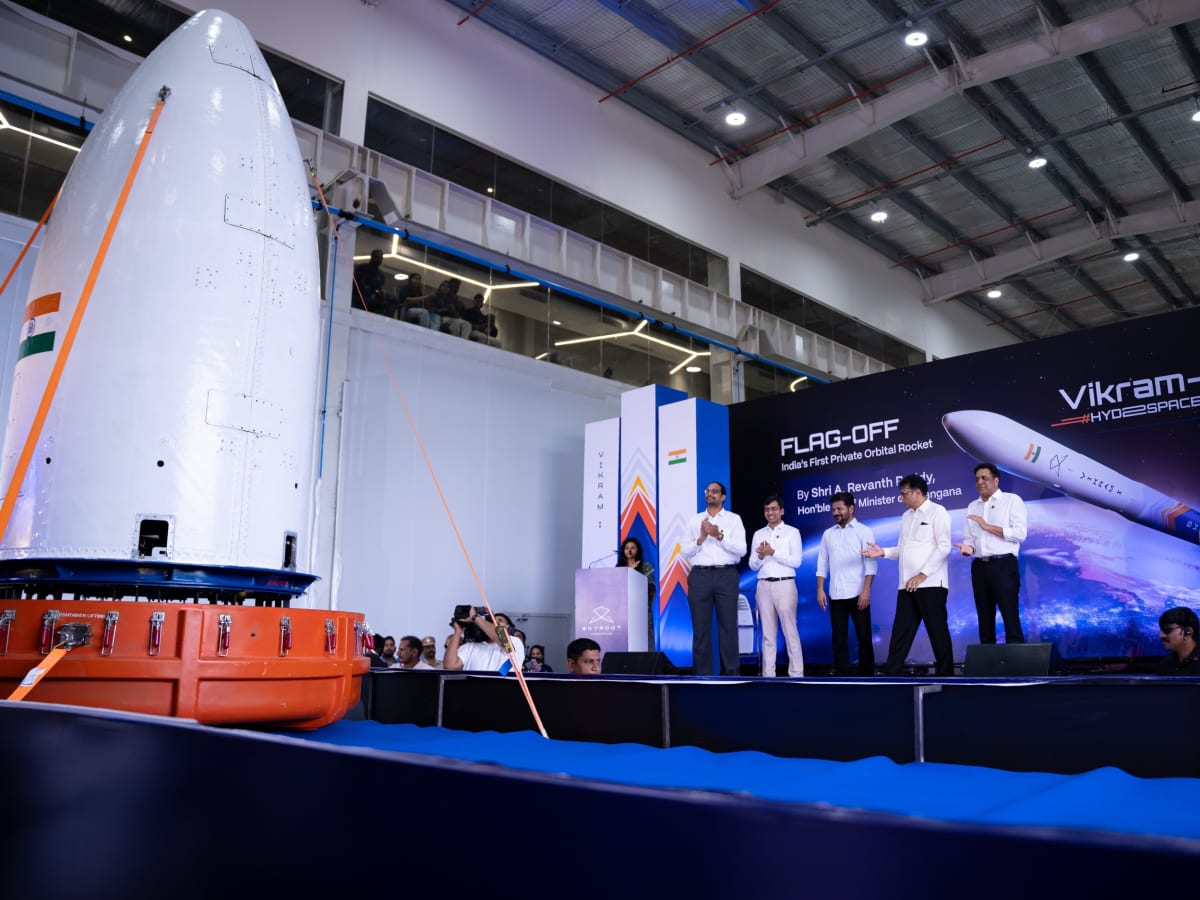
India's First Private Orbital Rocket Reaches Launchpad
A startup founded just six years ago is about to make history as India's first private company to launch a rocket into orbit. Skyroot Aerospace's Vikram-1 is ready to fly as early as July 12, marking a massive leap for the country's growing commercial space industry.
India is about to join an exclusive club of nations with private companies launching rockets to orbit, and it's happening faster than anyone expected.
Skyroot Aerospace rolled its Vikram-1 rocket to the pad at India's main launch site on July 2. The four-stage rocket is scheduled to lift off between July 12 and August 4, carrying several small satellites from customers around the world.
The mission, called Aagaman, is primarily a test flight. But it represents something much bigger: proof that India's recent space policy reforms are working.
Founded in 2018, Skyroot has moved at lightning speed thanks to government support. The Indian Space Research Organisation opened its test stands and launch facilities to the private sector, slashing the startup's costs and timeline dramatically.
"If we had to invest in the test stands and the launch pads, our capital requirements would have been much larger," said Ashwin Mahavadi, Skyroot's senior vice president. The company has already raised $60 million and reached a valuation of over $1 billion.
The Vikram-1 can carry up to 770 pounds to low Earth orbit. Skyroot tested key technologies on a smaller suborbital rocket back in 2022, ironing out problems before this first orbital attempt.
The Ripple Effect
Skyroot's ambitions extend far beyond one successful launch. The company plans two more Vikram-1 flights this year and aims to launch one rocket per month once reliability is proven.
An upgraded version with strap-on boosters, the Vikram-1U, is scheduled for early 2027. That rocket will carry up to 1,200 pounds, opening opportunities for larger satellites.
The Indian government is sweetening the deal even further. New incentives will subsidize launch costs by 30% for domestic satellite companies choosing Indian rockets. That's up to $3,000 per kilogram, giving young space startups a real boost.
Skyroot is even exploring international expansion. The company may set up a Japanese subsidiary and potentially launch from Japan to serve Asian customers better.
But CEO Pawan Kumar Chandana is keeping his team focused on the immediate goal. The company wants to capture real flight data from every system during this first mission to validate their designs and build a truly reliable launch service.
India's commercial space sector is just getting started, and Skyroot is leading the charge with manufacturing capacity already in place and a clear path forward. The country that put a spacecraft into Mars orbit on its first try is now proving it can nurture a competitive private space industry too.
More Images


Based on reporting by SpaceNews
This story was written by BrightWire based on verified news reports.
Spread the positivity!
Share this good news with someone who needs it