India's Mangrove Forests Now Pay Locals to Protect Them
Coastal communities in India are earning income by guiding tourists through mangrove forests, turning conservation into a livelihood. From kayaking narrow creeks to leading bird-watching tours, locals now have a financial reason to keep these vital ecosystems thriving.
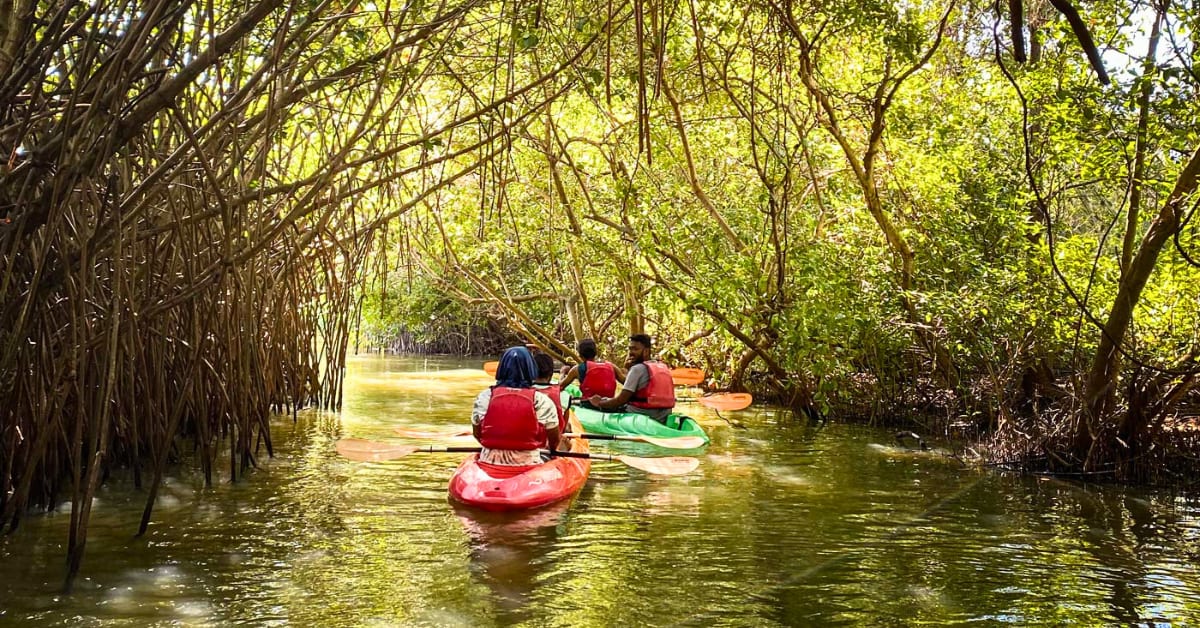
A kayak glides into Pichavaram's narrow waterways where mangrove roots rise like sculptures from the mud and branches form a living canopy overhead. This isn't just a scenic boat ride—it's part of a quiet transformation happening along India's coastlines where protecting nature now pays the bills.
Across India's 4,991 square kilometers of mangrove forests, local communities are discovering that healthy ecosystems can generate steady income. Tourists paddle through Tamil Nadu's Pichavaram village, watch birds in Odisha's Bhitarkanika, and explore Karnataka's coastal backwaters, creating jobs for boat operators, guides, and homestay owners.
The math is simple but powerful. A family that earns money guiding visitors through living forests faces less pressure to harvest those same forests for survival. Studies from the Sundarbans show that households involved in tourism rely less on extracting forest resources and enjoy better economic stability than their neighbors.
These mangrove forests punch far above their weight despite covering just 0.15% of India's land area. Their roots slow waves and prevent coastal erosion, their creeks serve as nurseries for fish, and their waterlogged soils store massive amounts of carbon. For the millions living beside them, mangroves have always shaped daily life through fishing and shoreline protection.
Tourism adds a new dimension. In coastal Karnataka's Saligrama and Udupi backwaters, a few hours of kayaking means income for a boat operator and potentially a meal sold, a room rented, or a craft purchased. The money circulates through communities without requiring a single tree to be cut.
The Ripple Effect
The benefits extend beyond individual paychecks. A 2024 review in the Journal of Environmental Management found that mangrove ecotourism across Southeast Asia consistently increased community participation in conservation and restoration efforts. When local people receive meaningful income from tourism, they become the forest's most dedicated protectors.
The success stories aren't without challenges. Too many visitors can disturb wildlife, damage delicate vegetation, and create waste problems. The key difference lies in whether tourism revenue actually reaches local communities or gets siphoned away by outside operators.
In Pichavaram, tourists pay extra for kayaks that venture deeper into narrow creeks where motorboats can't follow. That premium goes directly to local boatmen who've learned that showcasing an intact, thriving forest earns more than a quick harvest ever could.
India's mangrove communities are proving that conservation doesn't require choosing between nature and livelihoods—sometimes protecting one means protecting both.
More Images
%2Fenglish-betterindia%2Fmedia%2Fmedia_files%2F2026%2F09%2F04%2Ffeatured-img-3-2026-09-04-15-33-00.png)

%2Ffilters%3Aformat(webp)%2Fenglish-betterindia%2Fmedia%2Fmedia_files%2F2026%2F09%2F04%2Fmangroves-1-2026-09-04-14-59-54.png)
%2Ffilters%3Aformat(webp)%2Fenglish-betterindia%2Fmedia%2Fmedia_files%2F2026%2F09%2F04%2Fwhatsapp-2026-09-04-14-57-43.jpeg)
Based on reporting by The Better India
This story was written by BrightWire based on verified news reports.
Spread the positivity!
Share this good news with someone who needs it


%2Fhttps%3A%2F%2Ftf-cmsv2-smithsonianmag-media.s3.amazonaws.com%2Ffiler_public%2F3f%2F8b%2F3f8ba94f-bec9-40c9-b0c7-1b63c5ebea39%2F1280px-ancient_and_modern_4000_years.jpg)