India's Monsoon Greens: Free Superfoods Nourish Millions
Every rainy season, wild edible greens burst from India's forests and wetlands, providing free nutritious food that's richer in vitamins than kale. Generations of communities have sustained themselves on these fleeting plants that disappear as quickly as they arrive.
Long before imported salad greens became fashionable, India's landscapes offered their own seasonal superfoods: wild monsoon greens that appear free, nutritious, and perfectly adapted to local climates.
Every monsoon, forests, wetlands, paddy fields and village commons across India burst into life with edible greens called shaak, saag, keerai, soppu or bhaji depending on the region. These plants have nourished communities for generations, appearing only after sustained rains and disappearing within weeks.
Unlike cultivated vegetables, these wild greens are naturally adapted to India's rainy season. Their seeds lie dormant through scorching summers, then germinate rapidly once rains arrive, completing their entire life cycle in just six to ten weeks before vanishing until next year.
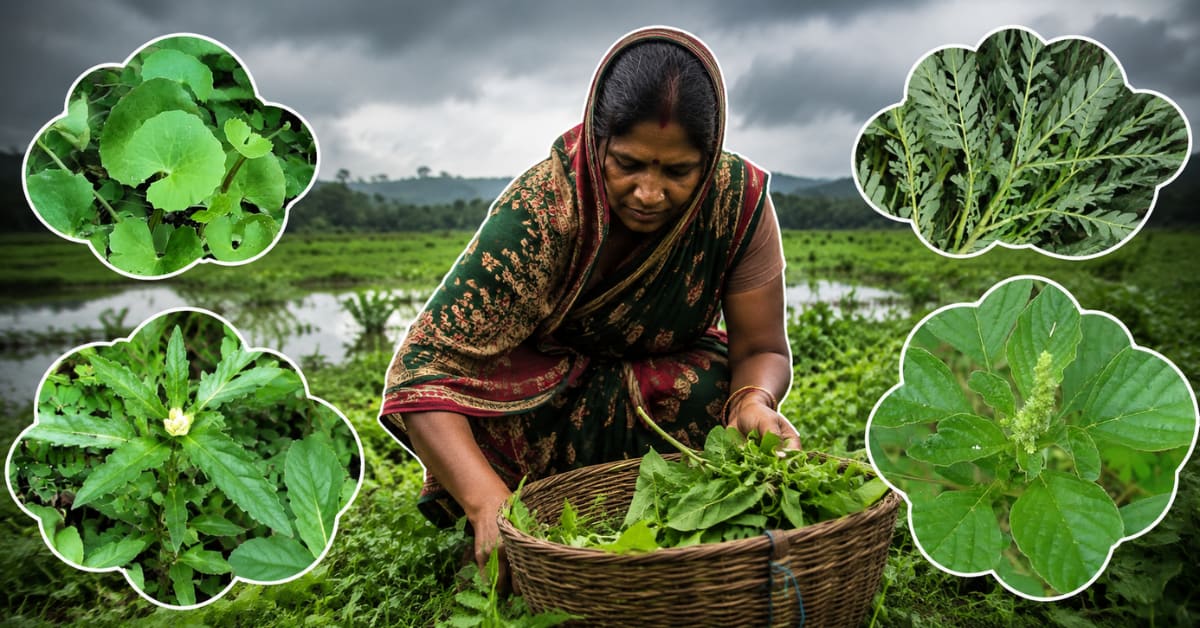
In Odisha's tribal regions, women leave early each morning with bamboo baskets, carefully harvesting young shoots of dozens of saga varieties from forests and fields. They select only what's needed so plants regenerate naturally, practicing sustainable foraging passed down through generations.
West Bengal's flooded marshlands become natural vegetable gardens during monsoon season. Families collect Kolmi Shaak from shallow waters and Helencha from damp grasslands during morning walks, then stir fry them with garlic and mustard oil for cooling meals during humid weather.
Across Maharashtra's Western Ghats, villagers eagerly await Takla Bhaji sprouting on grazing lands and roadsides after heavy showers. Its slightly bitter leaves are boiled then cooked with roasted peanuts, coconut or garlic into traditional dishes.
Karnataka's markets suddenly fill with soppu varieties harvested from rain-fed fields and village commons. Traditional recipes like soppu saaru combine several greens, creating meals naturally packed with vitamins and minerals.
Why This Inspires
Scientific studies confirm what communities have known for centuries: these wild greens are exceptionally rich in iron, calcium, potassium, folate, vitamins A and C, antioxidants and dietary fiber. Many surpass cultivated vegetables in nutritional content while requiring zero farming, water or resources.
Every time communities gather wild greens, they preserve traditional ecological knowledge about which species grow where, which leaves to harvest, and which roots to leave untouched for next year's crop. This wisdom ensures plants return season after season.
Once dismissed as poor people's food, nutritionists now recognize these greens as nutritional powerhouses that sustained healthy diets when cultivated vegetables were scarce. The plants also remind us that truly sustainable eating means following nature's seasonal rhythms rather than year-round imports.
As wetlands shrink and younger generations move away from seasonal food traditions, this ancient knowledge risks disappearing with the greens themselves, making preservation efforts more important than ever.
These fleeting monsoon greens prove that some of nature's most generous gifts arrive right on schedule, free for those who know where to look.
More Images
%2Fenglish-betterindia%2Fmedia%2Fmedia_files%2F2026%2F07%2F31%2Fbanyan-4-2026-07-31-17-20-17.png)
%2Fenglish-betterindia%2Fmedia%2Fmedia_files%2F2026%2F07%2F31%2Fgreens-2026-07-31-17-22-06.png)
%2Fenglish-betterindia%2Fmedia%2Fmedia_files%2F2026%2F07%2F31%2Fgreens-1-2026-07-31-17-25-29.png)
%2Fenglish-betterindia%2Fmedia%2Fmedia_files%2F2026%2F07%2F31%2Fgreens-2-2026-07-31-17-28-16.png)
Based on reporting by The Better India
This story was written by BrightWire based on verified news reports.
Spread the positivity!
Share this good news with someone who needs it