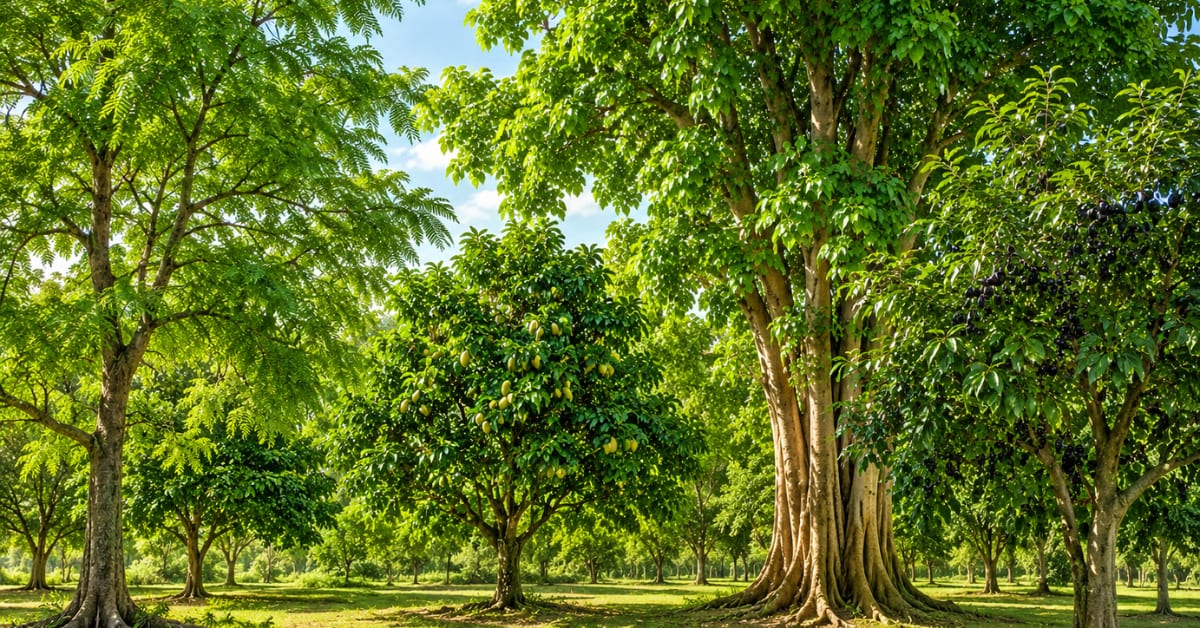
India's Monsoon Tree Planting Tradition Shows Climate Wisdom
For centuries, Indians have planted native trees with the first monsoon rains, creating a natural system that builds stronger roots and healthier ecosystems. Scientists now confirm this ancient practice offers one of the most effective ways to grow resilient landscapes.
Long before anyone talked about carbon footprints or climate adaptation, Indian communities knew exactly when to plant trees: right before the monsoon rains arrived.
This wasn't guesswork. It was wisdom refined over generations of watching nature work.
The practice remains beautifully simple. Wait for the first rains in June or July, then plant native saplings like neem, jamun, peepal, arjun, or mango. The combination of warm soil and steady rainfall does the rest, giving young trees everything they need during their most vulnerable weeks.
The timing matters more than most people realize. Monsoon rains encourage roots to grow deep into the earth, creating anchor systems strong enough to survive harsh summers. By the time dry season returns, these trees can stand on their own.
Communities across India have favored specific native species for good reason. Neem trees purify air and provide medicine while sheltering countless birds and insects. Jamun trees feed both people and wildlife with their purple fruits while cooling the surrounding area.
Peepal trees offer broad canopies that house entire bird colonies, and their extensive roots hold soil firmly in place. Arjun trees thrive near riverbanks, preventing erosion along fragile waterways. Mango trees provide fruit, shade, and habitat for decades, often planted with grandchildren in mind.
The Bright Side
This ancient approach solves several modern problems at once. As trees establish deep roots, they act as natural anchors during heavy downpours, reducing erosion and slowing runoff. More water seeps into the ground, naturally replenishing underground reserves.
The practice also proves remarkably efficient. Since rainfall handles most irrigation needs, communities save enormous amounts of time and water compared to planting during dry seasons. It's a perfect example of working with nature's rhythms rather than fighting them.
The ecological benefits extend far beyond the trees themselves. Native species support local insects, birds, and small animals that have evolved alongside them. They improve air quality, cool neighborhoods during hot months, and create green corridors that connect fragmented habitats.
Cities are taking notice. As urban areas face rising temperatures and water scarcity, planners are rediscovering the value of timing plantations with monsoon seasons. The same wisdom that guided village commons now shapes metropolitan green space strategies.
Every sapling planted this monsoon season carries potential that stretches decades into the future: cleaner air, richer biodiversity, healthier soil, and shade for generations yet to come. When the first showers arrive this year, they'll bring more than relief from summer heat; they'll signal nature's perfect moment to grow.
More Images
%2Fenglish-betterindia%2Fmedia%2Fmedia_files%2F2026%2F07%2F07%2Fmonsoon-trees-2026-07-07-18-09-45.png)
%2Fenglish-betterindia%2Fmedia%2Fmedia_files%2F2025%2F11%2F20%2Fwild-at-heart-banner-image-microsite-banner-2025-11-20-16-17-04.jpg)

%2Ffilters%3Aformat(webp)%2Fenglish-betterindia%2Fmedia%2Fmedia_files%2F2026%2F07%2F07%2Fmonsoon-trees-2026-07-07-18-10-50.png)
Based on reporting by The Better India
This story was written by BrightWire based on verified news reports.
Spread the positivity!
Share this good news with someone who needs it