India's Moon Mission Links Lunar Soil to Antarctic Meteorite
India's Chandrayaan-3 rover discovered that soil near the Moon's South Pole matches a meteorite found in Antarctica 44 years ago, solving a cosmic mystery. The breakthrough confirms theories about the Moon's ancient molten ocean and shows how asteroid impacts reshaped its surface.
A tiny rover on the Moon just connected two dots separated by 240,000 miles and millions of years of cosmic history.
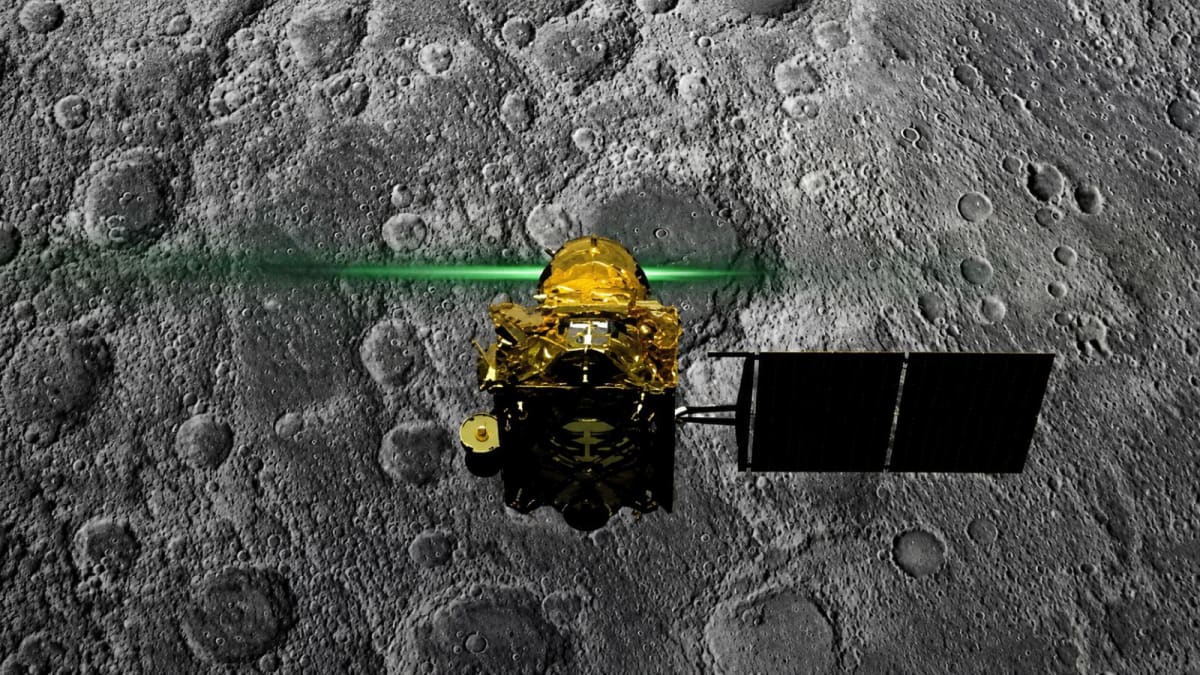
India's Chandrayaan-3 mission has revealed that soil at its landing site near the Moon's South Pole is nearly identical to a meteorite discovered in Antarctica's Allan Hills in 1982. The match is so precise that scientists now have proof that deep layers of the Moon were excavated by ancient impacts and scattered across its surface.
The Pragyaan rover's instruments measured the chemical makeup of lunar soil at Shiv Shakti Point, finding it rich in iron and magnesium but low in aluminum. That specific recipe matched meteorite ALHA 81005 almost exactly, with both containing about 26% aluminum oxide and 14% iron and magnesium oxides.
Lead scientist Dwijesh Ray from India's Physical Research Laboratory explained that massive asteroid impacts, like the one that created the South Pole-Aitken basin, dug deep into the Moon and mixed interior materials with surface soil. The basin is one of the largest impact craters in our entire solar system.
The team compared their findings to lunar meteorites found in northwest Africa, Libya, and Oman to confirm the connection. Each piece of the puzzle pointed to the same conclusion: the Moon's surface tells a story of violent collisions that exposed its hidden depths.
Why This Inspires
This discovery does more than solve an academic puzzle. It confirms the lunar magma ocean theory, proving the Moon was once covered in molten rock that separated into distinct layers as it cooled.
Future missions can now use this chemical roadmap to pick landing sites that reveal the Moon's deepest secrets. Scientists know where to look for materials that formed during the Moon's earliest days, offering windows into how rocky worlds like Earth evolved.
The findings show how one nation's moon mission can answer questions that puzzled scientists for decades, turning distant exploration into practical knowledge about our cosmic neighborhood.
Based on reporting by Indian Express
This story was written by BrightWire based on verified news reports.
Spread the positivity!
Share this good news with someone who needs it