India's New Airport Celebrates 400-Year-Old Local Crafts
The Bhogapuram airport in Andhra Pradesh brings centuries-old regional art traditions to life through its design, welcoming travelers with handcrafted installations and traditional motifs. From wooden toys to shadow puppets, the terminal transforms cultural heritage into a living gallery.
Travelers landing in Bhogapuram, Andhra Pradesh are greeted by something rare: an airport that feels like stepping into the heart of local culture rather than a generic terminal.
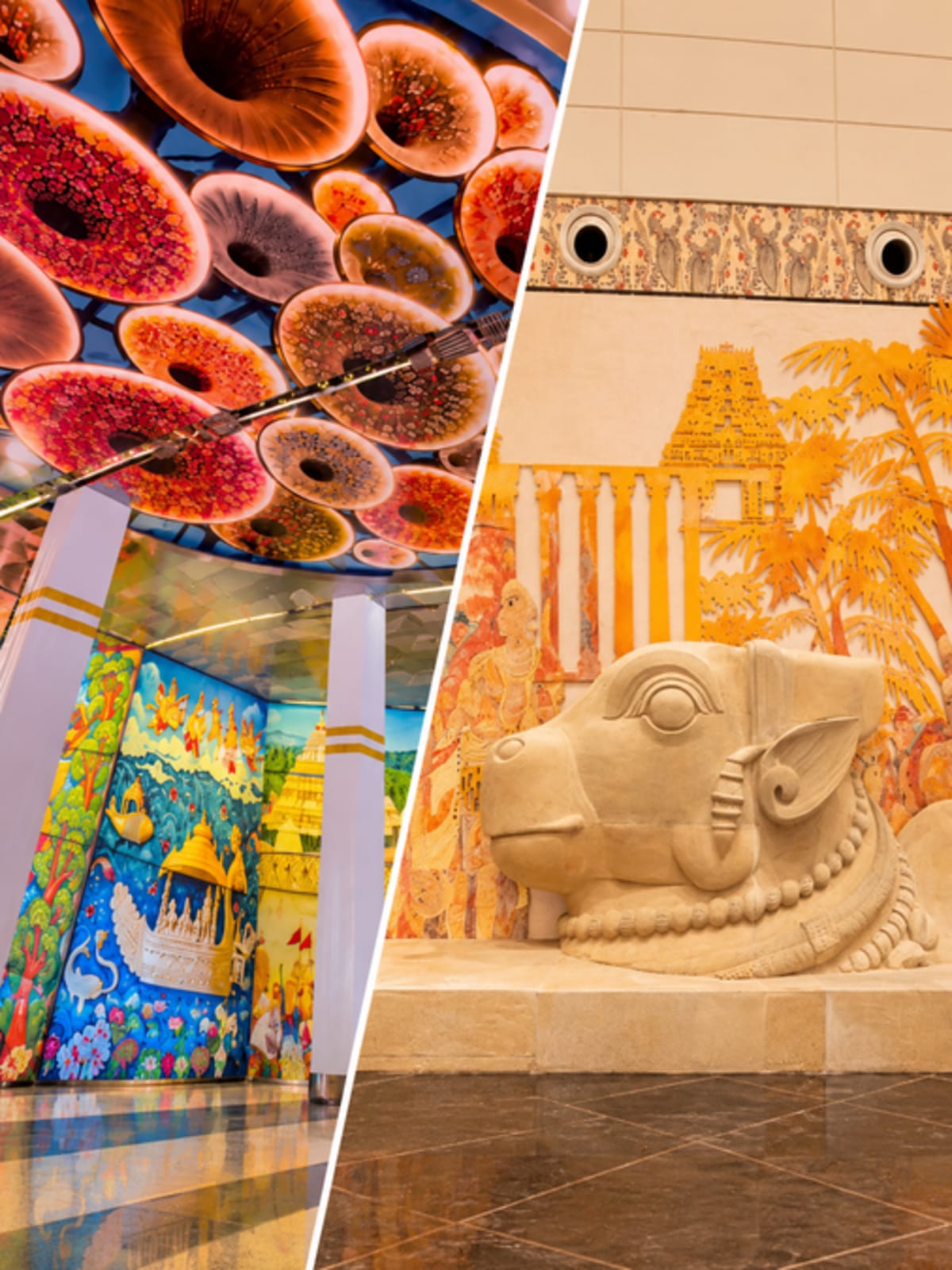
The new Alluri Sitarama Raju International Airport celebrates the region's artistic soul through thoughtful design. A giant installation of Etikoppaka Bommalu wooden toys welcomes visitors at the entrance, showcasing a 400-year-old craft tradition that uses soft wood and natural dyes.
The airport doesn't stop at one art form. Throughout the terminal, travelers encounter Tholu Bommalata, the region's traditional leather shadow puppet theater that has told epic stories for generations. The handcrafted Bobbili Veena, a traditional string instrument from Vizianagaram, appears as part of the cultural displays.
Even the floors tell stories. Inti Muggulu, the intricate geometric patterns traditionally drawn at home entrances to welcome guests, now guide travelers through transition zones and gate entrances as beautiful inlays.
The ceiling and interior details draw inspiration from Andhra's renowned textile heritage. Motifs from Machilipatnam Kalamkari and Uppada Jamdani weave botanical, avian, and geometric patterns throughout the space, turning functional architecture into handwoven art.
The airport's name itself honors history. Named after Alluri Sitarama Raju, the legendary freedom fighter who led the Rampa Rebellion, the terminal connects modern infrastructure with regional pride.
The Ripple Effect
This approach to airport design creates opportunities far beyond aesthetics. By showcasing regional crafts that earned Geographical Indication tags, the airport introduces millions of travelers to artisan traditions they might never encounter otherwise. The Bobbili Veena received its GI tag in 2011, and now gets international visibility every day.
Local craftspeople gain recognition and potential customers as their work moves from village workshops to a global stage. Young people see their cultural heritage valued in modern spaces, not just preserved in museums.
The design proves that infrastructure projects can strengthen cultural identity while serving practical needs. When travelers spend time in terminals, why not use those moments to celebrate what makes a place unique?
Every airport visitor becomes an ambassador for Andhra's artistic traditions, carrying stories of centuries-old crafts back home.
Based on reporting by The Better India
This story was written by BrightWire based on verified news reports.
Spread the positivity!
Share this good news with someone who needs it